
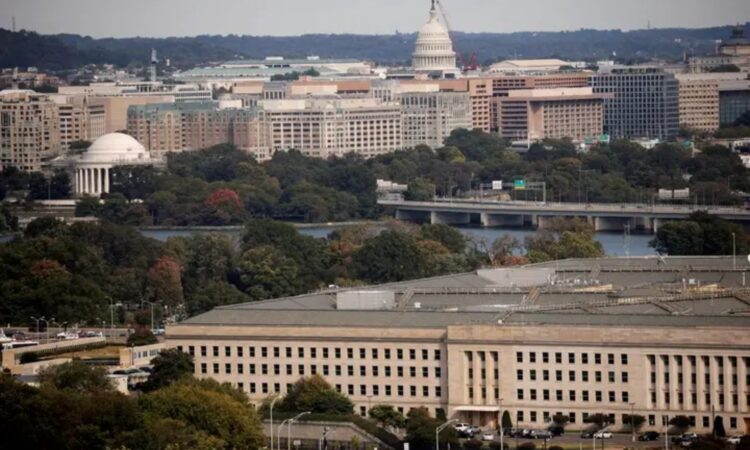
In Washington, D.C., there is a large government building called the Wilbur J. Cohen Building. On its walls are powerful murals showing everyday people a boy using crutches, a family sitting at a picnic table, a father and son walking along empty train tracks.
These scenes were painted by famous American artists Ben Shahn and Philip Guston. But the building is now mostly empty. Many workers have been fired, sent home, or moved elsewhere.
The murals are still there but maybe not for much longer because the building is one of many federal properties that might be sold. A private buyer would probably not pay to care for the murals or the old structure. It would likely be cheaper for them to tear the entire place down.
The Cohen Building has been called the “Sistine Chapel of the New Deal” because of its large and meaningful murals. Shahn and Guston, along with Seymour Fogel and Ethel and Jenne Magafan, painted scenes that showed the New Deal’s ideas: the importance of hard work, the good of government programs, and the need to protect people from hardship.
One of Fogel’s paintings, Wealth of the Nation, highlights the belief that both brain and muscle together could help America grow and succeed. These murals are not just decoration — they are part of our history. If the building is sold, that history could be lost forever.
Some might think it is silly to worry about artwork when there are so many big problems in the world. But during the Great Depression, when millions were suffering, President Franklin D. Roosevelt believed that art was essential. He wanted Americans not only to survive but to have joy, beauty, and hope.
The government paid many struggling artists, including Shahn, Guston, Jacob Lawrence, Alice Neel, and Jackson Pollock, to create art for public buildings across the country. Their paintings celebrated American life and helped calm people’s fears about the future. Roosevelt himself said that making and enjoying art helps build democracy.
The murals in the Cohen Building were created for the people, and they belong to the people. They remind us of where we came from, who we are today, and who we want to be.
These particular murals were created to honor the Social Security Act of 1935. This law brought retirement benefits and unemployment insurance to Americans at a time when getting old or losing a job could mean hunger and poverty. When Shahn heard he was chosen to paint these murals, he said it was the most important job he could imagine. He was proud to give a face to such an important law.
Both Shahn and Guston understood suffering. They were Jewish immigrants whose families had escaped danger in Europe. Guston’s childhood was especially painful when he was only ten, he found his father had taken his own life because he could not find work.
Guston later said that the federal art program had saved him otherwise, he might have ended up the same way. The murals they created reflect compassion for those who struggle, and the belief that art, like Social Security, should help everyone.
It is heartbreaking that murals meant to symbolize the promise between the government and its people a promise more than 70 million Americans still depend on — might be handed over to a developer who could destroy them.
Even though the building is listed as a historic place, rules meant to protect it may be ignored or rushed aside. A nonprofit group called the Living New Deal is trying to save the artwork, but time may be running out.
These murals are more than paintings. They protect a memory of a time when the country chose to take care of the vulnerable. They remind us how important it is to have not just enough to live on, but something worth living for. Social Security helps people afford their basic needs. The murals show us what we value peace, community, fairness, and looking out for one another.
Keeping these murals safe would honor a major part of American culture and continue the New Deal belief that everyone deserves security especially those who need help the most.