
President Donald Trump’s Policies Come With Unintended Consequences for Social Security

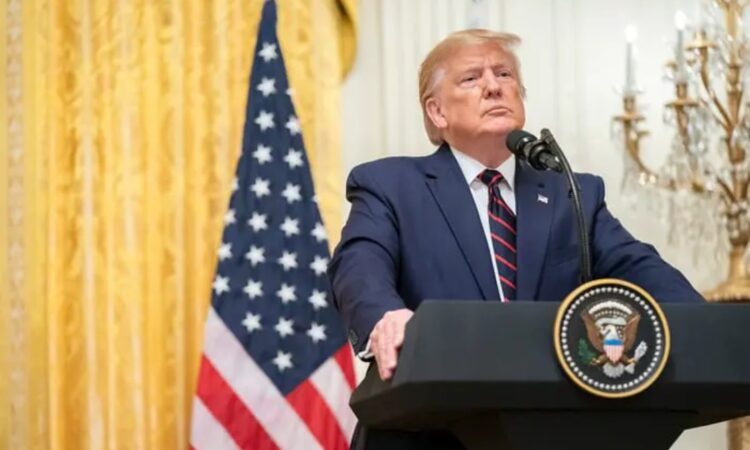
During the first year of Donald Trump’s second, nonconsecutive term as president, Social Security has gone through several noticeable changes. Some of these changes were direct decisions made by his administration, while others were side effects of broader policies that were not specifically aimed at Social Security but still affected it in important ways.
One early change involved how Social Security handles overpayments. During the COVID-19 period under the previous administration, people who were accidentally overpaid benefits only had 10% of their monthly checks withheld to recover that money. The Trump administration ended that policy and replaced it with a much tougher rule. Now, the government can withhold up to 50% of a beneficiary’s monthly payment to recover overpaid funds. This affects more than one million people who collectively owe tens of billions of dollars, making repayment much more financially painful for those individuals.
Another change came in the form of an executive order signed in late March that ended the mailing of paper benefit checks. While almost everyone was already receiving their Social Security payments electronically, more than half a million people were still getting checks by mail. Under the new rule, those individuals must switch to direct deposit or a government-issued payment card in order to keep receiving their benefits.
Beyond these visible changes, some of the president’s broader economic policies have had deeper and longer-lasting effects on Social Security. One of the biggest examples is his tariff and trade policy. The administration introduced a wide-ranging set of tariffs, including a general global tariff and higher tariffs on certain countries with large trade imbalances with the United States. These policies were designed to protect American jobs and make U.S.-made products more competitive, but they also had unintended consequences.
Economists have found that tariffs on imported materials used in manufacturing, such as steel or auto parts, increased costs for U.S. companies. When businesses face higher production costs, they often pass those costs on to consumers in the form of higher prices. As prices rise, inflation increases. Since Social Security benefits are adjusted each year to keep up with inflation, higher inflation leads to higher benefit increases, known as cost-of-living adjustments.
As inflation rose following the introduction of these tariffs, Social Security recipients saw a larger benefit increase than they otherwise might have. Because Social Security benefits never go down once they increase, this boost is permanent. The cost-of-living increase scheduled for 2026 is higher than the long-term average, and it marks a rare stretch of several consecutive years with relatively strong benefit increases. While this may sound positive for retirees, it also adds long-term costs to an already financially strained program.
Another major policy affecting Social Security is Trump’s large tax and spending law, often referred to as his “big, beautiful bill.” This law permanently extended earlier tax cuts and added new tax breaks that apply for several years. Seniors received a higher standard deduction, and some workers were given the ability to deduct portions of their overtime pay and tips from their taxable income.
While these tax changes put more money in people’s pockets in the short term, they also reduce the amount of payroll tax revenue flowing into Social Security. Payroll taxes are the main source of funding for the program, so when collections go down, Social Security’s finances worsen. Government actuaries have warned that these tax changes will cost Social Security hundreds of billions of dollars over the next decade.
As a result, the trust fund that pays retirement and survivor benefits is expected to run out of reserves sooner than previously estimated. Once those reserves are depleted, Social Security would only be able to pay benefits using incoming tax revenue, which would likely mean automatic benefit cuts unless Congress steps in. Current estimates suggest that future retirees could face benefit reductions of more than 20% if no changes are made.
In short, while some of Trump’s policies have led to slightly higher benefit checks in the near term and lower taxes for certain groups, they have also weakened Social Security’s long-term financial health. The effects may not be fully felt right away, but future retirees could bear the cost through reduced benefits and increased uncertainty about the program’s stability.