Keir Starmer just made the biggest mistake of his life – it will impact every single Brit

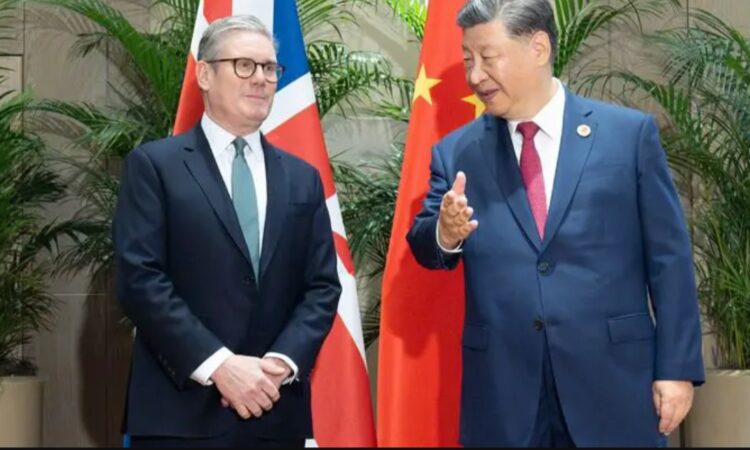
Every small detail they collect can later be used to adjust how they operate, helping them fine-tune their actions so they are perfectly suited to the people or systems they are targeting.
Keir Starmer will strongly argue that he has not put the country’s safety at risk. However, many people believe the opposite and are deeply worried that his government may have opened the door for Chinese intelligence services to gain access to huge amounts of sensitive information. The fear is that communication cables carrying financial data into the City of London, as well as emails and private messages used by millions of people, could now be more exposed than ever.
The decision appears to have been approved by Housing, Communities and Local Government Secretary Steve Reed, who said no organisation responsible for national security raised any objections. The reasoning was that there were no concerns about how close the project was to important underground infrastructure. Critics say this view completely misunderstands how Chinese intelligence actually operates.
Rather than focusing only on a single high-value target, Beijing collects enormous volumes of data, including information many people would normally dismiss as harmless or unimportant. This is done on such a massive scale that Western intelligence agencies would struggle to match it. Over time, even small or seemingly useless details can be pieced together to form a clear picture. Those clues then allow operations to be adjusted and sharpened until they are highly precise and effective.
The head of MI5, Sir Ken McCallum, has openly warned that China represents a threat on a daily basis, as it constantly looks for ways to gain long-term strategic advantages over the UK and its allies.
At the heart of this is what many describe as a form of economic warfare. The Chinese Communist Party is widely seen as trying to reshape the global system so that Western nations no longer dominate. In this vision, Xi Jinping stands at the centre as the most powerful figure in the world.
To achieve this, China is pushing for overwhelming economic control. Through its Belt and Road Initiative, it offers large-scale investments in infrastructure across more than 150 countries, creating new trade routes and financial dependencies that stretch across the globe. While this is often presented as development aid, critics argue that it is something far more calculated.
They say China is using what is known as debt-trap diplomacy, tempting poorer nations and developing economies into taking on massive loans for infrastructure projects. Once those debts grow and repayments become difficult, the high interest rates tie governments more tightly to Beijing, reducing their independence and increasing China’s influence over their decisions.
This strategy does not stop at weaker economies. It also affects major Western powers. For example, Britain’s F-35 stealth fighter jets depend on rare earth minerals, most of which are controlled by China. The same is true for many advanced weapons systems used by Western militaries today.
Experts estimate that China controls over 80 percent of the world’s rare earth production. In the event of a serious conflict with China, this would create a frightening situation where Western armed forces might need components sourced from the very country they are fighting against. This is even more alarming given China’s support for Russia and its repeated threats to invade Taiwan. Any such invasion would likely cause catastrophic damage to the global economy.
On top of this, the construction of a large Chinese embassy complex in London would allow Beijing to send hundreds more state-linked personnel into the UK. Many believe this would make it easier for China to influence, interfere, and expand its intelligence operations. Embassies also provide secure communications and diplomatic protection, which can be used to quietly coordinate activities without scrutiny.
Because of all this, critics argue that instead of standing firm against an authoritarian state determined to weaken Britain’s global standing, Keir Starmer’s government has effectively given China greater freedom to operate within the UK. For those who care deeply about democracy, national sovereignty, and long-term security, this is a development that raises serious and troubling questions.