
What has happened over the past few weeks in the United States is shocking to many people, but it should not be surprising. The shooting deaths of Renee Good and Alex Pretti in Minneapolis by federal officers, the aggressive raids carried out by ICE and Border Patrol, the taking of children from their families, and the open disregard for basic civil rights are all things many Americans were taught could never happen here. Yet they are happening, right now, in plain sight.
American citizens are being detained, beaten, and in some cases killed for doing things that are supposed to be protected by the Constitution. People have been targeted for recording ICE agents, standing nearby during arrests, protesting peacefully, or simply for being the wrong race in the wrong place. The Trump administration has tried to justify these actions by calling these people “domestic terrorists,” even when video evidence shows they posed no real threat. Immigrants are terrified to leave their homes. Communities are living under constant fear. And even though the year has barely begun, at least eight people have already died after encounters with ICE.
This creates a deep sense of confusion and disbelief, especially for people who were raised to believe America is a place where the rule of law protects everyone. That confusion is not accidental. Disorientation, shock, and contradiction are powerful tools used by authoritarian leaders to keep people off balance and unsure of what to believe.
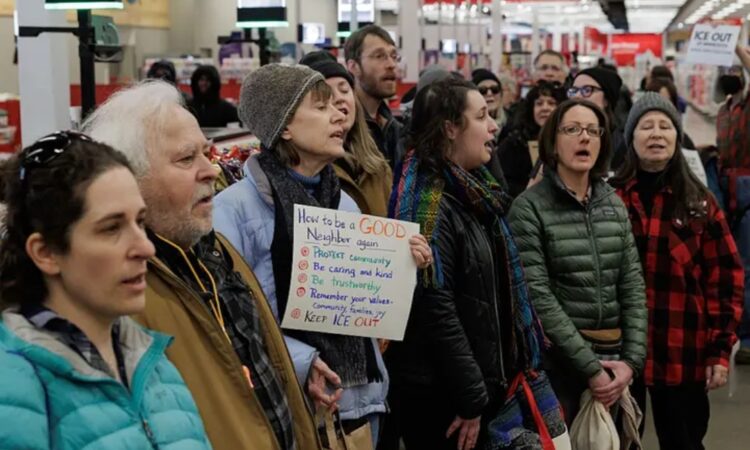
After Alex Pretti was killed on January 24, hundreds of people gathered near the site of his death to protest. During one interview, an older white woman said she could not believe the government would do such terrible things to its own people. She compared what she was seeing to Nazi Germany or modern-day Russia. Her words reflected genuine horror, but also a deep misunderstanding of American history.
Reactions like hers are common at protests, town halls, and community meetings across the country. Many white Americans, and even some Black and brown Americans, have never fully confronted the reality of what this country has always been capable of. The United States was built on genocide against Indigenous peoples, slavery, segregation, racial terror, political repression, and the violent policing of anyone seen as a threat to the social order. From Jim Crow and the Black Codes to the Red Scare, mass incarceration, the War on Drugs, and the persecution of LGBTQ people, state violence has always been part of the system.
Language reveals a lot about who people think deserves protection. When protesters say that “good people,” “regular people,” or “citizens” should not be treated this way, they often mean white, middle-class people like themselves. The outrage grows louder when the victims look familiar, respectable, and safe in the public imagination.
Historian Robin D.G. Kelley has pointed out why the deaths of people like Renee Good and Alex Pretti have shaken so many white Americans. Good was a white woman and a mother, two identities that society typically treats as deserving care and protection. When someone like that is killed by the state, it breaks an unspoken rule many white Americans believed still existed. But focusing on innocence or respectability misses the larger point. No one, regardless of their background, behavior, or legal status, deserves to be brutalized or killed by the government. Justice cannot depend on whether someone is seen as “good enough” to deserve it.
For Black, brown, and other marginalized communities, this sudden awakening among white Americans can be exhausting. What feels new and unbelievable to some has been an everyday reality for others for generations. Still, history offers important lessons.
Leaders of the Civil Rights Movement understood that images of white people being beaten or arrested by the state would provoke a reaction from white moderates and powerful elites in a way that Black suffering alone often did not. Black pain had long been ignored, normalized, or justified. White pain, especially when inflicted by government authorities, was harder to dismiss. This strategy helped force change, not because white lives were more valuable, but because the system was built to respond when whiteness itself felt threatened.
Today, we are seeing something similar. Images of white Americans being harmed by law enforcement are shifting public opinion. Polls taken after the deaths of Good and Pretti show growing opposition to Trump’s immigration policies. Nearly half of Americans now support abolishing ICE, and even some Republicans are calling for major reforms or strict oversight.
But awareness alone is not enough. Real change will require many white Americans to move beyond symbolic gestures and comfortable allyship. It means taking real risks: showing up to protests, protecting vulnerable neighbors, offering shelter and resources, and standing between armed agents and the people they target. It means being willing to face consequences, just as people in Minneapolis and other cities have done.
The fight for a truly multiracial democracy has always depended on ordinary white people who are willing to challenge power rather than benefit quietly from it. If the older woman who spoke on television truly loves this country, then this moment demands something deeper from her and others like her. The America she thought existed — fair, just, and protective of its people — was never equally real for everyone.
What is happening now to people who look like her has long been normal for communities of color. The choice before all Americans is whether to deny that truth or finally accept it and act together. This is a moment for solidarity, honesty, and courage.
A white Freedom Rider once said he joined the Civil Rights Movement after asking himself a simple question: what kind of white person do I want to be? Even more importantly, what kind of human being do I want to be?
As authoritarianism continues to tighten its grip, that question is no longer theoretical. Every American, on both sides of the color line, will have to answer it.