Staggering evidence trove shows who put Donald Trump in the White House — and controls him still

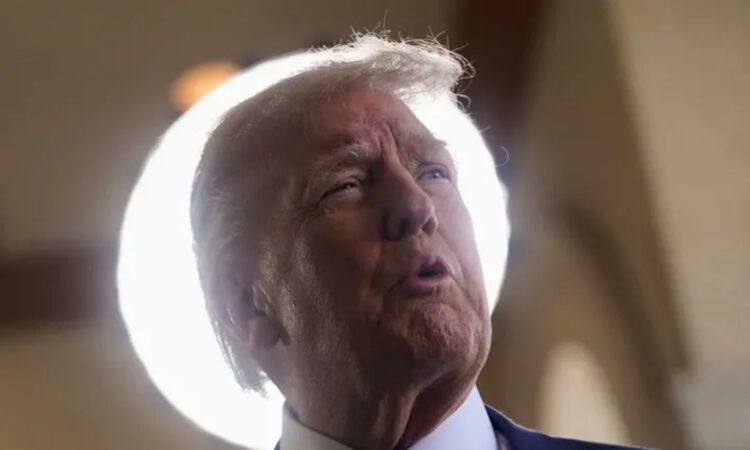
A long investigative report from the British newspaper the Daily Mail claims that Vladimir Putin has had leverage over Donald Trump for many years, possibly even before Trump first ran for president in 2016. The report is based on extensive research by multiple journalists and lays out a theory that Trump has been compromised through financial ties, intelligence pressure, and alleged involvement with Jeffrey Epstein.
According to the report, recently released Epstein documents repeatedly mention Putin and Moscow. The journalists suggest that Epstein may have continued meeting powerful figures, including Putin, even after Epstein’s 2008 conviction. They argue that Epstein was not just a wealthy criminal acting alone, but may have been running a massive blackmail operation tied to Russian intelligence. The idea is that Epstein lured rich and influential men to his homes in New York, Palm Beach, and on his private island, where they were secretly filmed having sex with underage girls. Those recordings could then be used as leverage.
The claim is that Epstein provided this compromising material to Putin, who used it to pressure powerful people when needed. In exchange, Epstein allegedly received large amounts of dirty Russian money to launder in the United States. This money is believed to have come from crime, corrupt oil deals, sanctions evasion, and Russian oligarchs close to Putin. Real estate is a common way to clean this kind of money, and the U.S. has very loose rules compared to other wealthy countries, making it an easy target.
The report ties this directly to Trump’s business history. After multiple bankruptcies, Trump was largely shut out by American and European banks. Around that time, money from Russian sources began flowing into Trump-branded real estate. Trump’s sons publicly acknowledged this years ago. Donald Trump Jr. said Russians made up a large share of their high-end buyers, and Eric Trump later told a friend that the company did not rely on U.S. banks and instead had plenty of funding from Russia.
Because of these concerns, Senator Ron Wyden has pushed for access to Epstein’s financial records and introduced legislation to force the Treasury Department to release them. Republicans have blocked those efforts so far.
The newly released Epstein documents also reportedly show email exchanges between Epstein and European officials close to Putin. In some messages, Epstein claimed he could help the Kremlin understand Trump better ahead of major meetings, including the 2018 Helsinki summit. He suggested that Russian officials “understood Trump” after conversations involving Epstein. He also appeared to act as a go-between, keeping Trump allies informed about meetings between Putin and other foreign figures.
Epstein died in jail under suspicious circumstances while Trump was president, before he could testify further. His associate, Ghislaine Maxwell, is now serving her sentence in a relatively low-security facility. Many people, including some Republicans at the time, openly questioned the official story of Epstein’s death, noting that he died just as he was reportedly beginning to cooperate.
The report asks how Trump’s behavior might make sense if he believed Putin held damaging material over him. It points to Trump’s repeated praise of Putin, his dismissal of U.S. intelligence agencies in favor of Putin’s word, his hostility toward NATO, his weakening of alliances, and his handling of classified information. It raises questions about whether Trump’s actions toward Ukraine, the United Nations, and U.S. foreign aid served American interests or Russia’s.
During Trump’s first term, it was reported that he had numerous private phone calls with Putin, including one shortly before the 2020 election. Investigations later identified hundreds of contacts between people connected to Russia and members of Trump’s campaign or transition team before the 2016 election.
Trump’s campaign manager, Paul Manafort, had previously been paid tens of millions of dollars by pro-Putin interests to help install a Russia-friendly president in Ukraine. Manafort later admitted to sharing internal Trump campaign polling and strategy with a Russian-linked operative during the 2016 race. Trump eventually pardoned Manafort, allowing him to avoid further prison time.
Investigators concluded that Manafort posed a serious counterintelligence threat. Despite this, Trump repeatedly attacked the investigation into Russian interference and took steps that the Mueller Report described as attempts to obstruct justice. These included trying to fire investigators, pressuring officials to limit the investigation, and dangling pardons in front of potential witnesses.
U.S. intelligence agencies were reportedly alarmed by Trump’s handling of sensitive information. He revealed highly classified intelligence to Russian officials in the Oval Office, exposing a key Israeli spy. Fearing further damage, the CIA later pulled one of its most valuable sources out of Russia, a source who had direct access to Putin’s inner circle.
Trump also held a private meeting with Putin in Helsinki in 2018, during which no detailed American records were kept and translators’ notes were reportedly destroyed. Intelligence officials later said the CIA was in panic mode because they had no idea what was discussed.
Shortly after that meeting, Senator Rand Paul personally delivered a package from Trump to Putin in Moscow. The contents of that package have never been disclosed. Around the same time, intelligence officials noticed that U.S. sources inside Russia were suddenly going silent.
Trump later made additional private calls to Putin and other foreign leaders. One such call led a U.S. intelligence whistleblower to file a complaint, saying Trump had made promises so troubling that they triggered an urgent national security response.
After Trump left office, the CIA admitted it had lost dozens of foreign informants who had been captured, killed, or compromised. Some observers questioned whether Trump’s handling of classified material played a role.
Even now, Trump continues to speak publicly about his relationship with Putin, including claiming he asked Putin to pause attacks on Ukraine. Putin ignored the request, reinforcing the imbalance in their relationship.
Taken together, the report argues this is not about political disagreement or bad judgment. It paints a picture of a president who may have been operating under fear, pressure, or blackmail, possibly tied to Epstein and Russian intelligence. The authors argue that if even part of this is true, it represents a historic failure of U.S. counterintelligence and a serious threat to democracy.
They conclude by urging Americans to demand real investigations and accountability, warning that ignoring the issue risks normalizing a presidency that can be bought, coerced, or used by a foreign power against the country itself.