
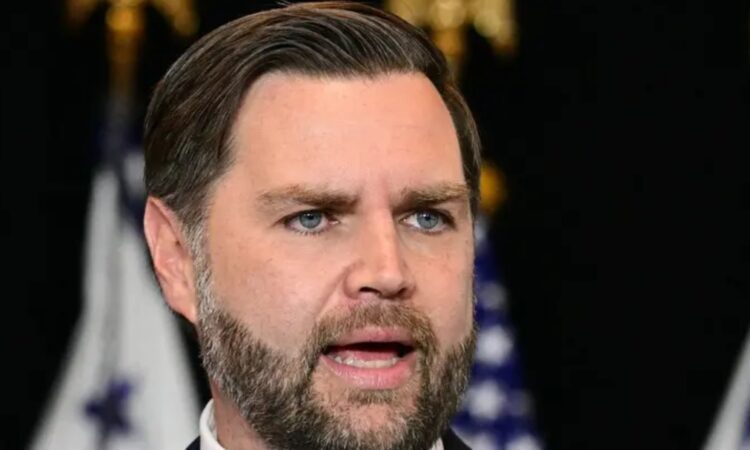
The vice president recently criticized the news media during an interview with Megyn Kelly, and experts say his comments fit a long-running pattern of attacking journalists to turn the public against them.
In the interview, Vice President JD Vance said he believes the media is one of the least trusted institutions in the country. He argued that journalists are biased, constantly angry, and fake, and claimed that this is why people do not trust them.
He said that reporters would be more likable and trusted if they showed a wider range of emotions instead of acting upset all the time. According to Vance, no one is angry nonstop, and when journalists seem that way, it comes across as dishonest.
Vance and Kelly focused much of their discussion on reporters who cover the White House. Vance brought up a recent moment when President Trump clashed with CNN reporter Kaitlan Collins. Collins had asked Trump about the release of new Jeffrey Epstein files and pointed out that survivors were upset that justice still has not been served.
Trump responded by criticizing Collins for not smiling. Vance praised Trump’s response and suggested that journalists are unnecessarily confrontational, even when asking tough questions. He said reporters should loosen up, have more fun, and not take themselves so seriously, arguing that the Washington press corps is overly intense.
This kind of hostility toward the media is nothing new for Trump or his administration. Trump has long used the phrase “fake news” to attack journalists, and Vance frequently does the same. Experts say Vance’s latest comments are another example of the administration trying to weaken public trust in the press.
Heather Hendershot, a historian and journalism professor at Northwestern University, says low trust in the media is not the real issue for the Trump administration. She argues that the deeper problem, from their perspective, is public resistance to the administration’s authoritarian goals.
She noted that no president has ever been happy with media coverage, but Richard Nixon was the first to aggressively target journalists by cutting funding to public broadcasting, spying on reporters, using tax audits to intimidate them, and threatening TV stations. According to Hendershot, the Trump administration has gone even further and has been more successful in damaging major news organizations and public trust.
Hendershot says Vance’s focus on distrust in the media is meant to distract from criticism of the administration itself. By blaming journalists, Trump and Vance shift attention away from their actions. She explains that stirring anger toward the press helps energize their political base. Whether the media deserves trust or not is almost irrelevant if the goal is to build support through shared resentment of journalism.
Bryan Adamson, a law professor who specializes in the First Amendment, agrees that this strategy is about shaping public opinion. He says attacking the media is a way to weaken trust in established institutions and push people to rely instead on the president and friendly media outlets.
According to Adamson, the administration repeatedly labels journalism as “fake news,” even without evidence. Over time, supporters echo the claim, public trust declines, and then leaders point to that decline as proof that the media is untrustworthy, even though they helped cause it.
Hendershot also says Vance’s complaint that journalists are too serious shows that he does not understand or value what journalism is supposed to do. In a healthy democracy, reporters act as watchdogs. They uncover wrongdoing, expose cover-ups, highlight injustice, and hold powerful people accountable. That work is serious by nature, and it would be strange to approach it casually.
She also criticized Vance and Kelly’s reaction to Trump telling Kaitlan Collins to smile. Hendershot said the comment was sexist and especially inappropriate given the subject Collins was covering. The Epstein case involves serious abuse allegations and victims who are still waiting for justice, and treating that topic lightly is irresponsible.
Hendershot believes the interview may have been an attempt to improve the administration’s image at a time when Trump’s approval ratings are low and many people see him as increasingly authoritarian.
She said Republicans are often portrayed as undermining democracy or dismissing the importance of issues like the Epstein files, and Vance’s message seemed to suggest that the real problem is not those actions but journalists who need to relax.
She also noted that Vance appeared calm, friendly, and smiling during the interview, likely trying to seem more approachable and less threatening.
Les Rose, a journalism professor at Syracuse University and former CBS News staffer, stressed that journalism is protected by the First Amendment because of how vital it is to democracy.
He said searching for the truth should not be confused with anger. Asking hard questions is not hostility, and challenging those in power is not emotional or self-centered. These are essential responsibilities of a free press.
Overall, experts say Vance’s comments show a lack of respect for the role journalism plays in society. While his remarks may sound casual or humorous on the surface, they reflect a deeper disregard for the media’s duty to hold leaders accountable.
According to Hendershot, this attitude is a clear sign of a larger political crisis and a warning that American democracy is not in a healthy state.