Donald Trump ally’s 2028 dreams in chaos as MAGA infights on thorny issue: ‘He can’t say a word’

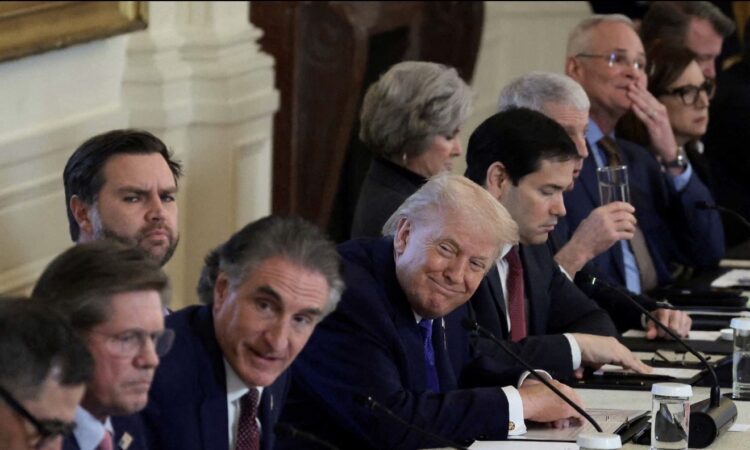
Republicans are heading toward a major internal fight as the 2028 election approaches, and the issue driving it is artificial intelligence. The disagreement is already exposing deep divisions inside the party and placing Vice President JD Vance in a difficult position, caught between very different views within the GOP on how AI should be handled.
Among MAGA voters and conservative leaders, there is no clear agreement on whether artificial intelligence should be embraced or feared. Some see it as a powerful tool for innovation and economic growth, while others believe it threatens jobs, personal freedom, and even human values.
That uncertainty makes it hard to predict where the Republican Party will land by 2028, especially after Donald Trump, who has largely opposed regulating tech companies and AI, is no longer on the ballot. A report from Politico Magazine says the party has yet to answer a basic question: what does the GOP stand for on AI once Trump is no longer setting the tone?
One Republican who has been vocal about his concerns is Josh Hawley. While he has often supported Trump, he has also broken ranks on major issues, particularly when it comes to big tech. Hawley has warned that the rise of artificial intelligence is not neutral or harmless.
In a speech last September, he argued that AI is being developed in a way that benefits wealthy elites while hurting working-class Americans. He said it threatens personal freedom, human dignity, and traditional American values, and warned that if this continues, AI could actively weaken the country.
At the same time, JD Vance and Marco Rubio are widely seen as potential front-runners to lead the Republican Party into the post-Trump era. Trump himself gave them a kind of soft endorsement in 2025, which raised expectations that one of them could carry the party’s banner in 2028. But the growing divide over AI makes that path far more complicated.
Politico points out that artificial intelligence could expose the cracks inside the coalition Trump built. On one side are blue-collar voters who worry about losing jobs and economic security to automation. On the other are business-friendly conservatives and tech-aligned donors who see AI as essential to staying competitive.
At the same time, social conservatives and religious voters are increasingly uneasy about the moral and cultural implications of AI, while a newer, more aggressive tech wing inside the GOP wants fewer limits and faster development.
That clash puts Trump-aligned candidates in an especially awkward spot. The current White House approach to AI is far more relaxed than what many populist conservatives want. Influencers and voters on the right who are skeptical of big tech feel ignored, and that tension is only expected to grow over the next few years.
For Vance in particular, this creates a political trap. He has closely aligned himself with Trump’s policies and messaging, which makes it risky for him to openly criticize the administration’s AI stance. According to a former Trump administration official who spoke anonymously, Vance’s hands are tied.
He can’t publicly take a strong position without upsetting powerful interests inside the party. Meanwhile, Hawley has the freedom to spend the next several years loudly attacking AI and positioning himself as a champion of working-class and populist concerns.
As 2028 gets closer, the Republican Party will have to decide whether it wants to fully embrace artificial intelligence, push back against it, or try to walk a careful middle line. That choice could shape not only the party’s platform, but also which candidates rise and which ones struggle in a post-Trump GOP.