
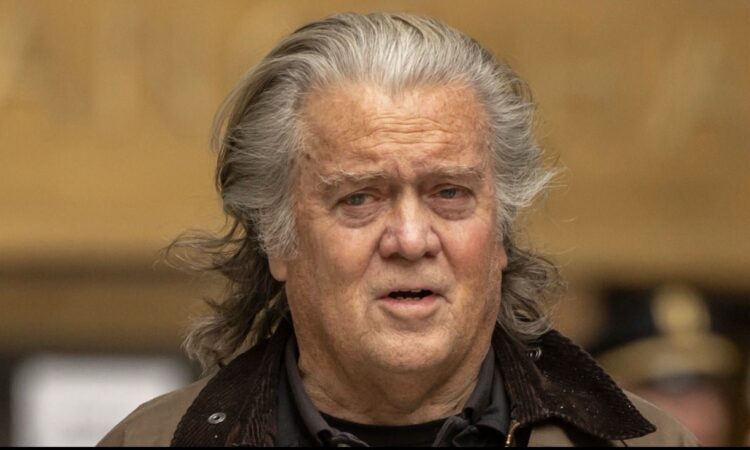
A wave of anger has broken out on the right after renewed attention was drawn to Steve Bannon and his past relationship with convicted sex offender Jeffrey Epstein. Bannon’s name appears in newly released Epstein-related documents, and as those details spread, many of his longtime allies suddenly seem eager to distance themselves from him.
Over Sunday and Monday, several high-profile conservative figures turned to social media to openly attack Bannon for his ties to Epstein, even though those ties have been publicly known for years. What’s different now is the timing. Recently released documents from the Department of Justice revealed that Bannon and Epstein had worked together on a planned documentary. According to reporting by the BBC, Bannon wrote to Epstein that the project would help “push back on the lies” about him and attempt to rebuild Epstein’s image as a so-called philanthropist.
The documentary never came out. Epstein’s death in 2019 effectively ended the project, and according to Trump biographer Michael Wolff, the whereabouts of roughly 17 hours of interview footage remains unknown. Despite this information being available for years, many conservative media figures had largely ignored it — until now.
That silence has suddenly broken. Big names on the right are now publicly criticizing Bannon, and some of the attacks are unusually blunt. Roger Stone, a longtime Republican operative known for political dirty tricks, went after Bannon in a pair of social media posts. In the first, Stone praised Elon Musk for previously criticizing Bannon, though he didn’t go into detail. Musk had earlier called Bannon a “fat drunken slob” and suggested he belonged in prison.
Stone followed up with a much harsher post the next day, calling Bannon “Stinky Steve” and accusing him of being deeply involved with Epstein and advising him on how to lie his way out of his criminal past. The language was crude, but the message was clear: Stone wanted no ambiguity about where he stood.
These attacks came at a sensitive moment for Bannon. Around the same time, Jeanine Pirro, now serving as a U.S. attorney, announced plans related to helping Bannon deal with records tied to his conviction for defying a subpoena from the January 6 Committee. That only intensified scrutiny and made the renewed criticism feel less accidental.
Conservative filmmaker Dinesh D’Souza, best known for the widely debunked conspiracy film 2000 Mules, also joined in. He mocked what he described as Bannon’s hypocrisy, pointing out the contradiction between Bannon’s populist branding and his cozy relationship with wealthy elites like Epstein.
Musk added fuel to the fire by sharing a post highlighting the connections between Epstein, Bannon, and Donald Trump, noting that Epstein had once been a close friend and neighbor of Trump. Musk simply captioned the post with two words: “Bannon is evil.”
From conservative media, Mark Levin weighed in as well. Levin said it was “funny” that many of Bannon’s ideological allies had demanded transparency from others while refusing to demand that Bannon explain his own well-documented, videotaped relationship with Epstein.
Right-wing talk show host Erick Erickson also criticized Bannon, saying his close ties to Epstein and to figures linked to the Chinese Communist Party should make people seriously question why conservative influencers continue appearing on Bannon’s program.
Others on the right went even further, accusing fellow conservatives of staying silent because they benefit financially or socially from Bannon’s influence. Some openly called those figures cowards, arguing that moral outrage seems to depend on who is paying whom. Another critic described Bannon as one of the sleaziest figures in modern politics and urged people to look beyond Epstein to Bannon’s other controversial relationships, including dealings with CCP-linked figures like Miles Guo.
What’s striking is not just the volume of criticism, but how long it took to arrive. Bannon’s relationship with Epstein has been known for years, yet many conservative voices only found their outrage once internal alliances began to fracture. For critics, this moment has exposed what they see as a larger problem on the right: selective accountability, personal loyalty over principle, and an influencer ecosystem that stays quiet until silence becomes inconvenient.
As more details resurface and former allies turn on each other, Bannon is finding himself increasingly isolated not because the facts are new, but because the political winds have finally shifted.