
‘The President Is Insane’: Donald Trump Mocked After New Meltdown On An Unexpected Topic

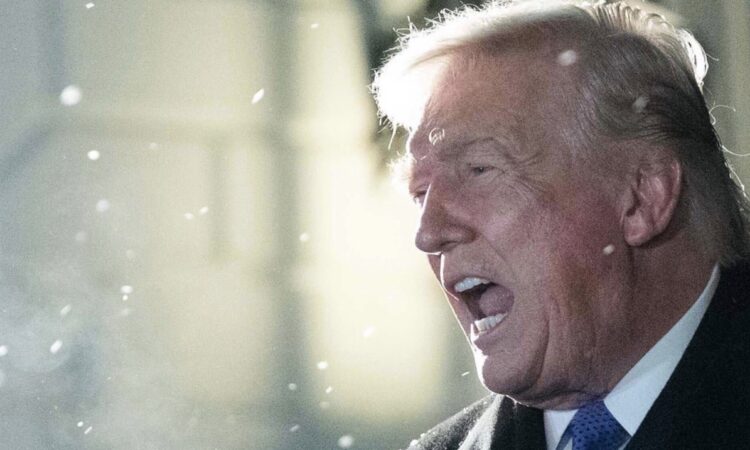
Critics are once again questioning President Donald Trump after he posted a long and unusual message online that mixed trade threats, China, and even hockey into one rambling statement.
On Monday, Trump shared a 296-word post on Truth Social where he complained that Canada has treated the United States unfairly. He then threatened to keep a major new international bridge closed unless Canada gives the U.S. at least half ownership of it. The bridge he was referring to is the Gordie Howe International Bridge, which stretches across the Detroit River and connects Detroit, Michigan to Windsor, Ontario. Canada paid for the bridge, and it is meant to help trade and travel between the two countries.
But instead of focusing only on trade or the bridge, Trump suddenly shifted the topic to China. He criticized Canada for improving its trade relationship with China, especially after a recent agreement to lower tariffs on certain goods like canola and electric vehicles. Then his message took an even stranger turn.
Trump claimed that if Canada gets too close to China, the first thing China would do is end all ice hockey in Canada and permanently eliminate the Stanley Cup. The Stanley Cup is the championship trophy awarded each year to the winning team in the National Hockey League. Hockey is not just a sport in Canada — it is a huge part of the country’s culture and identity. Many Canadians grow up playing it, watching it, and celebrating it. Even though most NHL teams are based in the United States, the Stanley Cup still carries deep emotional meaning in Canada.
What confused many people is that Trump did not explain how China could possibly force Canada to stop playing hockey or cancel the Stanley Cup. There is no clear connection between trade deals and the ability to play a national sport. This is not the first time Trump has made this claim. He mentioned something similar last month, but again, he did not explain how that would actually happen.
Because of this, many of his critics reacted with disbelief. Some openly mocked the statement online, saying it made no sense. Others said it was worrying that the president would jump from serious trade issues to dramatic warnings about hockey without offering any clear reasoning.
The message also comes at a time when relations between the United States and Canada have already been tense. Trump has previously threatened tariffs on Canadian goods and even made comments suggesting Canada should become the 51st U.S. state. His latest post added more pressure to an already strained relationship between the two neighboring countries.
Supporters of Trump say this is simply his style. They argue that he often uses bold or exaggerated language as a negotiating tactic. They believe he is trying to show strength and put pressure on other countries during trade discussions. But critics say there is a difference between tough negotiation and making claims that sound unrealistic or disconnected from reality.
For many observers, the biggest issue is not just the threat itself, but the tone and direction of the message. Mixing trade disputes, bridge ownership demands, China, and hockey into one sweeping late-night post makes it hard to understand what the actual policy goal is. It also keeps attention focused on Trump’s social media behavior rather than on concrete economic discussions.
Whether people see it as strategic exaggeration or something more concerning, the post has once again sparked debate about Trump’s judgment, his communication style, and the way he handles international issues in public.




We are the laughing stock of the world. The man is clearly psychotic.
Aren’t these all signs of mental confusion that are bringing him closer and closer to the madhouse?
The reason the post is so unhinged is that there is no real issue that he wants to address other than a billionaire buddy who stands to lose money if the bridge is opened has bribed him with something to try to prevent its opening. He can’t come right out and state that his rich buddy has promised him a Lear jet or something to keep it from opening so he makes out these bizarre unconnected things to disguise his real motive.but with trymo everything is transactional you just need to look a little bit to find what he hopes to get
What drug you think they’ll have him on to keep him awake and somewhat focused during the State of the Union address. I hope the night before he stays up all night rage posting. I normally wouldn’t watch any of his spews, but I’m assuming he’s going to run off the rails and hoping he never gets back on any rational topic.
I hope the sycophants in his circle to put country first and initiate the 25th Amendment. This is a total mockery of our presidential history of respect. He is truly a mental case now.