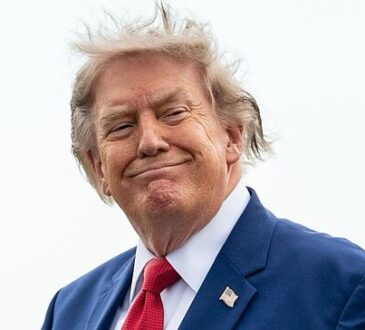

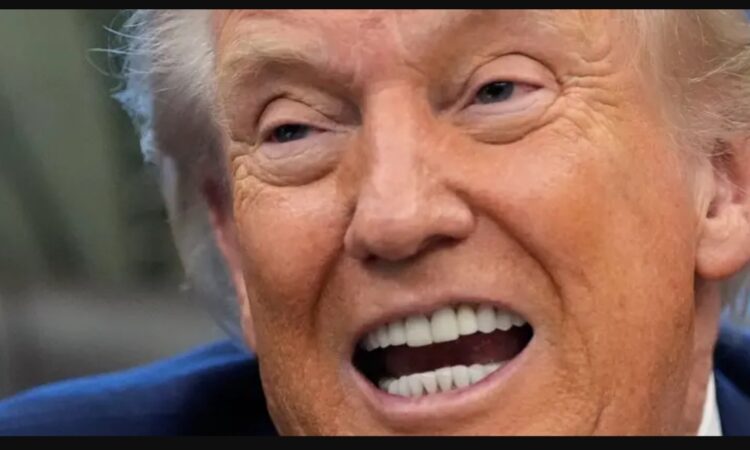
Donald Trump is shown speaking to reporters in the Oval Office after signing a spending bill that ended a partial government shutdown on February 3, 2026, at the White House in Washington.
The article compares Trump to the Roman emperor Caligula, who, according to legend, once ordered his soldiers to declare war on the sea. The writer uses this story to suggest that just as Caligula’s actions made people question his judgment, Trump’s recent environmental decision raises concerns about his leadership.
The focus of the criticism is the Trump administration’s reported plan to roll back a major 2009 scientific finding that greenhouse gases endanger public health and welfare. According to reporting from The Wall Street Journal, the administration is moving to undo what is known as the EPA’s “endangerment finding.” This finding has been the legal foundation that allows the Environmental Protection Agency to regulate greenhouse gas emissions under the Clean Air Act.
The writer argues that removing this finding would weaken the government’s ability to regulate large polluting industries, many of which are major political donors. The article portrays the move as short-sighted, saying it prioritizes immediate political or economic gains over long-term public health and environmental stability.
The comparison to Caligula continues by suggesting that while the Roman emperor’s symbolic war against the sea did not cause real harm, changing environmental policy could have serious consequences. The concern raised is that weakening air pollution standards could lead to more smog, dirtier air, and increased health problems, especially for working families who may not have the resources to deal with rising medical costs.
The article also notes that in the 2007 Supreme Court case Massachusetts v. EPA, the Court ruled that greenhouse gases qualify as pollutants under the Clean Air Act. The Court recognized that allowing such pollutants to build up in the atmosphere could cause real harm to people’s health and property. The writer argues that Trump’s decision would go against this legal precedent as well as the scientific consensus on climate change.
According to the piece, air pollution from fossil fuels continues to impose major health and economic costs in the United States. It claims that efforts to regulate emissions over the past several decades have prevented hundreds of thousands of early deaths and generated trillions of dollars in economic benefits by reducing illness and missed work. The article emphasizes that environmental regulation has not only protected public health but also delivered strong economic returns.
The author further criticizes Trump for reportedly directing the EPA to stop calculating the number of lives saved and dollars gained from pollution control. The suggestion is that without those figures, it becomes easier to justify cutting regulations. The article also connects environmental policy to health care affordability, noting that many Americans already struggle with rising medical costs, especially after changes to subsidies under the Affordable Care Act.
Citing data from the Kaiser Family Foundation, the article says many Americans report difficulty affording health care and are delaying or skipping treatment due to cost. It argues that weakening air quality protections could make these financial pressures worse by increasing pollution-related illnesses.
The writer claims that voters increasingly see environmental issues as economic issues that affect their daily lives. Polling mentioned in the article suggests that many Americans connect climate policy decisions to rising prices and personal financial strain. This, the author argues, could become a political challenge for Republicans in upcoming elections.
The piece concludes by returning to the Caligula comparison. While Caligula never truly conquered the sea, the writer warns that modern policy changes could have lasting and damaging effects on air quality. The article frames the environmental rollback as a major political and public health gamble, with consequences that ordinary Americans may feel directly in the years ahead.