Doctor reveals the frightening words patients hear in the moments after their body dies while the brain hangs on

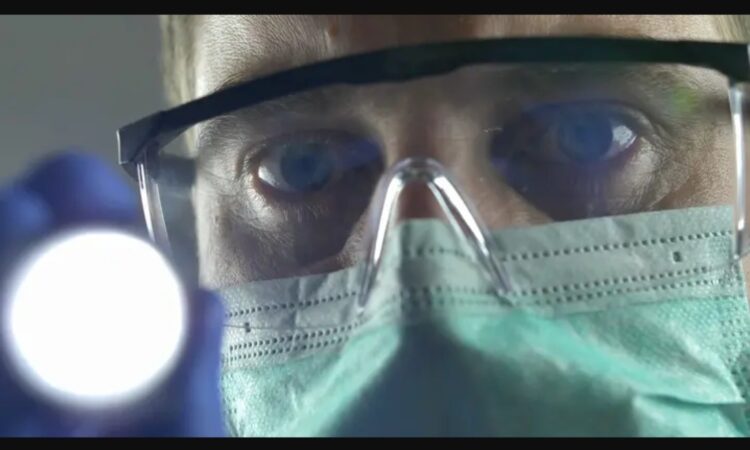
A doctor once used a small flashlight to check a patient’s eyes, trying to understand how their brain was functioning. For a long time, people believed that when the heart stops, the brain quickly shuts down too. But new research suggests the story may not be that simple.
Some patients have shown surprisingly strong brain activity even after their hearts stopped beating. In some cases, people who were brought back to life later said they were aware of what was happening around them while doctors were trying to revive them. It challenges the idea that death is an instant, silent blackout.
A primary care doctor in New York, Sam Parnia from NYU Langone Medical Center, explored this mystery in a study published in the medical journal Resuscitation. He spoke with patients who had been declared clinically dead meaning their hearts had stopped but were later revived.
Many of them described being fully aware during that time. Some even remembered specific conversations or actions that took place in the hospital room while doctors were working on them.
Dr. Parnia explained that their memories may have been so clear because their brains were still showing normal or near-normal activity during CPR. In some cases, this activity continued for up to an hour after the heart had stopped.
That finding surprised many people in the medical field, since doctors have long believed that the brain begins to suffer permanent damage about ten minutes after losing oxygen.
In the study, researchers looked at 53 patients who survived cardiac arrest across 25 hospitals in the United States and the United Kingdom. About 40% of those patients said they had some kind of memory, thoughts, or awareness during the time they were considered dead.
Some described feeling as if they had left their bodies but were still in the hospital room, observing everything happening around them. They said they felt completely conscious. Brain scans taken during resuscitation showed spikes in different types of brain waves linked to thinking, awareness, and higher mental function.
These waves including gamma, delta, theta, alpha, and beta were recorded between 35 and 60 minutes after the heart had stopped.
From this, Dr. Parnia concluded that the brain is more resilient than previously thought. Instead of shutting down immediately, it may go through a brief surge of organized electrical activity. He compared it to a computer that seems to have shut off but suddenly reboots.
This surge could explain why some people report hearing doctors declare their time of death, or why they remember detailed sounds and conversations from the room. It may also explain the common experience of a “life review,” where people feel as if their entire life flashes before their eyes.
According to Dr. Parnia, as blood flow to the brain decreases, certain control systems in the brain stop working. Without those “brakes,” the mind may gain sudden access to memories, emotions, and experiences all at once.
Beyond satisfying curiosity about near-death experiences, this research could have real medical value.
Understanding how the brain behaves during cardiac arrest might help doctors improve CPR techniques, protect the brain during emergencies, and better treat injuries caused by lack of oxygen.
The findings suggest that death may not be as immediate or as simple as once believed — and that, in some cases, awareness may linger longer than we ever imagined.