Will American Companies Get Tariff Refunds After the Supreme Court Strikes Down Trump’s Tariffs? What We Know So Far

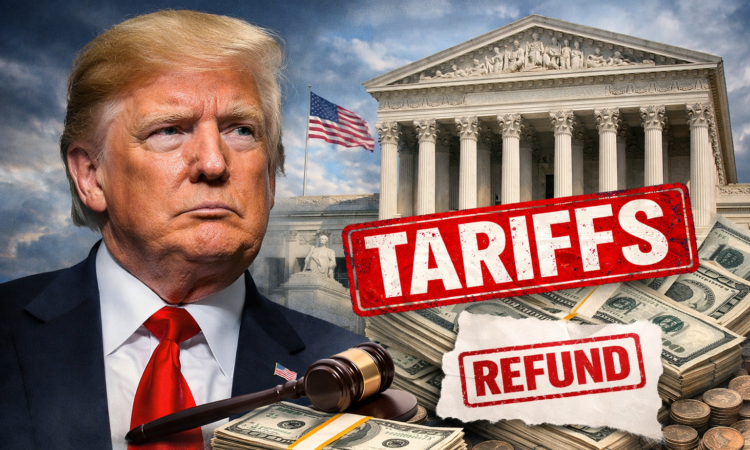
Small businesses say they cannot afford to wait years for relief after the Supreme Court struck down most of President Donald Trump’s tariffs. While the court ruled that the president did not have the authority to use a certain emergency law to impose many of those tariffs, it did not clearly explain what should happen to the billions of dollars that companies have already paid.
That has left one major question hanging in the air: will businesses get their money back?
The Supreme Court decided that Trump could no longer use the International Emergency Economic Powers Act to place broad tariffs on many trading partners. However, some industry-specific tariffs are still in place. Now companies, investors, and even everyday shoppers are wondering what will happen to the huge sums of money that were collected under the tariffs that were ruled unlawful. If refunds happen, who will receive them? And how will the process work?
Because the Supreme Court did not give clear instructions about refunds, the issue will likely move to lower courts and government agencies, especially U.S. Customs and Border Protection. Legal experts say refunds will probably not be automatic. Instead, businesses may have to apply, file claims, and go through formal procedures. Some companies may even give up because the process could be too complicated or expensive.
Analysts estimate that around $170 billion may have been collected under the tariffs in question. However, experts believe it is unlikely that all of that money will be refunded. Other economists have suggested the total refunds could fall somewhere between $100 billion and $130 billion. No one knows the exact amount yet.
One key detail is that the Supreme Court’s majority opinion did not mention refunds at all. That silence is now creating uncertainty. Without clear direction from the top court, the refund process could become confusing and slow. Some analysts predict that sorting everything out could take months and turn into a legal and bureaucratic headache.
Even Justice Brett Kavanaugh, who disagreed with the majority decision, warned that the refund situation could become a “mess.” Legal experts say he was frustrated that the court did not address the refund issue directly. They also point out that winning a case in court does not automatically mean businesses will easily get their money back.
Large corporations may have an advantage because they usually have strong legal teams and detailed records of the tariffs they paid. Many big importers carefully tracked their payments using official tariff codes. Smaller businesses, on the other hand, may struggle. Many depend on customs brokers and do not have full legal departments. They may not have the time or money to fight for refunds through complicated legal channels.
Some companies already filed protective lawsuits in the U.S. Court of International Trade, which may give them a clearer path to refunds through a court-ordered process. But most businesses did not do that. Those companies may now face a patchwork of different options, and not all of them may lead to success.
Experts also say the scale of the money involved is enormous larger than anything Customs and Border Protection has processed in refunds before. That alone could slow things down significantly. Lawyers are advising importers to act quickly, review their records, and protect their claims before deadlines pass.
The Court of International Trade is expected to play a major role in organizing how refunds are handled. There is currently a pause on refund lawsuits at that court, but experts expect it to be lifted soon so the process can move forward in a more coordinated way.
Meanwhile, business groups are increasing pressure on the White House. A coalition called We Pay The Tariffs, made up mostly of small businesses, says the trade war forced many companies to delay hiring and expansion plans. In a letter, the group urged the president and lawmakers to issue automatic refunds instead of forcing businesses into long legal battles. They say the extra money could help them pay off debt and restart growth.
The group also pointed out that small businesses do not have the same resources as large corporations. They cannot afford expensive lawyers or months of paperwork just to recover money that, in their view, should never have been collected in the first place. They made it clear that waiting years for relief is simply not an option for many of them.
Some legal experts argue that the law is straightforward. If the tariffs were collected without proper authority, then the government must return the money. They believe that everyone who paid those duties is legally entitled to a refund because the money was not lawfully collected.
At the same time, the court’s decision does not prevent Trump from using other trade laws to impose new tariffs in the future. That means uncertainty remains, even as businesses push for refunds.