Economist calls out Trump while dropping stark warning about US dollar: ‘Will happen soon’

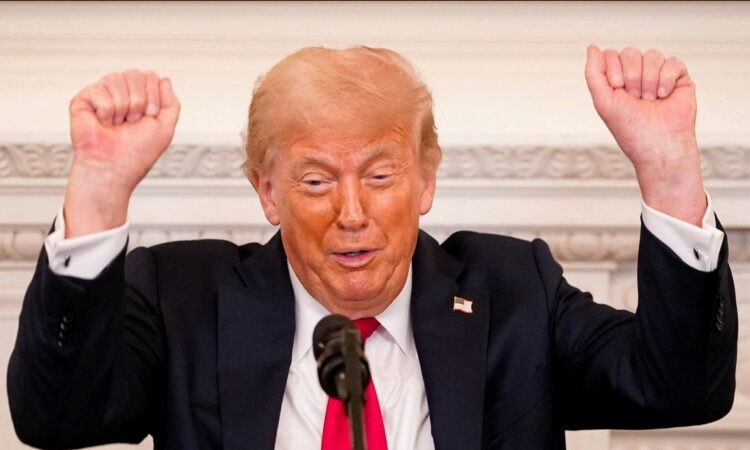
Economist and financial commentator Peter Schiff said on Sunday that Donald Trump was wrong to claim he could “destroy the economy of any foreign country” by using trade embargoes.
Schiff argued that this kind of statement misunderstands how the global economy really works and overestimates the power of the United States in today’s interconnected world.
Schiff has been warning for years about what he sees as deep problems in the American economy, especially rising living costs, growing national debt, and what he calls an affordability crisis. He believes many Americans are already struggling with high prices and weakened purchasing power. Because of that, he says policies that restrict trade could make things even worse at home.
Trump has publicly criticized Schiff before. In December, after Schiff appeared on Fox & Friends Weekend, Trump attacked him online, calling him a “Trump-hating loser” and questioning why the show had invited him on. Trump suggested Schiff had a history of being wrong in his economic predictions. Their disagreement reflects a larger debate between those who support aggressive trade tactics and those who warn about their consequences.
More recently, Schiff directly responded to Trump’s claim that the United States could crush any foreign economy by cutting off imports. Schiff said that if American consumers stop buying goods from a particular country, that country would not simply collapse.
Instead, its businesses would look for other markets around the world. There are many other countries with growing middle classes and strong demand for products. According to Schiff, global trade does not revolve around just one nation anymore.
He argued that the real harm would likely fall on American consumers and businesses. If imports were cut off, Americans would face fewer choices and higher prices. Many U.S. companies depend on foreign parts, materials, and products.
Cutting off access to those imports could raise production costs, disrupt supply chains, and lead to job losses. Schiff believes that instead of destroying foreign economies, such a move could seriously weaken the U.S. economy.
When someone pushed back by saying that no country has the same level of buying power as the United States, Schiff responded that this advantage may not last forever. He said that if the U.S. dollar falls in value while other countries’ currencies rise, America’s relative buying power would shrink.
In his view, a nation’s true strength comes from what it produces, not just what it consumes. He argues that many foreign countries have strong manufacturing and production bases, while the United States relies heavily on spending and borrowing.
Another person questioned why foreign companies have not already walked away from the American market if they supposedly have so many other buyers. Schiff answered that they likely will shift away over time, especially if the dollar weakens significantly. He suggested that once the dollar drops, it will make American consumers less attractive to foreign exporters, speeding up that transition.
In a separate post, Schiff warned that if a future administration were to use presidential authority to impose full embargoes meaning Americans would be blocked from buying imported goods from certain countries or even from all countries the impact could be severe.
He said such a move would likely be even more damaging than tariffs, which are taxes placed on imports. In his opinion, full trade bans would raise costs across the board, limit consumer choice, hurt businesses that rely on global supply chains, and slow economic growth.
Overall, Schiff’s message is that economic power is more complex than simply cutting off trade. He believes that in a global economy, trying to punish other countries through embargoes could backfire, harming American workers, businesses, and families more than the intended targets.