Donald Trump Caught Misleading Americans In Another False Claim During State of the Union

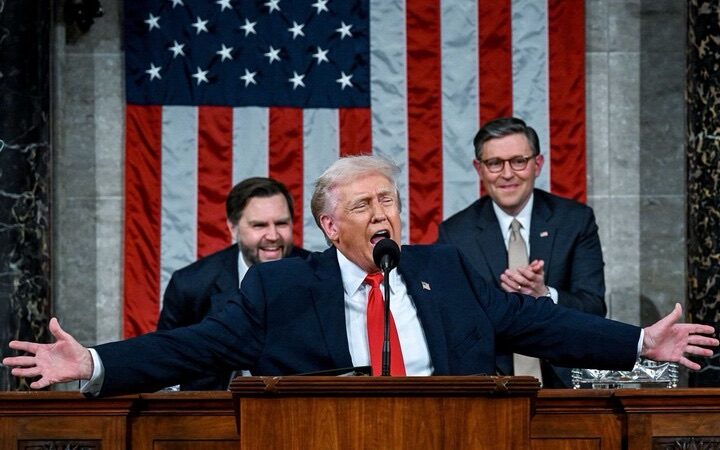
During his State of the Union speech on Tuesday, President Donald Trump told Americans that he had helped bring in $18 trillion in investments into the United States during his first year in office.
He spoke confidently about the number, saying companies and countries from around the world were putting huge amounts of money into America because of his leadership. While he was speaking, the official White House broadcast even showed the $18 trillion figure on the screen to support what he was saying.
But the next day, NBC News reported that the number did not match the information published by the Trump administration itself. According to the White House’s own website, the total amount of investment commitments was actually about $9.7 trillion far lower than the $18 trillion Trump claimed during the speech. That means the number he mentioned was higher by more than $8 trillion.
The report also explained that many of these investments were not brand-new deals. Some projects had already been planned before Trump returned to office. Others were investments companies were already expected to make, with only small increases added later. In simple terms, a large part of the money was already in motion and not something that suddenly appeared because of new policies.
Even the $9.7 trillion figure raised concerns among economists. Experts said the number itself could be misleading because not all of it represents real money being spent immediately in the U.S. economy. More than $2.5 trillion of the total, according to economic analysis, does not count as direct investment at all. Another big portion comes from general promises or pledges made by foreign government funds, many of which do not have clear timelines or firm guarantees.
A large share of the corporate investment plans is connected to future data centers, projects that usually take many years to build and can still change depending on business conditions. Investment announcements often sound impressive, but they are usually long-term plans rather than money arriving right away.
For example, one drug company, Fujifilm Biotechnologies, needed about five years just to open one factory in North Carolina. That example shows how these kinds of investment promises take time and do not immediately create jobs or economic growth.
The disagreement over the numbers quickly turned into a political debate. Critics said the president exaggerated the figures to make the economy look stronger than it really is. Supporters argued that long-term commitments still show confidence in the United States. In the end, the situation highlighted how economic claims made during major political speeches are often closely examined once the details are checked.