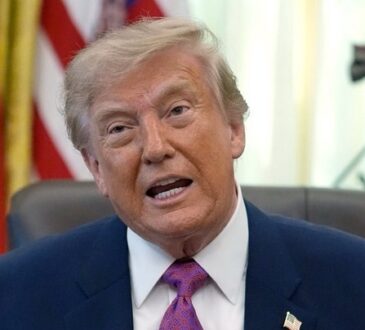

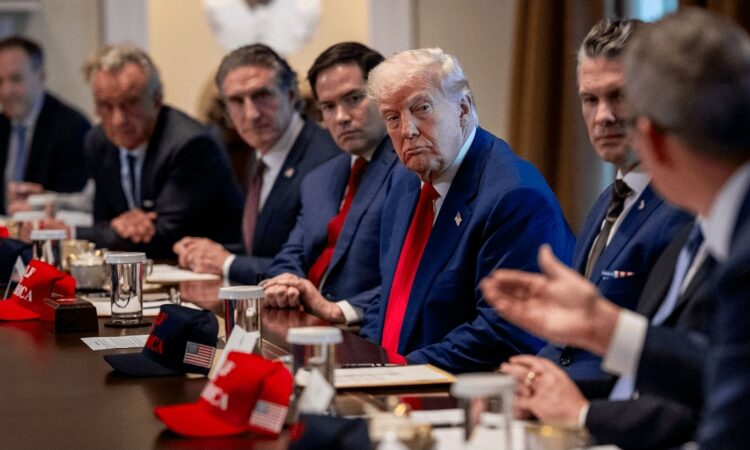
President Donald Trump held a Cabinet meeting on April 30, 2025, in the Cabinet Room at the White House.
If anyone still wondered whether Secretary of State is acting independently or simply carrying out President ’s wishes, his recent meeting with Hungarian Prime Minister in Budapest seemed to answer that question. During that visit, Rubio warmly praised Orbán and described the relationship between the United States and Hungary as entering a “golden age.” He pointed to Orbán’s close personal ties with Trump and openly supported Orbán’s campaign for a fifth term in office in the upcoming April election.
Orbán’s praise did not come without context. Over the 15 years he has been in power, many critics say he has steadily weakened Hungary’s democratic system. In 2022, lawmakers in the described Hungary as a “hybrid regime of electoral autocracy,” meaning that while elections still happen, democratic standards and protections have been seriously damaged. They argued that Hungary’s actions had pushed it away from the EU’s shared democratic values.
Critics point to a long list of changes under Orbán’s leadership. They say he has reduced the influence of opposition parties, passed tough anti-immigration laws, restricted media freedom, and placed limits on universities and other educational institutions. His government has also been accused of reshaping election rules in ways that favor his party, Fidesz, which holds a supermajority in parliament. In addition, he has weakened judicial independence by expanding the courts and forcing some senior judges into early retirement.
Some observers believe Orbán’s approach has served as a model for Trump. They argue that Trump has followed a similar path in challenging democratic norms and institutions in the United States.
Rubio’s public embrace of Orbán has disappointed many of his former supporters. They see it as a sharp break from his earlier positions. In the past, as a senator from Florida, Rubio criticized the decline of democracy in Hungary and even signed a letter expressing concern about how much it had eroded. Now, as Secretary of State, he speaks of Orbán as a strong leader who deserves to continue leading his country.
Rubio’s shift is also noticeable in his stance toward Russia. As a senator, he was known as a strong critic of Russian President , calling him harsh names and condemning his actions. Today, critics say Rubio has avoided directly blaming Putin for Russia’s invasion of Ukraine. Instead, he has aligned himself with Trump’s push to end the war quickly, even if that means making concessions that could favor Russia. Orbán, widely seen as Putin’s closest ally within the EU, has also benefited from this softer tone.
At one time, Rubio was widely viewed as a firm supporter of democracy at home. Now, his critics argue that he is helping Trump challenge and weaken long-standing democratic institutions in the United States, while also praising a European leader accused of doing the same in his own country.
As Secretary of State, Rubio serves at the president’s pleasure and can be dismissed at any time. Still, he chose to accept the role, fully aware of Trump’s priorities and governing style. Those who are critical of him believe he made a conscious decision to support Trump’s agenda, even if it meant setting aside his earlier beliefs. Some also speculate that Rubio’s loyalty could be part of a strategy to position himself for a future presidential run in 2028.
Rubio is not alone in this. Other Republican leaders, including , , , , and , are described by critics as loyal supporters who help carry out Trump’s plans. The argument is that without such allies willing to stand firmly behind him, Trump would struggle to implement his policies on multiple fronts.
More broadly, some see Rubio as representative of a larger trend within today’s Republican Party. They believe many Republican politicians have chosen to remain silent or supportive in order to protect their careers or advance politically, even if that means stepping away from positions they once defended.
According to this viewpoint, by failing to push back against what they see as democratic backsliding at home and the embrace of authoritarian-leaning leaders abroad, Republican officials share responsibility for the direction of the current administration. Critics argue that voters will ultimately decide whether that direction reflects the country’s values when they head to the polls on November 4.
Tom Tyner, the writer of the original piece, is a freelance editorialist, satirist, political analyst, blogger, author, and retired English instructor.