
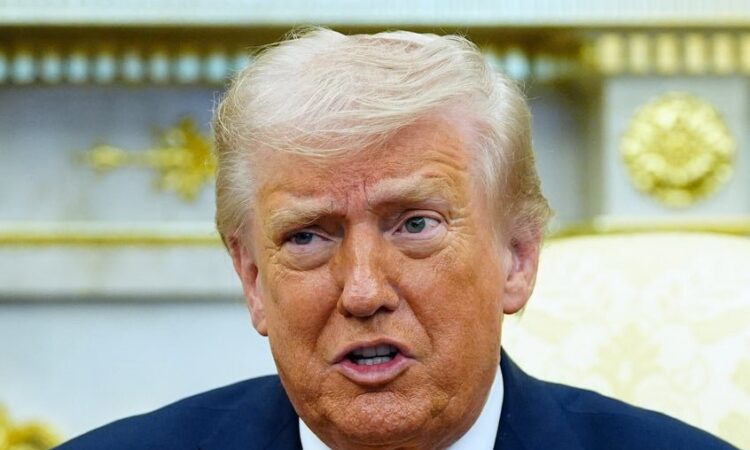
On Sunday, Donald Trump once again stirred attention after sharing a post that suggested he deserves some kind of “reward” in the form of a third presidential term. The post, shared on his Truth Social platform, included an image created by a supporter with the caption saying he should get a third term because of what they described as a “stolen election.”
That message clearly connects to Trump’s long-standing claims about the 2020 election, which he has repeatedly said was unfair, even though those claims have been widely disputed and rejected by courts and officials. Those same claims also played a major role in the events of January 6 United States Capitol attack, when a group of his supporters stormed the U.S. Capitol in an attempt to challenge the election results.
This latest post is not the first time Trump has talked about the idea of staying in power beyond the normal limits. Over the past few years, he has made several comments suggesting he might want a third term, or even more. However, under the Twenty-second Amendment to the United States Constitution, a president is only allowed to serve two terms, which makes a third term legally impossible under current law.
Despite that, Trump has continued to keep the idea alive in different ways. He has even sold “Trump 2028” merchandise and spoken publicly about the possibility. At times, he has hinted at it jokingly, but on other occasions, he has sounded more serious. In a past interview, he said he was “not joking” about the idea and mentioned that many people had encouraged him to consider it, although he also said it was still early.
People close to him have also added to the conversation. His ally Steve Bannon has openly said that efforts are being made to make a third-term run happen, expressing confidence that Trump could return to power again in 2028, even though it would require major legal or constitutional changes.
More recently, Trump has gone as far as saying he feels “entitled” to another term, which has raised further debate and concern among critics. Many see these statements as testing public reaction or keeping his supporters energized, while others worry about what it could mean for democratic norms and constitutional limits.
At the same time, public opinion appears mixed. Reports suggest that his approval rating has been around 41%, showing that while he still has a strong base of support, there is also significant opposition.