Obama Comes Out Swinging After Racist AI Video Targets His Family, But the Real Damage Comes When Donald Trump Melts Down Right on Cue

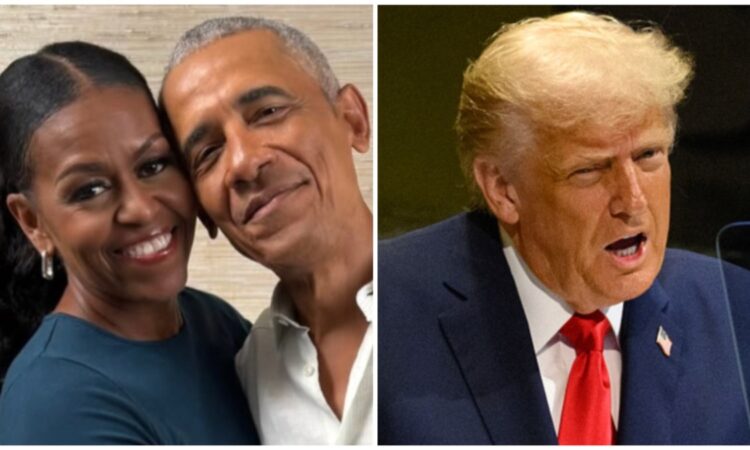
Barack Obama has responded publicly after a controversial AI-generated video shared online by Donald Trump depicted him and his wife, Michelle Obama, in a deeply offensive way. The video quickly drew backlash, with many people criticizing both the content itself and the decision to share it.
In a recent interview, Obama made it clear that while he has faced criticism and attacks for many years in politics, he tries not to take personal insults too seriously when they are directed at him. However, he said there is a clear boundary when it comes to his family.
He explained that his wife and children did not choose to be part of political life in the same way he did, so involving them in attacks crosses a line for him. For Obama, that distinction matters, and he emphasized that it’s a standard he believes should apply to everyone, regardless of political differences.
Even though he acknowledged that the video was offensive, Obama shifted the focus to something he sees as a bigger concern.
He pointed to the growing use of artificial intelligence in creating misleading or disturbing content, especially when serious topics are turned into entertainment or when harmful imagery spreads quickly online. His concern was less about a single post and more about the direction digital culture is heading, where technology can be used to blur reality and amplify negativity.
He also spoke about how social media can sometimes give a false impression of society. According to him, the constant stream of extreme or disrespectful content online does not fully represent how most people actually think or behave in real life.
He said that when you speak to people directly, many still believe in basic values like respect, kindness, and decency, even if those values are not always visible in online spaces.
Obama made it clear that he does not want to spend his time constantly reacting to political drama or social media controversies. He suggested that doing so would turn him into more of a commentator than a leader, which is not how he sees his role. Instead, he prefers to focus on broader issues and long-term concerns rather than getting pulled into every public dispute.
His comments come at a time when Trump has once again been very active on social media, posting a series of messages that include sharp attacks on political opponents.
Among those targeted are figures like Hakeem Jeffries and Eric Holder. In those posts, Trump used strong and controversial language, which has drawn criticism from opponents and observers who believe this kind of rhetoric increases political tension.
Trump also repeated claims about problems with past elections and warned about future ones, calling for major changes to voting rules.
These claims have been widely disputed, including by officials from his own administration in the past. Still, his messages continue to resonate with some supporters while raising concerns among critics about how such statements might influence public trust in elections.
The situation escalated further when Trump described political opponents in extreme terms and framed the situation as a kind of national struggle. He urged Republicans to take stronger action and push forward with changes to election laws, including ending long-standing legislative rules like the filibuster in order to pass new measures.
These posts quickly triggered strong reactions online. Some people pointed out what they saw as a contradiction between earlier calls for calmer political language and the tone of the recent messages. Others expressed concern that this kind of rhetoric could shape how people view upcoming elections and political processes.
At the same time, there were also responses from those directly targeted. For example, Hakeem Jeffries responded with a message that appeared to mirror Trump’s style, using humor and irony to push back.