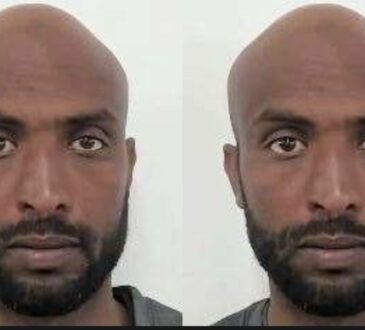
Illegal Migrant Reveals What He Would Do If He Is Denied Entry to the UK Again, Saying Coming Back to Britain Is His Only Hope

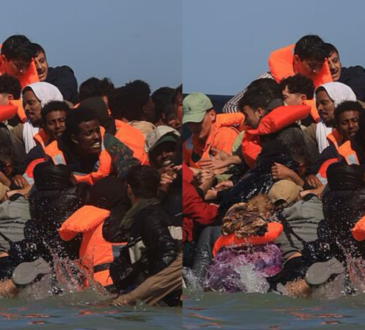
A migrant who crossed the English Channel and was sent back to France says he is determined to return to Britain, even after being removed more than once.
The experiences of two Iranian men have come to light as the “one in, one out” agreement between Britain and France reaches its end.
One of the men, identified as Baran, 33, said he fled Iran because of problems with the authorities linked to his political activities. He claimed security forces had targeted him, that rubber bullets had been fired at him and that intelligence officers had raided his home.
After leaving Iran, Baran eventually reached northern France. In January, he and another Iranian man, Aso, 28, crossed the English Channel in a small boat and arrived in Britain.
However, the two men were detained after reaching the UK. They were later returned to France under the “one in, one out” agreement between the British and French governments.
Baran strongly opposed being sent back to France and even went on hunger strike while he was being held. According to detention records, he told officials: “I would rather die than return to France.”
Despite his protest, he was flown back to Paris in February.
Baran claimed that his situation became even worse after he returned to France. He said smugglers who had been involved in his journey and were still demanding money managed to find him.
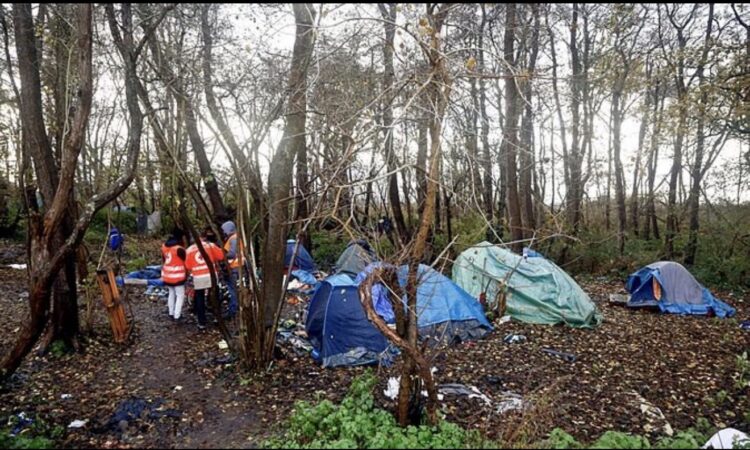
According to Baran, they took him to a migrant camp around Dunkirk, where he said he was beaten with sticks and hands and threatened with guns. He also claimed he was forced to spend as long as 10 hours a day washing dishes and clothes for them.
Describing what happened, Baran said he felt like he had become “a slave for the smugglers.”
But his return to France did not stop him from trying to reach Britain again.
In March, Baran travelled back to the UK by hiding inside a lorry. He was discovered when the vehicle reached Dover and was detained once again.
Aso said he also faced serious difficulties after being returned to France.
Aso said he had converted from Islam to Christianity and feared what could happen to him if he was returned to Iran. He claimed he could face execution because of his conversion.
After being returned from Britain to France in March, Aso said he was initially placed in an immigration centre in Paris. He claimed he was later made to leave and found himself homeless.
He eventually stayed in woodland near Dunkirk. During that period, he said he was constantly worried that smugglers could find him.
By May, Aso said he felt he could no longer remain in France. He wrote that he believed he had only two choices: return to Iran and risk being executed or attempt to get back into Britain.
He chose Britain.
In June, Aso managed to return to the UK by hiding inside a lorry.
He said he would not have taken such a dangerous journey again if he had felt safe living in France. According to him, Britain was the only country where he believed he could be protected from both the Iranian authorities and criminal smuggling networks.
Their stories have emerged as the “one in, one out” arrangement between Britain and France comes to an end.
The scheme was announced by Prime Minister Sir Keir Starmer and French President Emmanuel Macron. Under the arrangement, Britain could return some people who arrived illegally by small boat to France. In exchange, the UK would accept an equivalent number of asylum seekers from France through a legal route.
By the end of September, more than 1,400 people who had reached Britain in small boats had reportedly been returned to France under the agreement. At the same time, 1,117 people had been legally transferred from France to Britain.
The pilot scheme formally ended on October 1 after discussions about extending it failed to produce an agreement.
People who were already detained under the scheme could still be placed on removal flights in the following weeks, but new cases were no longer being added to the programme.
The end of the arrangement comes as people continue attempting to cross the English Channel.
Between January 1 and September 27, 2026, 19,135 people reportedly reached Britain in small boats. That figure was 42% lower than during the same period a year earlier.
However, those figures do not include people who entered Britain through other methods, including those hiding inside lorries.
The “one in, one out” agreement was designed partly to discourage people from paying smugglers and making the dangerous journey across the Channel. The idea was that migrants would know they could be returned to France even after successfully reaching Britain.
However, some of those sent back have reportedly attempted the journey again.
The Guardian tracked more than 30 people who had been forcibly returned to France, while some asylum seekers claimed that around 200 people removed under the scheme had later managed to reach Britain again.
Baran himself was eventually returned to France for a second time.
After being sent back again, he said he had no friends, no clear plan and nowhere permanent to stay. He said he was sleeping in a park and was once again thinking about how he could reach Britain.
“My only hope is to find a way to return to the UK. But I don’t know how,” he said.
His current whereabouts are not known.
The experiences of Baran and Aso highlight one of the biggest questions surrounding the now-ended scheme: whether returning migrants to France was enough to stop some of them from attempting to reach Britain again.