More Than 100,000 People Watched Videos of This Heavily Muslim Guarded ‘Islamabad’ in a Quiet UK Village — Now the Imam Has a Message for Anyone Wondering What’s Behind the Gates

A Muslim community in a quiet Surrey village has suddenly found itself receiving huge attention online after videos showing its buildings, high fences and security gates spread across social media.
More than 100,000 people have reportedly watched clips about the site, which is known as Islamabad and is located in the village of Tilford. Some of the videos have caused curiosity and debate, with people asking what exactly happens behind the gates and why the site appears to have such strong security.
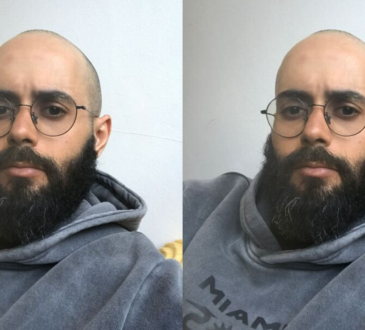
But Imam Mansoor Clarke, who is connected to the community, says people should not judge the place simply by watching short videos or reading comments on social media. His message to anyone who is genuinely interested is simple: come and visit, have a cup of tea, look around and ask questions.
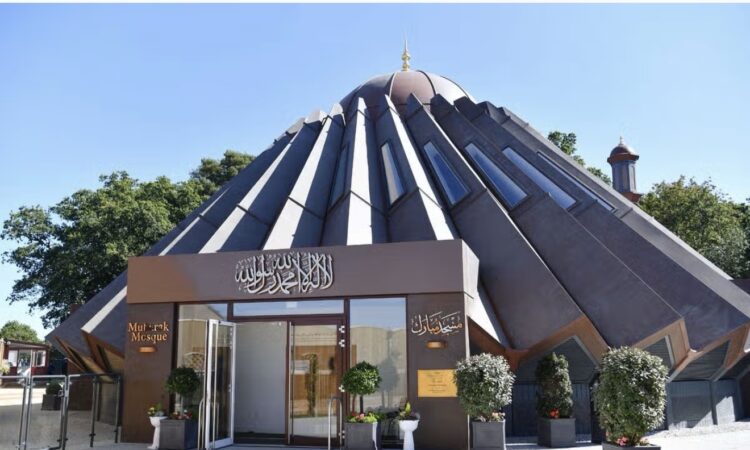
The site is located a short distance from Waverley Abbey and has actually been part of the Tilford area for decades. It is mainly used by members of the Ahmadiyya Muslim community and includes the Mubarak Mosque, residential buildings, sporting facilities and other spaces used for community activities.
Despite being established in the area for many years, the site has recently attracted a new level of attention because of videos being shared online.
Some commentators have questioned what happens there, while others have focused heavily on the fences, security gates and controlled entrance. A number of people unfamiliar with the site have described it as mysterious or secretive.
That picture is strongly rejected by people within the community.
Islamabad was established in Tilford in 1985 after the Ahmadiyya Muslim community purchased an old boarding school. Parts of the original property remain, although major changes have taken place over the years as the community has developed the site.
One of the biggest changes was the construction of the Mubarak Mosque, which has become an important place of worship for Ahmadiyya Muslims. A multi-purpose hall and other facilities have also been developed.
But the community says life behind the gates is not limited to religious services.
During an ordinary week, different people may visit the site for mosque tours, sporting activities, meetings, community programmes and other events. Members also have relationships with organisations and residents outside the complex.
Mansoor said the people who worship and live there do not consider themselves separate from Tilford.
He explained that the community sees Tilford as its home and that generations of Ahmadiyya Muslims have developed relationships with local residents, schools, churches, charities and community organisations over the years.
According to him, working with and helping other people is an important part of their religious beliefs.
He said members are encouraged to help their neighbours, support charities and schools and build friendships with people from different religions and backgrounds.
The community also takes part in local sporting activities. One example is an annual cricket match involving members of the community and Tilford Cricket Club.
However, it is the security around Islamabad that has become one of the biggest talking points online.
Anyone arriving at the site cannot simply walk straight inside. Visitors have to go through a staffed entrance, while high fencing can be seen around parts of the property.
For people seeing the site for the first time through a social media video, those security measures have raised questions.
Some have wondered why a religious community in a peaceful Surrey village would need such visible protection. Others have interpreted the gates and fences as evidence that the people inside want privacy or do not want outsiders entering.
Mansoor says that interpretation is wrong.
He explained that the security measures are there to protect people rather than to hide anything from the public.
The Ahmadiyya Muslim community has faced persecution and threats in different parts of the world, and Mansoor said the community believes it has a responsibility to take reasonable precautions to protect worshippers, families and visitors.
From the community’s point of view, the gates are therefore about safety, not secrecy.
Mansoor said they actually want people to visit and see the site for themselves.
He said visitors can come inside, have a cup of tea, see the mosque and ask questions in a safe and relaxed environment.
He also pointed out that the community has invited many different groups onto the site, including schools, neighbours, journalists, police, other faith groups and ordinary members of the public.
His message to people who are curious about what is behind the gates is that there is no need to rely on somebody standing outside with a camera.
There is also no need, he joked, for anyone to climb the gates or jump over the fences to find out what is happening.
Instead, people can approach the community directly and arrange to see the site properly.
The recent online attention has still been difficult for some members of the community.
Mansoor said he was disappointed to see people making assumptions about him and others based on what they had seen or heard online, especially when those people had never actually visited the site or spoken to members of the community.
At the same time, he said there has also been a more encouraging side to the situation.
Some people have responded to the viral videos by defending the community and challenging claims being made about it.
Rather than becoming angry about all the attention, Mansoor believes the controversy could provide an opportunity for people on both sides to speak to each other.
He wants those who have questions or concerns to come directly to the community instead of forming their entire opinion from a short video.
He said people are welcome to walk through the front entrance, sit down with members of the community, drink tea, look around the mosque and ask difficult questions if they wish.
For him, face-to-face conversation is one of the best ways to deal with suspicion and misunderstanding.
He said the community is not frightened of people asking questions and would rather discuss concerns openly than allow rumours and speculation to continue spreading online.
That invitation also applies to people who may strongly disagree with them or who have concerns about what they have seen on social media.
The community’s position is that seeing the site in person gives people an opportunity to make up their own minds rather than depending completely on someone else’s interpretation.
For a place that has existed in the Surrey countryside for decades, the sudden internet attention has created an unusual situation.
Thousands of people who may never previously have heard of Islamabad in Tilford are now seeing videos of its gates, fences, mosque and buildings.
Some are simply curious, while others have questions about why the site operates the way it does.
But Mansoor says the answer should not be more online arguments.
Instead, he wants curiosity to bring people through the front door.
If the viral videos eventually result in more people visiting the mosque, speaking directly with those who live and worship there and learning more about the community, he believes something positive could come out of the controversy.
His message is that people should not allow a social media clip to make the decision for them.
Come and see the place, he says. Ask the questions yourself, meet the people behind the gates and then decide what you think.
For Mansoor and the wider community, turning suspicion into conversation and conversation into understanding would be a far better outcome than allowing online speculation to continue dividing people who have never even met.