Here’s Why More Than 100,000 Migrants Could Be Allowed Into Britain Every Year Under a New Deal That Could Bring Major Changes

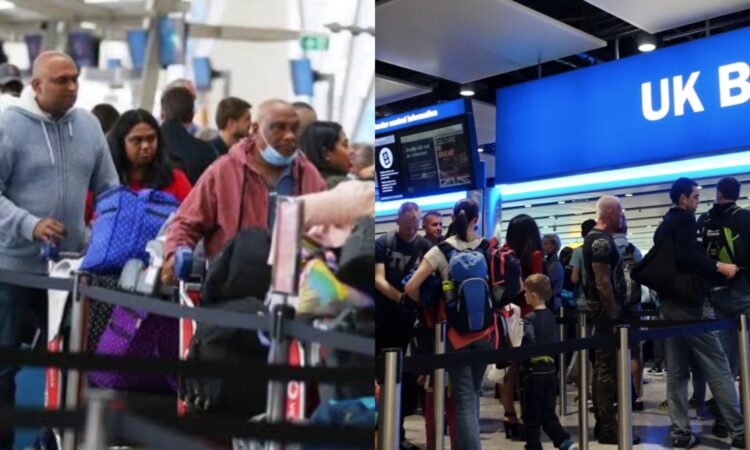
Britain could be on the verge of agreeing to a major new deal with the European Union that would allow almost 100,000 young Europeans to come to the UK every year.
The proposal is part of a wider attempt by the British Government and Brussels to improve relations after Brexit. Talks between the two sides are now at an advanced stage, with hopes that several agreements could be announced at the UK-EU summit in Brussels on November 20.
One of the most important and difficult parts of the negotiations is a new youth mobility scheme. If an agreement is reached, people under the age of 30 from Britain and EU countries could have a chance to live, work, study and travel on the other side of the Channel for a limited period.
The scheme would give young Europeans a new route to spend time in Britain without having to use the normal immigration routes that are currently required after Brexit. Young Britons would also benefit by being able to spend time in EU countries under a similar arrangement.
However, the number of people who would be allowed to take part has become a major point of disagreement.
The British Government is understood to have increased the number of places it is willing to offer. Reports suggest the UK was initially considering around 50,000 places each year but has now moved towards a figure of between 75,000 and 80,000.
The EU, however, wants the number to go even higher.
European negotiators are reportedly asking for around 100,000 places every year, with some young Europeans potentially being allowed to remain in the UK for as long as three years.
The difference may sound relatively small compared with the wider size of Britain’s population, but the number has become politically important because the Government remains under pressure over immigration and net migration.
British officials are therefore keen to avoid agreeing to a figure that could be seen as crossing the 100,000 mark.
One person familiar with the negotiations suggested that a compromise could eventually be reached just below 100,000.
The source even joked that the final number could be 99,999 visas, rather than 100,000, because of how politically sensitive the figure has become.
The talks show how difficult it has been for Britain and the EU to find a balance between improving opportunities for young people and maintaining the UK’s post-Brexit immigration rules.
Supporters of the youth mobility scheme argue that it could give young people on both sides of the Channel more opportunities to gain work experience, study, travel and experience life in another country.
The scheme could also make it easier for British young people to spend time in Europe, something that was much simpler before Brexit.
But opponents are likely to focus on the number of people who could come to Britain and the possible effect on immigration figures.
The youth mobility agreement is not the only issue being discussed. Britain and the EU are also working on agreements covering trade in food and drink and cooperation on carbon emissions trading.
The hope is that the different agreements can be brought together into a wider package that can be presented as a new step in the relationship between Britain and Brussels.
There is also a separate disagreement over university tuition fees.
European officials want EU students studying at British universities to have access to fees closer to those paid by domestic students. At present, EU students can face much higher international fees because of changes introduced after Brexit.
The British Government is concerned about the financial position of universities and is pushing for EU students to pay more than British students.
The European Commission has reportedly delayed its demand for lower fees until after the November summit. There are expectations that the two sides could work towards a separate agreement next year that would reduce the cost for EU students, although they could still pay more than students from Britain.
The talks are taking place as the Government considers what Britain’s long-term relationship with Europe should look like.
Prime Minister Andy Burnham is expected to use the November summit as an important opportunity to build closer ties with the EU.
The talks have also reopened a much bigger political argument about whether Britain could one day seek to rejoin the European Union.
Former Chancellor Rachel Reeves has backed the idea of moving Britain closer to Europe and said she believes the country’s future could eventually lie within the EU.
Her comments are significant because she was involved in writing Labour’s 2024 election manifesto, which ruled out Britain rejoining the EU.
Reeves has now argued that those who support Britain returning to the EU should explain the benefits and carefully consider how such a move could happen.
She also said she hoped the youth mobility scheme would be agreed at the upcoming summit.
Her comments have already faced criticism from the Conservatives.
Conservative Party leader Kemi Badenoch accused the Government of reopening an argument that many people thought had been settled by Brexit.
She argued that Britain should focus on making the most of the opportunities created by leaving the EU instead of returning to the same political arguments about membership.
The coming weeks could therefore be important for Britain’s relationship with Europe.
If the UK and EU reach an agreement, tens of thousands of young Europeans could once again have an easier way to live, work and study in Britain, while young Britons could receive similar opportunities across Europe.
But the final number of places remains one of the biggest questions.
With Brussels pushing towards 100,000 places a year and Britain wanting to keep the figure below that level, negotiations are expected to continue right up to the November summit.
A deal could mark one of the biggest changes in Britain’s relationship with the EU since Brexit, even though it would stop well short of Britain returning to the bloc.