British Men Who Refuse to Join the Army if World War 3 Breaks Out Could Face Serious Consequences, as Expert Reveals What Could Happen to Them

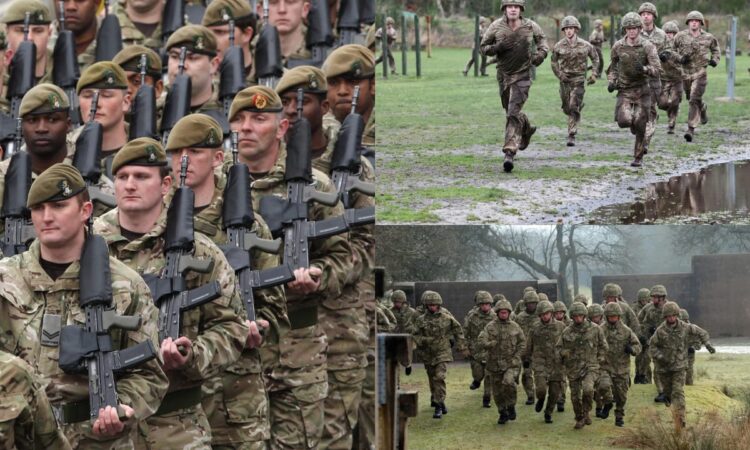
People across Britain have been warned about what could happen if they refuse to serve their country in the event of a Third World War.
With tensions rising between major world powers, there are growing fears that another global war could break out. Russia’s repeated warnings about nuclear weapons have added to these concerns, leaving many people wondering whether Britain could eventually introduce compulsory military service.
Compulsory military service, also known as conscription, means the government can require certain people to join the armed forces or help with the country’s war efforts.
Earlier this year, the UK Government extended the age range for certain Army Reserve call-ups. The decision raised questions among some members of the public, particularly at a time when tensions between Russia and Western countries remain high.
Although Britain has no current plans to introduce compulsory military service for the general public, military experts believe the situation could change if the country became involved in a major war.
Professor Joshua Bilton, an expert in war studies, has now explained what could happen to British men who refuse to take part if the government introduces conscription.
According to him, those who refuse to serve could face serious criticism from people around them. Their decision could affect how they are treated by friends, family members and others in society.
He also warned that refusing to contribute to the war effort could potentially affect someone’s chances of getting a job after the conflict ends.
However, he explained that not everyone would react in the same way.
Some people might understand why a person does not want to take part in a war, while others could see that decision as a failure to support their country during a difficult time.
Professor Bilton said people’s reactions would largely depend on their personal beliefs, their families and how they feel about the war itself.
He also explained that even if Britain introduced compulsory service, it would not necessarily mean that every eligible man would be sent to the battlefield.
In fact, he believes most people would be given other responsibilities rather than being asked to fight.
Some could work in factories producing important supplies, while others might help with emergency services, transport, communications, civil defence or other jobs needed to keep the country running during a war.
Looking back at the First and Second World Wars, Professor Bilton pointed out that only around 25% of men within certain age groups served in the armed forces.
Even among those who joined, many were given jobs that did not involve fighting directly on the front line.
This means that if another major war happened, Britain could need people to support the country in many different ways, not just by carrying weapons.
The professor also discussed whether the government would publicly embarrass or shame men who refused to take part.
He said he did not believe the government would necessarily encourage such behaviour. However, he warned that pressure could still come from certain groups within society.
He compared this possibility to something that happened during the First World War, when some women gave white feathers to men who were not wearing military uniforms.
At the time, the white feather was used to suggest that a man was a coward for not joining the armed forces.
Professor Bilton believes similar forms of public pressure could return if Britain faced another major conflict.
Meanwhile, former British Army chief Lord Dannatt has explained how the government might respond if the country urgently needed more people to defend itself.
According to him, Britain would probably not begin by forcing ordinary civilians with no military experience to join the Army.
Instead, the government would first call upon people who already have military training.
This would include members of the Army Reserve and former military personnel who could be recalled to active service.
If those groups were not enough, the government might then consider introducing compulsory service for younger adults.
Lord Dannatt suggested that people aged between 18 and 24 could be among the first groups considered if conscription became necessary.
However, he also explained that bringing large numbers of former soldiers back into service would not be an easy task.
The government would need to arrange training, equipment, accommodation and other support before sending people into military operations.
His comments suggest that Britain would likely follow a gradual process rather than immediately ordering large numbers of civilians to report for military duty.
For now, there is no compulsory military service for the general public in Britain, and the government has not announced plans to introduce it.
The changes involving Army Reserve call-ups should not be confused with a new law requiring all British men to join the military.
It is also important to understand that Professor Bilton’s warning about possible employment problems and public criticism is a prediction about how society might react, not an announcement of new legal punishments.
Any future system of compulsory military service would require government decisions and a legal framework setting out who could be called up, what duties they would perform and what would happen if someone refused.
Nevertheless, with international tensions continuing, the possibility of Britain needing more people to support its armed forces has become a subject of discussion.
For many British families, the biggest question remains whether their sons, husbands or other relatives could one day be asked to serve if another world war breaks out.