Henry Nowak’s Killer Vickrum Digwa Went to Court Hoping to Get His Life Sentence Reduced, But What the Judges Did Instead Left Him in Shock

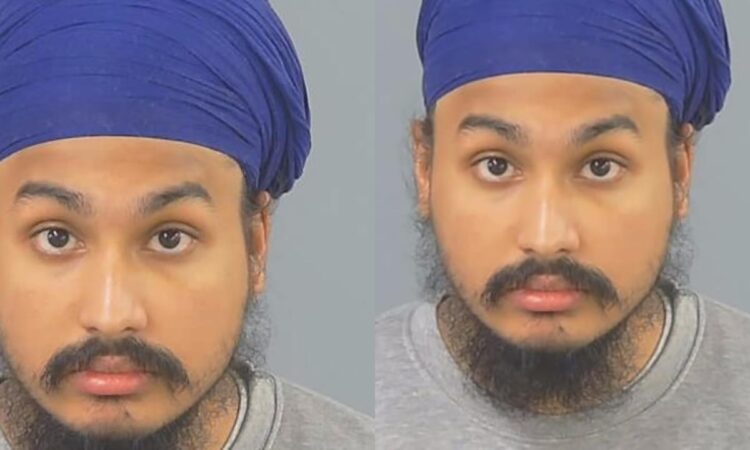
The man who killed 18-year-old Henry Nowak in Southampton has had his prison sentence increased after his attempt to get a shorter sentence failed.
Vickrum Digwa, 23, was originally sentenced to life in prison in June 2026, with a minimum of 21 years behind bars. However, the Court of Appeal has now increased that minimum term to 25 years after judges decided the original punishment was not long enough for the seriousness of his crime.
Henry Nowak was stabbed to death in Southampton on 3 December 2025. He was just 18 years old and had his whole future ahead of him when his life was suddenly taken away.
After stabbing Henry, Digwa tried to mislead the police by claiming that he had been the victim of a racist attack. But the truth later came out, and he was convicted of murder.
The case was brought before the Court of Appeal after Attorney General Ellie Reeves argued that the original 21-year minimum sentence was too short. At the same time, Digwa’s lawyers were trying to convince the court that his punishment was too harsh and should be reduced.
However, things did not go the way Digwa had hoped.
On Thursday, 5 November 2026, judges ruled that his sentence should be increased instead of reduced.
Lady Chief Justice Baroness Carr explained that the original sentence did not properly reflect how serious the murder was.
One of the most disturbing parts of the case was what Digwa did after stabbing Henry. The court heard that he used his phone to record the aftermath of the attack and even zoomed in on Henry’s face while making cruel comments.
The judges described his actions as extremely cruel, saying they caused Henry even more suffering and humiliation during his final moments.
During the hearing, Jonathan Polnay KC, representing the Attorney General, told the court that Digwa had repeatedly stabbed an unarmed young man who had done nothing to defend himself.
He also argued that Digwa had abused the religious exemption that allows Sikhs to carry certain ceremonial blades in public.
Digwa’s lawyer, Imran Khan KC, disagreed with the Attorney General’s argument. He said the original sentence had already taken the serious details of the crime into account and asked the judges to reduce the minimum prison term.
But the judges rejected that argument.
Digwa watched the hearing through a video link from HMP Frankland in County Durham. He was wearing a dark suit, shirt and tie.
When the judges announced that he would now have to serve at least 25 years before becoming eligible for parole, he reportedly showed no visible reaction.
Members of Henry’s family were also present at the Royal Courts of Justice in London. One relative was seen wiping away tears after the decision was announced.
Henry’s parents welcomed the increased sentence but said nothing could ever bring their son back.
In an emotional statement, the family explained that while Digwa could appeal his punishment, they would never have the chance to escape the pain of losing Henry.
They described their suffering as a life sentence of grief, saying their son was only 18 and had so many dreams and opportunities ahead of him.
The family said the court’s decision was an important step towards justice, but no number of years in prison could replace the life that had been taken away.
The Attorney General also welcomed the ruling, saying she had been horrified by the brutality of the murder.
She said her thoughts remained with Henry’s family and hoped the increased sentence would help them feel that justice had been served.
However, the murder itself is not the only issue that has caused public anger.
The police response to Henry’s stabbing has also faced serious criticism after body-worn camera footage was released.
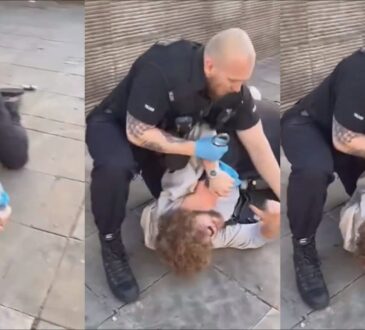
The footage showed officers handcuffing Henry as he lay seriously injured instead of immediately giving him first aid.
Henry could reportedly be heard telling officers that he could not breathe.
The release of the footage led to protests and raised questions about how the police handled the situation.
Henry’s family have also accused the police of failing their son and giving them different explanations about what happened on the night he died.
In an interview with ITV Tonight released this week, the family said they believed they had been misled by the police.
They claimed that officers initially presented Henry as the person responsible for the confrontation, even though he was the victim of a fatal stabbing.
The family said they felt they had been failed several times, both during the police response to the attack and in the way information was later shared with them.
The case has continued to attract attention because of the circumstances surrounding Henry’s death, Digwa’s actions after the stabbing and the questions about how police officers treated the injured teenager.
Although Digwa’s minimum prison term has now increased from 21 to 25 years, this does not mean he will automatically be released after serving that time. He will only become eligible to be considered for parole, and his release will depend on whether he is judged safe to return to society.
For Henry’s family, the decision brings some sense of justice, but the pain of losing their 18-year-old son remains.
They say that while the man responsible for Henry’s death may one day have the opportunity to leave prison, they will have to live with their loss for the rest of their lives.