Britain Left Stunned After France Refused to Take Back Hundreds of Boat Migrants Under Labour’s One In, One Out Deal as Report Reveals the Unexpected Reasons Behind the Rejections


France reportedly refused to take back up to half of the migrants Britain wanted to return under the UK’s “one in, one out” agreement, raising fresh questions about the effectiveness of the scheme.
A new report has revealed that hundreds of migrants who arrived in Britain by crossing the English Channel were rejected by French authorities when the UK tried to send them back.
The agreement was introduced under former Prime Minister Keir Starmer to reduce the number of people entering Britain in small boats.
Under the deal, Britain could return some migrants who crossed the Channel illegally to France. In exchange, the UK agreed to accept a similar number of migrants from France through a legal process.
However, the agreement faced serious problems because France did not approve many of Britain’s requests.
One reason was that French authorities raised concerns about the information Britain provided about some migrants. France also did not always give British officials clear explanations for rejecting their requests.
In some cases, British officials received only a simple approval or rejection without enough information to understand the decision.
Rules about sharing personal information also made it difficult for France to explain some of its decisions.
However, the report did not establish one single reason why all the migrants were rejected.
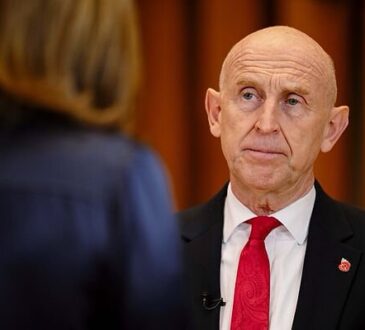
According to John Tuckett, the Independent Chief Inspector of Borders, the Home Office also struggled to return even 100 migrants each week.
The scheme resulted in around 1,500 migrants being returned to France, while a similar number were allowed to enter Britain legally from France.
The agreement eventually ended last month after France reportedly wanted Britain to accept a wider arrangement involving migrants from other European countries.
France wanted responsibility for returning migrants to be shared more widely across Europe rather than leaving France to handle the issue alone.
The findings have angered Conservative politicians, who believe the agreement failed to stop people from crossing the English Channel.
Shadow Home Secretary Chris Philp described the scheme as a complete failure.
He claimed that only 3% of migrants who crossed the Channel illegally were removed under the agreement, while 97% remained in Britain.
According to Philp, the low number of returns meant the scheme was unlikely to discourage people from making the journey.
The report also found that the government had not clearly explained what it wanted the agreement to achieve.
More than 23,000 migrants have reportedly arrived in Britain by small boat this year, according to figures cited in the original report.
In another recent incident, 21 migrants reached a beach in Kent without being stopped at sea.
Despite the criticism, the Home Office defended the agreement and said its cooperation with France had helped reduce small boat arrivals.
A spokesperson said arrivals had fallen compared with last year and that summer arrivals were the lowest in six years.
The Home Office also said the agreement had shown that returning migrants to France was possible, even though the scheme had faced difficulties.
The government has now introduced a new Small Boats Returns Taskforce to help speed up the removal of migrants who have no legal right to remain in Britain.
However, the latest findings have raised concerns about future agreements with France, particularly when French authorities can refuse to accept migrants Britain wants to return.
The government now faces questions about how it plans to return more migrants and prevent further dangerous crossings of the English Channel.