Nearly 1,500 Migrants Arrive in Popular British Tourist Hotspot in a Single Day, But Officials Discover Something Unexpected About Some of Them

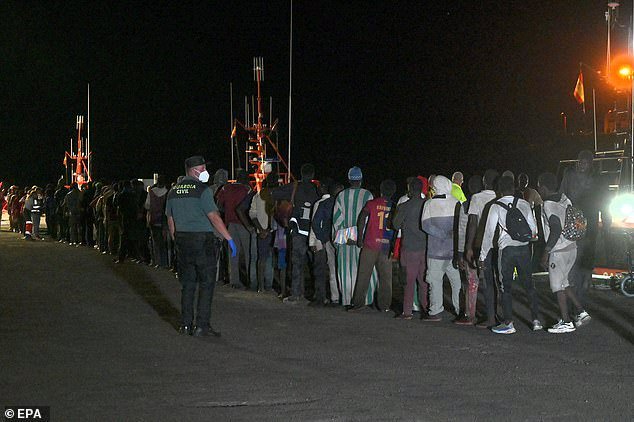
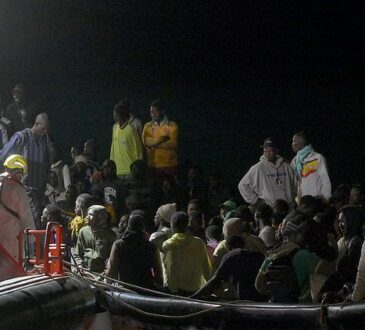
Almost 1,500 migrants arrived in Spain’s Canary Islands over the weekend, putting even more pressure on local authorities as the number of people making the dangerous sea journey continues to rise.
Spanish coastguards rescued a total of 1,488 migrants travelling in 14 boats. The Canary Islands are a popular holiday destination for thousands of British tourists every year, but the islands are now facing serious difficulties because of the large number of migrant arrivals.
The latest arrivals were reported as the highest number of migrants rescued in a single day in six years, surpassing the 1,461 people rescued near the islands in November 2020.
One of the boats rescued on Saturday was carrying around 240 people, including 12 women and 36 children.
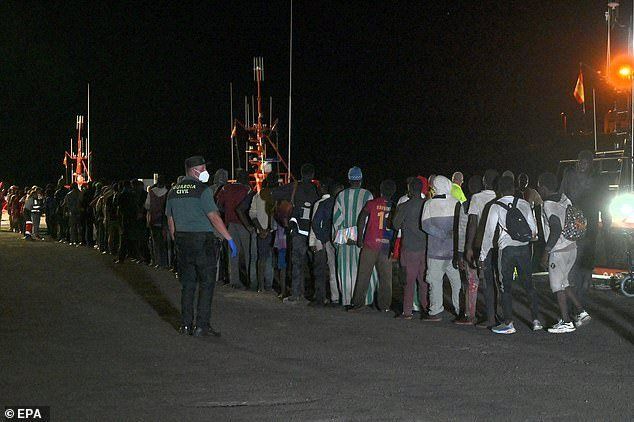
Most of those rescued came from African countries, including Senegal, Gambia and Guinea. They were taken to El Hierro, a small Spanish island that recently declared a state of emergency because local services were struggling to cope with the growing number of arrivals.
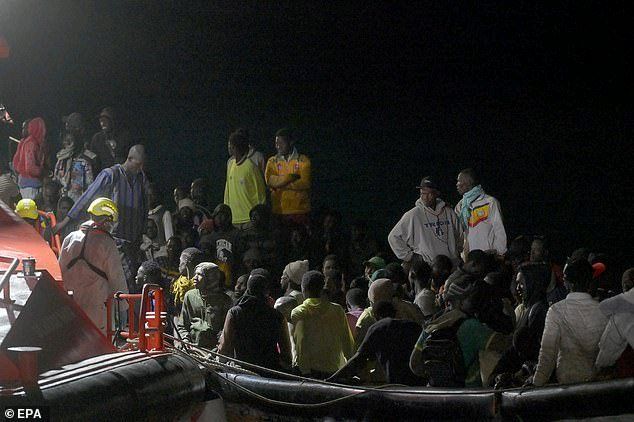
Of the 14 boats rescued, 12 were taken to El Hierro, while one was taken to Gran Canaria and another to Tenerife.
The situation has become particularly worrying for people living on El Hierro, which has a population of around 12,000.
Reports suggest that more than 5,000 migrants have arrived on the island in November alone, raising serious concerns about how local authorities can provide accommodation, food, healthcare and other essential services.
In just the first six days of November, rescue teams on El Hierro helped 3,261 migrants who had made the dangerous journey across the Atlantic Ocean.
Local officials have warned that the situation is becoming extremely difficult to manage.
The sea route from West Africa to the Canary Islands is considered one of the most dangerous migration routes in the world.
Every year, thousands of people risk their lives travelling in overcrowded wooden boats, hoping to reach Spain and begin a new life in Europe.
Many of these boats travel long distances through rough waters, strong currents and unpredictable weather conditions.
Although the sea is often calmer during autumn, the journey remains extremely dangerous, and some migrants never reach their destination.
The large number of arrivals has left police officers, rescue workers and other local services struggling to keep up.
A spokesman for the island’s Unified Police Union said authorities were overwhelmed by the situation.
He compared what was happening on El Hierro to an earlier migration crisis in Ceuta, another Spanish territory, warning that the number of arrivals was becoming difficult to control.
The head of El Hierro’s governing council, Alpidio Armas, also expressed serious concerns about the situation.
Speaking to Spanish television, he said local leaders were very worried about the sudden increase in migrants arriving on the island.
He explained that the situation had become so serious that the island had no choice but to declare an emergency.
According to him, the emergency declaration would allow the island to seek more support and cooperation from higher levels of government.
Spain’s Territorial Policy Minister, Angel Victor Torres, was expected to visit El Hierro on Sunday to discuss the growing crisis and possible ways to support the island.
Meanwhile, the human cost of the dangerous crossings continues to grow.
At least nine migrants have died in waters near the Canary Islands in recent weeks, while a seriously ill baby had to be flown to hospital after arriving.
Thousands of others have been rescued by Spanish emergency services after attempting the dangerous journey.
The latest arrivals have increased concerns about how much longer small islands such as El Hierro can cope without additional help from the Spanish government.
Local leaders are calling for urgent action, warning that the continued arrival of hundreds of migrants in a short period is putting enormous pressure on their communities and essential services.