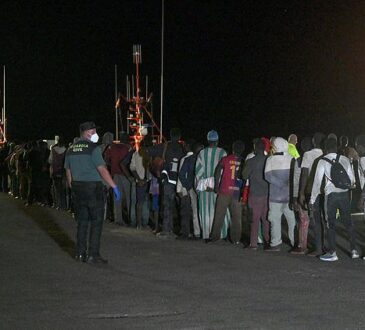
Thousands Of Illegal Migrants Planning to Enter Europe Left Facing Uncertainty After Police Make a Shocking Discovery

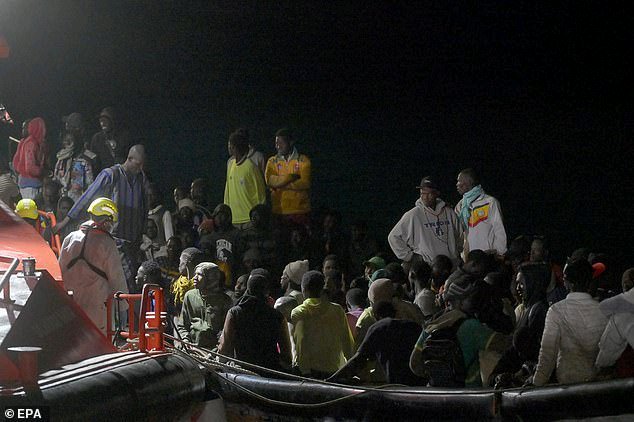
An international police operation targeting criminal gangs involved in smuggling migrants across the Mediterranean Sea and the Atlantic Ocean has led to the arrest of 262 suspects.
The operation, called Operation Communis Maris, took place between October 5 and 8, with police and border officers from 16 countries working together to stop migrant smugglers and rescue people being transported illegally.
According to INTERPOL, the four-day operation led to 262 arrests and 434 new investigations. Officers also found 1,715 migrants travelling without the required documents and identified 109 people who may have been victims of human trafficking.
Of those arrested, 221 were suspected of migrant smuggling, 16 were accused of human trafficking, and another 25 were arrested over other crimes, including making and using fake travel documents.
The operation was led by INTERPOL, with support from several international organisations, including Europol and Frontex.
Police said their main aim was to break up criminal gangs making money from transporting migrants, rescue people whose lives were in danger and bring those responsible to justice.
David Caunter, a senior INTERPOL official, warned that the Mediterranean Sea remains one of the world’s most dangerous routes for migrants, with thousands of people losing their lives each year.
He explained that criminal gangs often take advantage of desperate people by charging them large amounts of money and putting them on overcrowded boats that are not safe for long journeys.
During the operation, police stopped several boats carrying migrants.
In southern Morocco, officers intercepted a boat carrying around 70 people, including 30 children. The passengers had reportedly spent six days at sea before authorities found them.
In another incident, officials in Senegal warned neighbouring countries about a boat that had left their waters.
The following day, authorities in Mauritania stopped the wooden boat carrying 80 passengers, including two children. Three people suspected of organising the journey were arrested.
In Libya, police rescued 34 people believed to be victims of human trafficking. Three suspects were also arrested over their alleged involvement in a criminal gang accused of migrant smuggling, human trafficking and demanding money through threats.
In Algeria, six people suspected of running a migrant smuggling network were arrested. Investigators also accused the group of putting children in danger.
Police in Syria carried out patrols and watched suspected smuggling activities before raiding properties believed to be used by criminal gangs.
Seven suspects were arrested, including a man believed to be one of the gang leaders. Officers also intercepted 22 migrants.
The operation did not focus only on boats crossing the sea. Police also investigated migrant smuggling through airports, the use of fake passports and travel documents, and how criminal gangs receive and move their money.
INTERPOL said cooperation between countries was important because migrant smuggling gangs often operate across several borders.
The organisation explained that sharing information and working together allows police to identify suspects, stop their activities and prevent more people from losing their lives during dangerous journeys.
The operation was funded by the European Union through a project known as Himaya.
The 16 countries involved were Algeria, Cyprus, France, the Gambia, Greece, Italy, Libya, Malta, Mauritania, Morocco, Portugal, Senegal, Spain, Syria, Tunisia and Türkiye.
Authorities said the arrests and investigations were part of a wider effort to stop organised criminal gangs from making money by putting migrants’ lives at risk.