Thousands of Muslims Gather in London for Major Conference as Organisers Reveal What They Want to Achieve

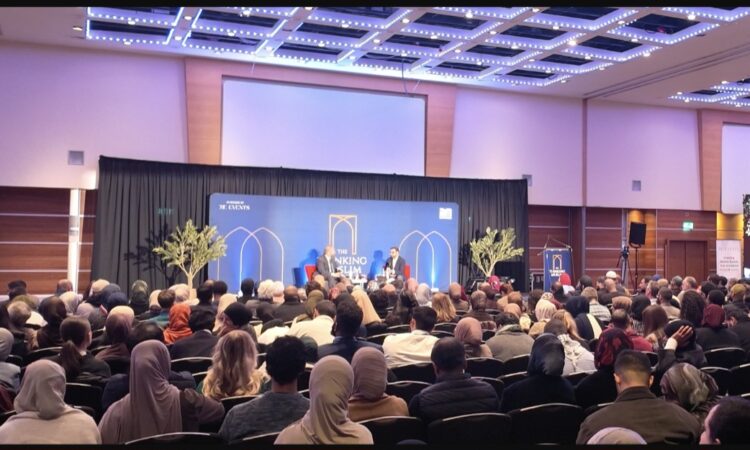
Thousands of Muslims gathered in London for a major Islamic conference aimed at discussing the challenges facing Muslim communities in Britain and around the world.
The event, known as the Thinking Muslim Conference 2026, took place at the Novotel London West hotel in Hammersmith on November 8. It was the first live conference organised by Thinking Muslim, a popular YouTube platform hosted by Muhammad Jalal.
The main purpose of the conference was to bring Muslims together to discuss their religion, the problems affecting their communities and how they could work together to bring about positive change.
Organisers wanted Muslims to have a place where they could openly discuss political issues, religious matters, discrimination and the growing criticism of Islam in Western countries.
The conference also aimed to encourage Muslims to become more confident in speaking about their faith, defending their rights and challenging what they believe is unfair treatment.
Several well-known Muslim speakers, religious leaders, writers and activists attended the event. Among them were Sami Hamdi, Moazzam Begg, Paul Williams, Hasan Spiker, Imam Dawud Walid and Dr Francesca Bocca-Aldaqre.
During the discussions, speakers talked about how Muslims could make their voices heard online, respond to discrimination and become more involved in issues affecting society.
Another important topic was the rise of far-right movements and anti-Muslim hatred in Britain, Europe and the United States.
Some speakers expressed concerns that Muslims were facing increasing pressure because of their religious beliefs and political opinions. They encouraged Muslim communities to remain united and continue speaking out against injustice.
However, the conference also attracted criticism before it took place.
Conservative MP Nick Timothy raised concerns about some of the people invited to speak at the event.
He wrote to the Home Secretary asking the government to investigate the conference and examine the visas given to some international speakers.
Timothy claimed that certain speakers had links to extremist organisations or had previously made troubling statements.
In a public message, he said one speaker had expressed willingness to carry out a suicide bombing, while another had reportedly been linked to Al-Qaeda and had met Taliban members.
The conference organisers rejected his description of the event and disputed the allegations.
Despite the controversy, the conference went ahead and attracted a large audience.
Paul Williams, who runs the Blogging Theology YouTube channel, praised the event and said thousands of people had attended.
He described it as an important gathering that allowed Muslims to discuss serious religious, political and intellectual matters.
Moazzam Begg, from CAGE International, also spoke about how attitudes within Muslim communities had changed over the years.
He explained that many Muslims had previously been afraid to attend public meetings or speak openly about political issues because they feared being labelled extremists.
According to him, that fear has reduced, and more Muslims are now willing to take part in public discussions, campaigns, humanitarian work and other activities.
He said the large turnout showed that Muslim communities were becoming more confident about expressing their views.
Another speaker, Hasan Spiker, encouraged Muslims to focus on explaining Islam to people who may not understand the religion.
He argued that Muslims should use education, discussion and religious outreach to challenge negative opinions about Islam.
He also spoke about Britain’s Christian history and suggested that some people who strongly criticise Islam may not fully understand its teachings.
Paul Williams also warned that the growth of far-right political movements remained a serious concern.
However, he said Muslims should remember that people from other religions and backgrounds also support their rights.
He encouraged Muslim communities to work with others who believe in religious freedom, fairness and equal treatment.
The event was not only about discussing the problems Muslims face. It was also intended to encourage cooperation, strengthen religious understanding and help Muslims find practical ways to respond to challenges in their communities.
Organisers believe that bringing religious leaders, activists and ordinary Muslims together can help create stronger relationships and encourage more people to participate in public discussions.
The conference also gave supporters of the Thinking Muslim platform an opportunity to meet some of the speakers they had previously watched online.
The large attendance showed the level of interest among those who wanted to discuss the future of Muslim communities and their place in British society.
Although the event faced political criticism, its organisers maintained that the purpose was to encourage open conversations about Islam, Muslim identity, social issues and the challenges facing Muslims around the world.
The first Thinking Muslim Conference has now brought these discussions from an online platform into a large public gathering in London, with supporters hoping it will encourage further conversations and similar events in the future.