Nearly 3,200 Boat Migrants Arrive in Just Three Days, but What Authorities Discovered Left in Shock

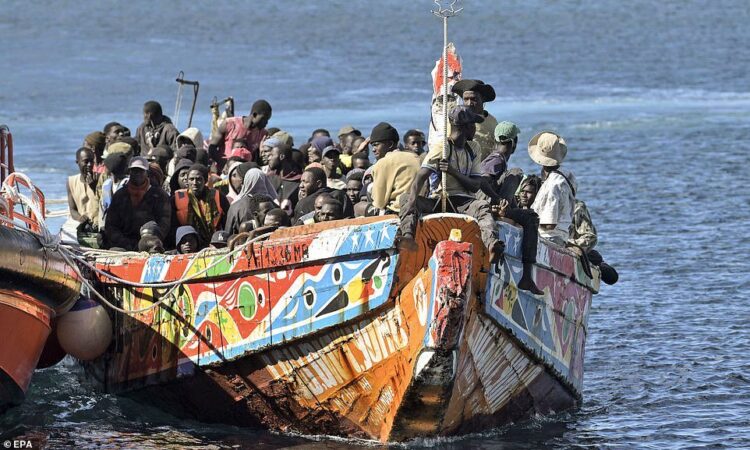
Nearly 3,200 migrants have arrived in Spain’s Canary Islands by boat in just three days, putting more pressure on local authorities who are already struggling to cope with the growing number of arrivals.
The Canary Islands, located off the coast of north-west Africa, have become a major route for migrants hoping to reach Europe. Many travel from West African countries in small boats, risking their lives on a dangerous journey across the Atlantic Ocean.
On Saturday alone, around 1,580 migrants arrived on 15 small boats. This was reported to be the highest number of arrivals recorded in a single day. Over the three days, a total of 3,161 people reached the islands.
Spain’s Maritime Rescue Service said it helped 1,324 migrants, with most arriving on the small island of El Hierro, which has a population of around 12,000 people.
One of the boats was carrying 240 people, including 12 women and 36 children. Authorities said many of those arriving were from Senegal, Gambia and Guinea.
The sudden increase has raised serious concerns among local officials, who say the islands do not have enough resources to deal with so many people arriving within a short period.
Spain recently declared a migration emergency in the Canary Islands following a sharp rise in arrivals. The government also announced €15.8 million in emergency funding to help move migrants from the islands to mainland Spain.
El Hierro has been particularly affected. According to Spanish newspaper ABC, around 17,000 migrants have arrived on the island this year, while approximately 1,600 are still staying there.
The head of El Hierro’s local government, Alpidio Armas, said authorities were deeply worried about the sudden increase.
He explained that the situation had become so serious that an emergency had to be declared to allow local authorities to receive more support from the Spanish government and other organisations.
Police officers on the island have also raised concerns, saying they are overwhelmed by the number of people arriving.
One police union representative warned that the situation was becoming difficult to control and compared it to the problems experienced in Ceuta, another Spanish territory located near Morocco.
Ceuta has also faced serious problems following a large movement of migrants across its border in July.
Reports claimed that around 72,000 people attempted to enter the territory by swimming, climbing or rushing across the border.
The situation has placed considerable pressure on local services and caused frustration among residents.
While Spain’s national government says around 5,000 migrants remain in Ceuta, the city’s mayor has claimed the number could be as high as 15,000.
Police officers and thousands of soldiers have been sent to the area to help maintain security and patrol the streets and border.
Despite efforts to provide accommodation, some migrants, including children travelling without their parents, have reportedly been sleeping on the streets.
Residents have held several protests, demanding that the Spanish government take stronger action to deal with the situation.
During one protest in October, around 200 people gathered outside the local government building. Some carried Ceuta’s black-and-white flag, while others banged pots and pans to express their anger over what they believed was the government’s slow response.
Meanwhile, the journey from West Africa to the Canary Islands remains extremely dangerous.
Although the islands are only about 65 miles from the nearest African coast, many migrants travel much longer distances to avoid security patrols.
Some journeys take several days or even weeks, with many boats leaving from Mauritania.
The number of attempted crossings often increases during autumn because the sea is generally calmer. However, the journey still carries a serious risk of death.
Last week, at least 35 people reportedly died when a small boat sank off the coast of Senegal while attempting to reach Europe.
Figures from Spain’s Interior Ministry show that more than 28,000 migrants arrived in Spain by sea between January and the end of October, with over 13,000 reaching the Canary Islands.
Despite the recent increase, arrivals in the Canary Islands during the first ten months of 2026 were reportedly almost 61% lower than during the same period in 2024, when more than 46,000 people reached the islands.
The growing pressure has left Spanish Prime Minister Pedro Sánchez’s government facing criticism over how it is handling migration.
Local leaders are calling for more financial support, better accommodation and stronger measures to manage arrivals.
With thousands of migrants continuing to attempt the dangerous journey to Europe, authorities are concerned that further arrivals could put even more pressure on communities already struggling to cope.