Former Iranian Military Commander Sanctioned Over Human Rights Abuses Set to Speak at London Conference, and the Topic May Surprise Many

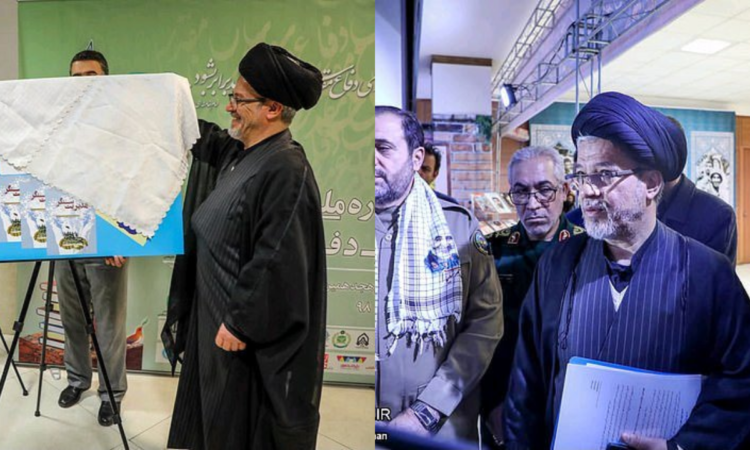
A former commander of Iran’s Islamic Revolutionary Guard Corps (IRGC), who held a senior position in the Iranian government when tougher rules on women wearing the hijab were introduced, is set to speak at a conference in London about Islamophobia.
Saied Reza Ameli has been named as one of the main speakers at the Islamic Human Rights Commission’s (IHRC) 13th annual conference, which will take place on December 13. The event is called “Artificial Intelligence and Islamophobia,” and Ameli is expected to deliver his speech online rather than attend in person.
His involvement has raised concerns because of his past connections to Iran’s military and government policies, particularly those affecting women’s rights and freedom of speech.
Between 2019 and 2023, Ameli served as secretary of Iran’s Supreme Council of Cultural Revolution, a powerful government body responsible for cultural and educational policies.
During his time in office, the council introduced stricter guidance on Iran’s compulsory hijab rules, which require women to cover their hair in public.
In July 2022, Iran’s then-president, Ebrahim Raisi, ordered the country’s morality police to take tougher action against women who were accused of not wearing their headscarves properly.
Two months later, 22-year-old Mahsa Amini died after being arrested by morality police in Tehran over allegations that she had broken the country’s dress rules.
Her death caused widespread anger and led to major protests across Iran. Security forces responded with violence, and reports at the time said at least 476 protesters had been killed.
Ameli was still serving as secretary of the council during these events, although the report does not establish that he personally ordered the police crackdown.
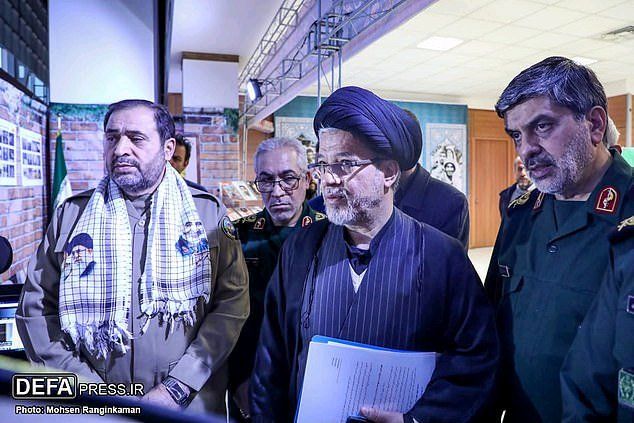
His military background has also attracted attention.
According to United Against Nuclear Iran (UANI), Ameli joined the IRGC in 1980 and later served as deputy commander of the Imam Sadeq Brigade between 1997 and 1999.
He also served under Ali Fazli during the Iran-Iraq war. Fazli was later sanctioned by the British government over his involvement in violent crackdowns against civilians during protests in Iran in 2009.
Ameli has also been connected to organisations responsible for controlling internet access in Iran.
He remains a member of the Supreme Council of Cyberspace, a government body that helps decide which websites and online services people in Iran can access.
The British government has previously criticised the council for restricting internet freedom and allowing security agencies to control online information.
Some researchers believe Ameli played an important role in developing Iran’s National Information Network, a project designed to give the government greater control over the country’s internet.
Human rights organisations have warned that such a system could make it easier for Iranian authorities to monitor citizens and restrict access to information from outside the country.
Ameli has also been linked to policies allowing Iran’s military and intelligence agencies greater access to university research.
A government document issued in 2021, while he was secretary of the Supreme Council of Cultural Revolution, called for cooperation between universities and security organisations in areas including artificial intelligence, drones, advanced weapons and military technology.
Kasra Aarabi, Director of IRGC Research at United Against Nuclear Iran, criticised Ameli’s involvement in the London conference.
He said Ameli had held important positions in organisations involved in enforcing Iran’s strict religious rules and supporting military research.
Aarabi also questioned how someone with such close connections to the Iranian government had been able to establish organisations in Britain.
Ameli has a long history in the UK.
He helped establish the Islamic Human Rights Commission in 1997 and served as a director of its board of trustees between 2006 and 2022.
He also studied at Royal Holloway, University of London, where he completed a doctorate in 2001.
In 2006, he co-wrote a book about the hijab and British women. The book recommended that the British government consider policies allowing the hijab to be included in school and workplace uniforms. It also supported providing women-only spaces in public places.
Ameli is now a professor at the University of Tehran and continues to hold influential positions in Iran.
In 2023, Canada imposed sanctions on him over what it described as serious and widespread human rights violations in Iran, including the violent suppression of protests.
The UK has also sanctioned two Iranian organisations with which he has been associated, although those sanctions do not automatically mean Ameli himself is personally sanctioned by Britain.
Meanwhile, the organisation hosting the conference is facing questions of its own.
The Islamic Human Rights Commission is supported by a charity called the Islamic Human Rights Commission Trust, which operates from the same building in Wembley, northwest London.
The Charity Commission has launched an investigation into the trust because of concerns about its relationship with the IHRC, including publications and events organised by the group.
A spokesperson for the Charity Commission confirmed that the investigation was still ongoing.
The IHRC describes itself as an organisation that helps people facing racial or religious discrimination.
It provides free advice to people who believe they have been treated unfairly by public services, including schools, housing providers and the police.
The organisation also offers support to people dealing with immigration problems.
According to its figures, between February 2025 and January 2026, its legal fund helped nine people with applications to remain in Britain. It said this support saved individuals and families £18,832 in Home Office fees and £16,000 in professional fees.
This year’s conference will focus on how artificial intelligence affects Muslims, including concerns about discrimination, surveillance and the use of technology during conflicts.
The IHRC has also raised concerns about allegations that artificial intelligence has been used by Israeli authorities during the war in Gaza.
Despite the criticism surrounding Ameli, the organisation has defended its decision to invite him.
In a statement to the Daily Mail, the IHRC described him as a respected academic who has worked to encourage understanding between different cultures and communities.
The organisation said he had consistently supported multiculturalism and had even faced criticism in Iran for being too supportive of Western ideas.
It also rejected suggestions that his Canadian sanctions should prevent him from speaking at the conference.
According to the IHRC, Canadian sanctions do not apply in Britain, and there is no legal restriction stopping him from taking part.
The organisation further claimed that Ameli had publicly opposed the enforcement of compulsory hijab rules in Iran.
However, critics continue to question his past role in the Iranian government and his connections to organisations accused of restricting human rights.
His planned appearance at a London conference about Islamophobia has therefore drawn attention because of the contrast between the event’s focus on discrimination and the human rights concerns surrounding his previous positions in Iran.