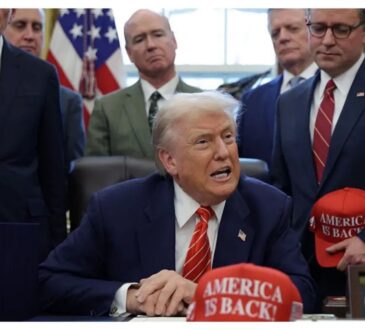

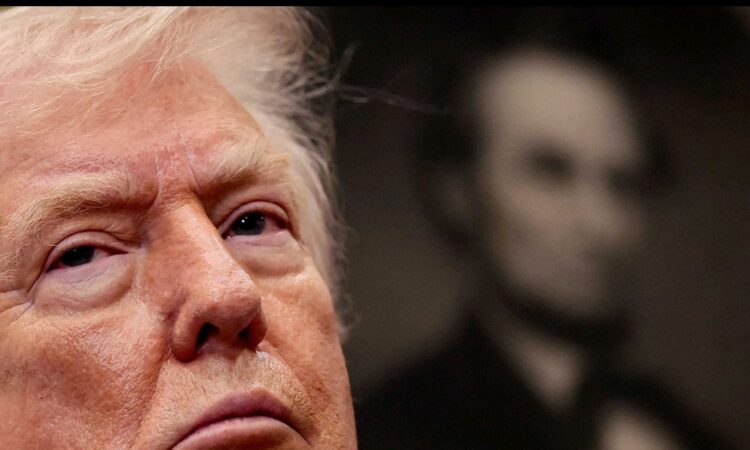
U.S. President Donald Trump is seen watching during an event at the White House in Washington, D.C., where he announced plans to lower the cost of prescription drugs. The event took place in the Roosevelt Room on December 19, 2025, and the photo was taken by Reuters photographer Evelyn Hockstein.
Even though job growth across the country slowed down sharply in 2025 compared to the year before, one industry grew rapidly under President Trump: the business of lobbying for presidential pardons. Law professor Kim Wehl wrote that this industry was thriving because Trump had turned what was meant to be a compassionate and constitutional power into something much darker. According to Wehl, the pardon power was no longer about mercy, but had become a tool for corruption, personal gain, and political favors.
Trump has faced heavy criticism for how he has used his power to grant pardons. On his very first day back in office, he pardoned about 1,600 people connected to the January 6 attack on the U.S. Capitol. He also pardoned a major drug trafficker, even while his administration claimed to be aggressively fighting drugs. In another case, he pardoned a cryptocurrency billionaire who allegedly helped Trump’s family gain as much as $1 billion, raising serious questions about conflicts of interest.
The power to issue pardons comes from Article II of the U.S. Constitution and has always been controversial. Past presidents have also used this power in questionable ways. Former President Bill Clinton pardoned Marc Rich, a wealthy donor to the Democratic Party, on his last day in office. Former President Joe Biden also caused controversy by pardoning his son, Hunter Biden, despite earlier promising he would not do so.
However, Wehl argues that Trump’s actions go far beyond anything seen before. In an analysis published Sunday in Zeteo, she wrote that Trump’s use of pardons is fundamentally different and far more extreme. She says this was made possible by a Supreme Court dominated by conservatives, which has expanded presidential power since Trump returned to office in January, along with a Congress that has largely failed to push back.
Wehl wrote that because the Supreme Court and Congress have enabled Trump, the meaning of Article II has been twisted. Instead of representing justice or mercy, presidential pardons have become something that can be traded for loyalty, vast amounts of money, or closeness to power. In her view, pardons are now treated like political currency in a disturbing display where powerful people face no consequences.
She warned that while the damage so far may appear mostly legal, it will not stay that way. When pardons are used as something to buy or sell for personal benefit and control, it sends a dangerous message to the country. It tells people that following the law and expecting fair justice no longer matter. According to Wehl, this approach suggests that Trump himself decides what the law is, and she describes the situation as deeply disturbing.