Donald Trump Crosses a Line He Shouldn’t and a Cabinet Member Gets a Chance to Walk It Back, But Delivers Reckless Response That Stuns the Host and Sets Viewers Off

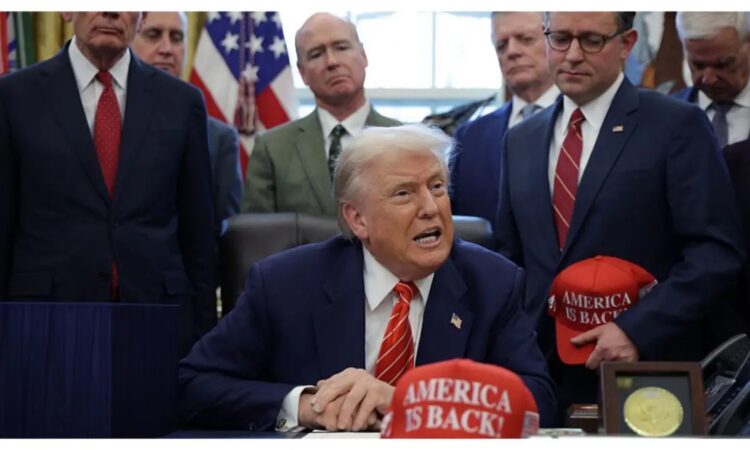
President Donald Trump has built a pattern where he says things that immediately put the people working under him in a difficult position. Time and time again, his top officials are forced to go on television and try to explain or defend comments that are already causing outrage. Instead of clarifying the situation, these moments often make things more uncomfortable and raise even more questions.
That is exactly what happened when Treasury Secretary Scott Bessent appeared on Meet the Press. During the interview, journalist Kristen Welker gave him several chances to clearly say whether the president’s latest comment had crossed a line. But each time, he avoided giving a direct answer.
The controversy started after Trump reacted to the death of Robert Mueller, who had led the investigation into Russian interference in the 2016 election. In a post, Trump wrote that he was glad Mueller was dead and claimed he could no longer harm innocent people. The statement shocked many people, especially because Mueller was a highly respected public servant and a decorated Vietnam War veteran.
During the interview, Welker asked a simple and direct question: whether it was appropriate for a president to celebrate the death of someone like Mueller. Instead of answering yes or no, Bessent shifted the conversation. He kept saying that people should have empathy for Trump and what he and his family have gone through.
Welker did not let it go. She repeated the question in different ways, even asking if it was appropriate for a president to celebrate the death of any American citizen. But Bessent continued to avoid the core issue. Each time, he returned to the same point, saying that no one could truly understand what Trump has experienced.
The exchange quickly spread online, and many people reacted strongly. Critics said the interview showed how far some officials are willing to go to defend the president, even when his words are widely seen as offensive. Some described it as blind loyalty, while others said it reflected a deeper problem in political culture, where accountability is being replaced with constant defense.
There were also people who pointed out what they saw as hypocrisy. They argued that similar comments from others would likely have caused a much bigger backlash from Trump’s supporters. Others focused on the tone of the administration, saying moments like this show how political language has become more aggressive and less respectful over time.
For Trump, his anger toward Mueller has been building for years. The investigation led by Mueller did not charge Trump with working with Russia, but it also did not fully clear him. That left a lasting sense of grievance, which Trump has continued to express publicly.
Bessent tried to explain that frustration during the interview. He described moments where Trump felt personally targeted, including the FBI search of his Mar-a-Lago home. According to Bessent, those experiences had a deep emotional impact on the president, which he believes people should take into account.
Still, for many watching, that explanation did not justify the original comment. What stood out most was not just what Trump said, but how his administration responded to it. Instead of drawing a clear line, one of the country’s top officials chose to defend or deflect, even when asked a very basic moral question.