Donald Trump drunk on his own reflection drops ultimate humiliation bombshell on Europe

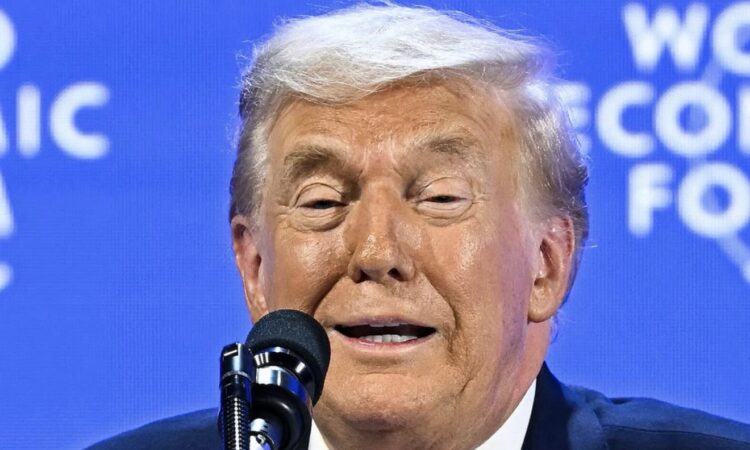
Donald Trump went to Davos clearly wanting praise and admiration. He left doing the exact opposite, reminding the world why so many people worry whenever he speaks in public. What was supposed to be a serious speech from the President of the United States sounded more like a rambling performance by someone obsessed with himself rather than focused on leading a country.
Instead of addressing world leaders with calm authority, Trump acted as though he was performing for an imaginary crowd that only exists in his own mind. In that imagined world, leaders cheer for him, admire him deeply, and, according to Trump himself, even call him “Daddy.
He actually said this out loud, claiming NATO leaders love him so much they use that nickname. In reality, many diplomats in the room were left stunned, watching a US president turn international diplomacy into something closer to a childish fantasy.
That bizarre boast set the mood for everything that followed. The rest of his speech was filled with confusion, exaggeration, and statements that simply were not true. Trump spoke with confidence, but confidence alone does not make something accurate, and he seemed to believe that speaking loudly was the same as speaking wisely.
One of the most alarming parts of the speech was his obsession with Greenland. At several points, he even mixed it up with Iceland, showing a basic lack of care for facts. He spoke openly about taking control of Greenland, claiming he would not use force, then immediately suggesting that if he did, America would be unstoppable.
It was a threat disguised as reassurance. He tried to make it sound reasonable by saying the US was “just asking” for Greenland, as if it were a small favour rather than land that belongs to Denmark and the people who live there.
Trump argued that America needs ownership of Greenland for defence reasons, ignoring the fact that the US already has a major military base there. The issue was never really about security. It was about control. Trump wants to be able to say he took something, that he dominated another country, that he won.
He then turned his attention to Europe, criticising Denmark and repeating his familiar claim that Europe would be speaking German or Japanese without America.
The remark was crude and insulting, designed to belittle allies rather than strengthen relationships. In Trump’s view, allies are not partners. They are people to be talked down to and reminded of their supposed weakness.
His comments about NATO were just as troubling. He suggested the alliance might not defend the US if it were attacked, a claim that ignores basic facts. NATO has only ever activated its mutual defence clause once, and that was to defend the United States after the September 11 attacks. Trump knows this, but facts have never mattered much to him. What matters is grievance, anger, and the feeling that everyone else owes him something.
When he spoke about Ukraine, his speech drifted even further from reality. He claimed the war would never have happened if he were president and suggested that Vladimir Putin is holding back because of personal respect for him. He presented global peace as something dependent on his personality rather than on serious diplomacy, cooperation, or international law.
As expected, he also repeated his claim that the 2020 election was rigged. He did this on a global stage, in front of world leaders, without offering any evidence at all. No details, no proof, just the same lie he has repeated for years, hoping that saying it often enough will make people believe it.
This was not just awkward or embarrassing. It was genuinely dangerous. A sitting US president telling the world that American democracy is fraudulent, while hinting at prosecutions that exist only in his imagination, sends a message of instability, not strength.
His comments about Greenland alone should have alarmed America’s allies. He openly talked about owning foreign land, brushed aside international law, mocked partner countries, and treated military power like a personal tool to get what he wants. This is not how democratic leaders behave. It is the language of strongmen who believe power belongs to them personally.
Throughout the entire speech, one thing was clear. Trump craves admiration. He demands respect. He insists people love him, even when there is no sign they do. He talks about applause even when the room is quiet.
At Davos, Trump contradicted himself repeatedly. He mixed up countries, twisted history, and made threats while pretending to be generous. This was not a bad day or a slip of the tongue. This was Trump exactly as he is when unfiltered: self-obsessed, aggressive, disconnected from reality, and convinced of his own greatness.
If his goal was to reassure the world about American leadership, he failed completely. He did not look strong. He looked unstable. And perhaps the most worrying part of all is that Trump genuinely seems to believe this approach is working.