Donald Trump goes scorched earth on Democrats over voting bill, then promises an executive order that could ignite a constitutional crisis

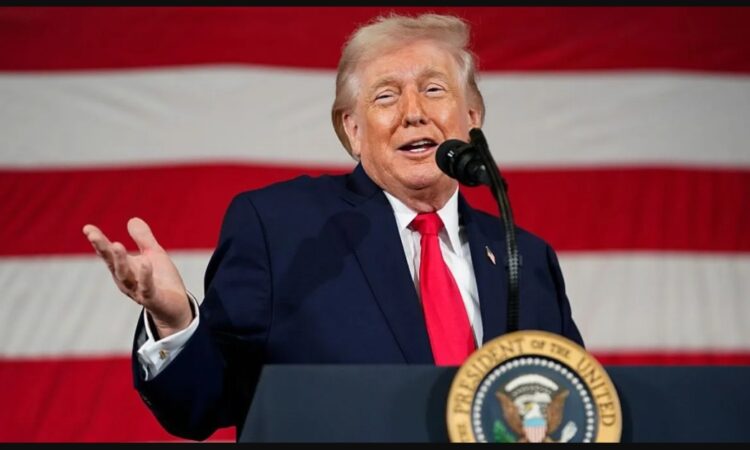
President Donald Trump recently said that if the Senate does not quickly pass a new voting bill called the SAVE Act, he will sign an executive order to make it happen anyway. The SAVE Act stands for the Safeguard American Voter Eligibility Act.
Trump says the bill would require people to show proof of U.S. citizenship in order to vote. By threatening to act on his own, he would be going around Congress, which could lead to a serious constitutional battle over whether he has the power to do that.
According to reporting from The Hill, Trump shared his thoughts in posts on his social media platform, Truth Social. He said there will be voter ID requirements in the upcoming midterm elections, whether Congress approves them or not.
He also claimed that most Americans want stricter rules, including proof of citizenship and limits on mail-in voting. However, he did say there should be exceptions for members of the military and people who are sick, disabled, or traveling.
About half an hour later, he doubled down and said he would move forward with executive action if lawmakers fail to pass the bill. He argued that there are legal reasons why what he calls a “scam” should not be allowed, and he promised to explain those reasons in the executive order.
The bill already passed the House of Representatives by a very close vote, but it is facing serious trouble in the Senate. The proposed law would add strict new rules for mail-in ballots.
Voters who choose to vote by mail would need to include a photocopy of a government-issued ID. If they cannot get an ID, they would have to send a written statement explaining why, along with the last four digits of their Social Security number.
The Senate is deeply divided over this issue. Only one Democrat, Senator John Fetterman, has shown support for the bill. On the Republican side, Senator Lisa Murkowski of Alaska has publicly said she opposes it. She warned that adding new federal rules so close to Election Day could cause confusion and make it harder for states to run smooth and fair elections. She said election officials are already deep into their preparations, and forcing sudden changes without enough time or resources could hurt election integrity rather than protect it.
Trump strongly criticized Democrats, calling them dishonest and accusing them of cheating. He urged Republicans to make voter ID laws their top priority going into the midterm elections. He argued that even many Democratic voters support voter ID requirements and claimed it would help Republicans win reelection.
At the same time, some Republicans are pushing for aggressive tactics in the Senate, such as a “talking filibuster,” which would keep debate going for a long time and put pressure on lawmakers. However, Senate Majority Leader John Thune is reportedly concerned that spending weeks fighting over voting reform could delay work on other major issues like housing reform, highway funding, market regulations, and the farm bill. Still, some Republican lawmakers believe the president should use every tool available to force the Senate to act.
In a separate issue, a new report from Democrats on the Senate Foreign Relations Committee claims that a deportation program under President Trump has cost U.S. taxpayers more than $40 million in the past year. The program involves sending migrants to countries that are not their home countries, a process known as third-country deportation.
The report includes a striking quote from a U.S. official who admitted that the goal of the program is to scare people. According to the report, the official said the administration wants migrants to believe they could be dropped “in the middle of nowhere.” The investigation, led by Senator Jeanne Shaheen, took ten months and produced a 30-page report examining how the program works and how much it costs.
More than $32 million of the total spending went to five countries: Equatorial Guinea, Rwanda, El Salvador, Eswatini, and Palau. In some cases, money was sent before any migrants even arrived. The cost per person has been extremely high. For example, Rwanda received $7.5 million but had only accepted seven people as of January 2026. Palau also received $7.5 million and had not taken in anyone at all by that time.
El Salvador has accepted the largest number of migrants, around 250 people. Even so, the cost per person was still more than $20,000. On top of that, the administration often uses military aircraft for these transfers, which can cost more than $32,000 per hour to operate. Because of the way the system works, taxpayers sometimes end up paying twice—once to send someone to a third country and then again to fly them to their actual home country.
Democrats involved in the investigation say they are concerned about the lack of oversight and transparency. They warn that without proper monitoring, it is unclear whether U.S. funds could be contributing to corruption or abuse in the receiving countries. Critics argue that the program appears to be more about intimidation than efficiency, given its high costs and limited results.