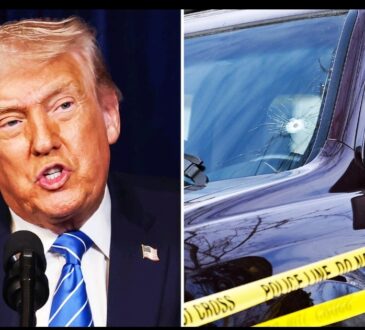


The U.S. political world was shaken over the weekend after President Donald Trump ordered military strikes against Venezuela and announced that Venezuelan President Nicolás Maduro and his wife, Cilia Flores, had been captured. The news immediately sparked strong reactions across Washington, especially from Democrats, many of whom are now calling for Trump to be impeached. They argue that the president acted without legal authority and put the country at serious risk by launching an attack without approval from Congress.
According to Trump, the United States carried out a large-scale military operation targeting Caracas, Venezuela’s capital. During this operation, U.S. forces reportedly detained Maduro and his wife. The Trump administration claims that Maduro is responsible for narco-terrorism and has played a major role in the flow of illegal drugs into the United States, which it says has contributed to thousands of American deaths. U.S. officials say both Maduro and Flores are facing criminal charges in federal court in New York.
Maduro has been accused by U.S. prosecutors for several years. He was first indicted in 2020 on drug trafficking and terrorism-related charges. In 2025, the U.S. government doubled the reward for information leading to his arrest to $50 million. Despite these accusations, Maduro has consistently denied all wrongdoing and has claimed the charges are politically motivated.
The White House has not yet publicly commented on the backlash. Newsweek reached out to the administration for a response, but no statement had been released as of Monday morning.
Reactions in Congress have been deeply divided. Many Republicans praised Trump’s actions and said the operation made the United States safer by cracking down on drug trafficking. They argue that previous administrations failed to act decisively and allowed drugs to pour into the country unchecked. Some Republicans have described the capture of Maduro as a historic moment and a major win for U.S. national security.
However, not everyone agrees. Several lawmakers from both parties have raised serious concerns about whether Trump had the legal authority to order the attack. The U.S. Constitution gives Congress the power to declare war, and critics argue that Trump bypassed this requirement. Democrats, in particular, say this could amount to an impeachable offense.
Representative Delia Ramirez of Illinois was one of the first Democrats to publicly call for impeachment. She said Trump’s actions violated both U.S. and international law and warned that allowing such behavior to go unchecked could set a dangerous precedent. She argued that Congress has a responsibility to step in when a president abuses power and urged lawmakers to pass legislation that would limit Trump’s ability to use military force without congressional approval.
Other Democrats echoed similar views. Representative Dan Goldman of New York said he believes the strikes clearly meet the standard for impeachment. Representative Maxine Waters of California said she had previously doubted whether impeachment was realistic given the political landscape, but now feels it may need to be reconsidered.
Several political candidates running for House seats also weighed in. California State Senator Scott Wiener said Trump should be impeached immediately, arguing that the president had no legal authority to invade Venezuela. He described the move as lawless and said it fit a pattern of behavior that should not be tolerated. Kat Abughazaleh, a candidate in Illinois, went even further, saying Trump should be impeached, convicted, and removed from office as quickly as possible.
Legal experts say there is at least an argument for impeachment. Brian Kalt, a law professor at Michigan State University, explained that violating constitutional limits on presidential power can qualify as an impeachable offense. However, he also noted that impeachment is unlikely to succeed. Republicans currently control the House of Representatives, and impeachment would require some Republican support to move forward. Even if the House did impeach Trump, the Senate would almost certainly not convict him, making removal from office extremely unlikely.
Kalt also pointed out that modern politics have made impeachment more common but less effective. He said presidents are now easier to impeach in theory, but harder to remove because party loyalty often outweighs legal or ethical concerns. He added that if Democrats regain control of the House, they may attempt impeachment even if they know conviction in the Senate is nearly impossible.
Another political expert, Robert Shapiro of Columbia University, agreed that impeachment would only matter if there were strong bipartisan support. Without a large number of Republicans backing the effort, it would likely fail and could even backfire by allowing Trump to portray himself as a victim of political attacks.
Shapiro also said it is too early to know how this situation will affect upcoming elections. The issue could energize voters on both sides and become a major factor in the midterm races later this year. For now, no formal impeachment articles have been filed, and it remains unclear whether any lawmaker plans to introduce them.
Public reaction outside Congress has been just as intense. Some political commentators have expressed fear that failing to act against Trump will encourage future military actions without oversight. Others argue that Trump is finally doing what previous leaders were unwilling to do by confronting foreign leaders accused of criminal behavior.
Democratic Senator Chris Van Hollen criticized the operation, claiming it was driven by a desire to control Venezuela’s oil resources and benefit wealthy donors and corporations. He accused Trump of using national security as a cover for economic interests.
On the other side, Republican Representative Mike Lawler strongly defended the president. He praised Trump for targeting drug traffickers and said the capture of Maduro would save American lives. Lawler argued that Trump’s actions have done more to stop the drug trade in one year than previous administrations accomplished over many years.
At this point, the future remains uncertain. No impeachment process has officially begun, and betting markets suggest a relatively low chance of impeachment in the near term, though the odds increase over the next few years. Trump has been impeached twice before during his first term, but both times the Senate declined to convict him. So far in his second term, Democrats have been more cautious about calling for impeachment, but that may change as events continue to unfold.
As the debate continues, the situation highlights deep divisions in American politics and raises fundamental questions about presidential power, the role of Congress, and how far a president can go without legal approval. Whether this moment leads to real consequences or becomes another chapter in an increasingly polarized political era remains to be seen.