Donald Trump just ‘changed forever’ who can become president after him: ‘Won’t be an option’

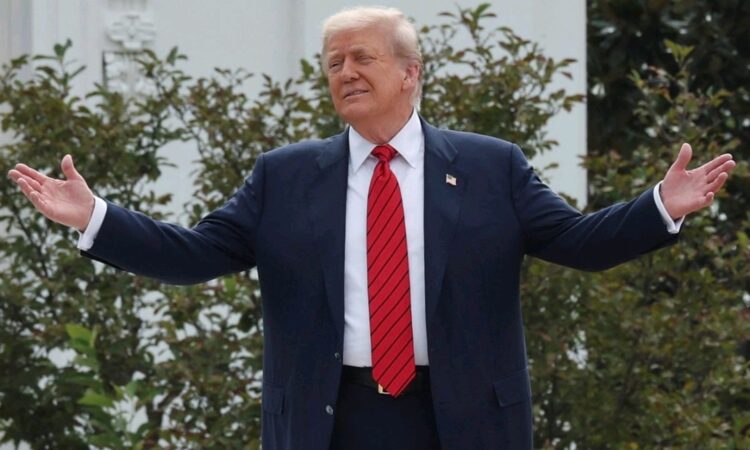
A political analyst has argued that the decisions Donald Trump is making during his second time in the White House may cause changes that cannot be undone.
According to the analyst, Trump has focused strongly on showing American power around the world. This has included actions involving places like Venezuela and Greenland, as well as military strikes on Iran. There have also been tense and poorly handled trade talks with members of NATO. The columnist Alexander Burns from Politico says that this is exactly the kind of situation that Joe Biden and later Kamala Harris warned voters about during the 2024 election campaign.
Burns believes it is unclear whether the person who becomes president after Trump will be able to fix the damage. In his view, it does not look very likely. He argues that Biden had tried to present himself as a defender of traditional American politics. Biden criticized Trump as someone who did not respect long-standing political rules and customs. He promised to make the government work more smoothly, rebuild trust in political norms, and eventually pass leadership on to a new generation.
However, Burns says that Biden’s administration moved too slowly and became stuck in political problems of its own. Because of this, it failed to achieve many of its goals. Burns suggests that if there was ever a chance to return to a more stable and predictable style of leadership similar to how the country operated in the 20th century that opportunity was missed. He believes that when Americans next choose someone to replace Trump, simply trying to go back to the old way of doing things will no longer be possible.
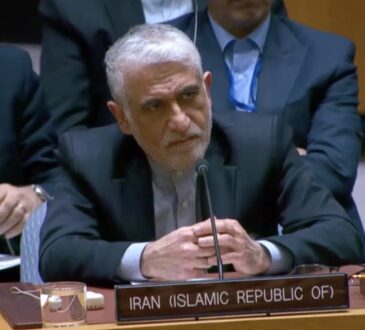
Burns argues that today’s political climate lacks subtlety and careful thinking. As a result, future leaders may find that some diplomatic strategies are no longer available. For example, he says the United States can no longer try to rebuild softer, more cooperative relationships with governments in places like Iran or Cuba, especially as those countries face serious internal problems. He notes that Barack Obama once attempted a more open approach with such countries as part of his broader vision for the 21st century, but Burns believes that door has now been permanently closed.
He also argues that America’s reputation as a reliable trade partner has already been deeply affected. Even if a future president wants to restore the type of trade relationships that existed during the time of George W. Bush, Burns doubts that it will be fully possible. In the same way, he believes that the global role and unity of NATO will not simply return to what it was in the late 1990s just because a new president promises support for allies. In his view, the world has changed too much, and the consequences of recent decisions may last for a very long time.