Donald Trump just gave countries worldwide the ‘green light’ for military invasions: analysis

The Trump administration’s decision to capture Venezuela’s president has triggered widespread criticism and concern, especially about what this action means for international law and global stability. The administration has repeatedly defended the operation by saying the Venezuelan leader was wanted by the United States on serious criminal charges. Critics argue that this justification is extremely dangerous because it lowers the bar for when military force can be used against another country’s leadership.
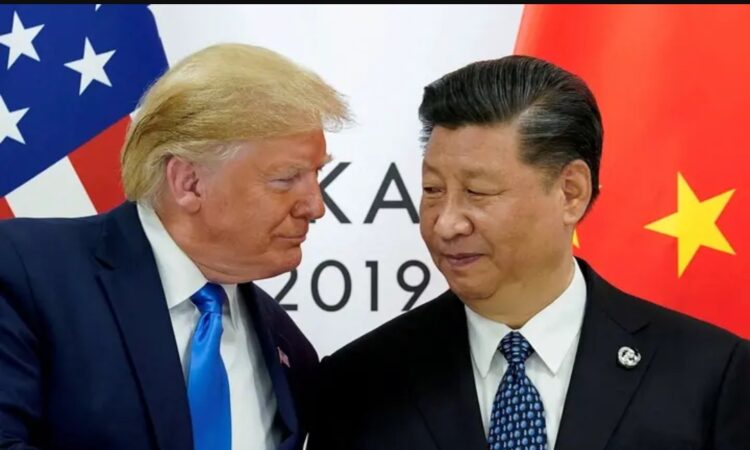
Political commentators have pointed out that if the United States claims it can send troops into another country, overthrow its government, and seize its president simply because that leader is accused of crimes under U.S. law, then other countries can easily copy that logic. Former MSNBC host Mehdi Hasan highlighted this concern by asking what grounds the United States would have to object if China did the same thing to Taiwan. If China invaded Taiwan, removed its president, and claimed legal justification under Chinese law, Hasan argued that Washington would have little credibility left to condemn it.
The situation became even more controversial when it was revealed that Venezuelan President Nicolás Maduro was captured during a large-scale military operation approved by President Trump and then transported to New York to face trial. The charges include narco-terrorism and illegal weapons possession. While the administration portrayed the move as a law enforcement action, critics say it was clearly a military invasion of a sovereign country, no matter how it was framed.
This move appeared to directly contradict Trump’s long-standing public image as a president opposed to foreign wars and military entanglements. Throughout his political career, Trump often criticized past administrations for intervening abroad. Now, observers say, this operation makes it harder to take those claims seriously. Even within the administration, officials struggled to clearly explain how the action fit within legal and ethical boundaries. Vice President JD Vance, in particular, faced backlash for attempting to justify the operation online, with many accusing him of bending logic to defend the indefensible.
Other analysts warned that the fallout could be global. Some argued that the United States had effectively handed authoritarian leaders a ready-made excuse to justify aggression. One commentator said the action gave China the “green light” it needs to invade Taiwan, while another warned it could be used by Russia to justify capturing Ukraine’s president. The concern is not that these countries needed encouragement, but that the U.S. has now weakened its ability to argue against such actions in principle.
The United States has long maintained a policy of strategic ambiguity regarding Taiwan. It does not officially recognize Taiwan as an independent country, but it strongly supports Taiwan’s ability to govern itself and plays a major role in its defense and economy. China, meanwhile, insists that Taiwan is part of its territory and has repeatedly said it is willing to use force to bring it under its control. For decades, the U.S. has relied on moral authority, alliances, and international norms to discourage China from acting militarily.
Critics now argue that this authority has been badly damaged. By launching what many see as an unprecedented military strike to seize a foreign leader, the U.S. may have undercut its own arguments against similar behavior by other powerful nations. If international rules are applied only when convenient, they warn, then those rules stop meaning much at all. In that sense, the Venezuela operation may have consequences far beyond one country, reshaping how global powers justify force and making the world a more unstable and unpredictable place.