
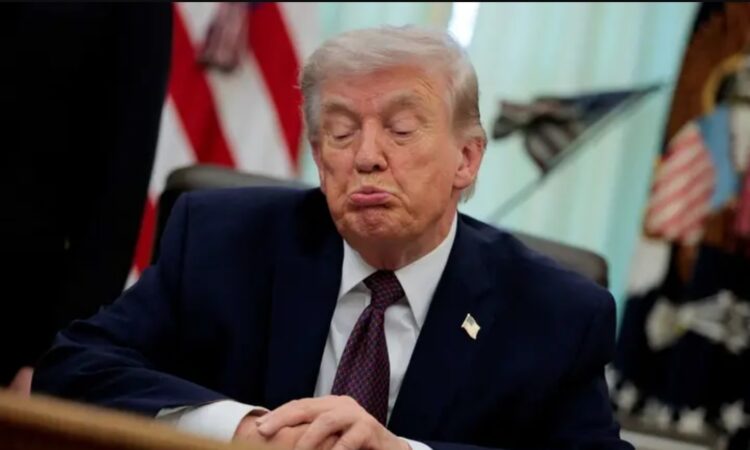
Donald Trump has just been given a pretty embarrassing reminder about how government actually works and he’s clearly not pleased about it.
A U.S. judge named Richard Leon has stopped Trump, at least for now, from continuing with his plan to build a huge $400 million ballroom where part of the White House used to be. Trump had already torn down the East Wing to make space for it. This project was one of his most visible attempts to reshape the White House itself.
In a detailed written decision, the judge explained that Trump probably does not have the legal power to make permanent changes to something as important as the White House without getting approval from Congress first. Interestingly, this judge was appointed by George W. Bush, so this isn’t coming from a political opponent it’s about the law.
The key idea here is “authorization.” In simple terms, it means having official permission. In the U.S. system, the president doesn’t just get to do whatever he wants. Power doesn’t start with the president it comes from the people. And the branch of government that most directly represents the people is Congress. That’s why the Constitution gives Congress its powers right at the beginning.
Because of that, if a president wants to do something major especially something that could last for generations, like changing the White House they usually need Congress to approve it.
The judge’s decision is what’s called a preliminary injunction. That means he believes the group suing Trump the National Trust for Historic Preservation has a strong chance of winning the case. It also means that if construction continues in the meantime, it could cause damage that can’t be undone. So everything is paused while the legal fight continues.
This lawsuit started after Trump demolished the East Wing, which had been part of the White House for over a century and was expanded during the time of Franklin D. Roosevelt. Trump wants to replace it with what he calls the finest ballroom in the country.
According to the plans, this ballroom would be enormous bigger than the main living area of the White House and the West Wing combined. If built, it would become the most dominant part of the complex. Critics say that would symbolically shift the focus of the White House away from being a place where the president works and lives, and more toward a place for grand events and personal showmanship.
Trump has argued that the project shouldn’t be a problem because it’s being paid for by private donors, not taxpayers. He says he has raised hundreds of millions of dollars from wealthy supporters and companies. From his perspective, that means he doesn’t need Congress to approve funding.
But the judge rejected that argument. He made it clear that just because private money is being used doesn’t mean the president has the authority to tear down part of the White House and rebuild it however he wants. The judge even emphasized that the president is not the owner of the White House he’s more like a temporary caretaker responsible for preserving it for future presidents and the public.
That idea that the president is a steward rather than an owner seems very different from how Trump tends to think. Coming from a real estate background, he appears to see projects in terms of ownership, control, cost, and speed. But government doesn’t work that way.
This ruling is another reminder that a president’s power has limits. Even if Trump believes his project is impressive, efficient, or privately funded, that doesn’t automatically make it legal. The system is designed so that big decisions, especially ones that affect national symbols or long-term public interests, require broader approval.
Trump’s reaction was angry. He criticized the group that sued him and defended the project by saying it’s under budget, ahead of schedule, and free for taxpayers. From a business perspective, those are strong arguments. But in government, legality matters more than efficiency or cost.