Donald Trump says he’s ‘entitled’ to illegal third term as allies work to back effort

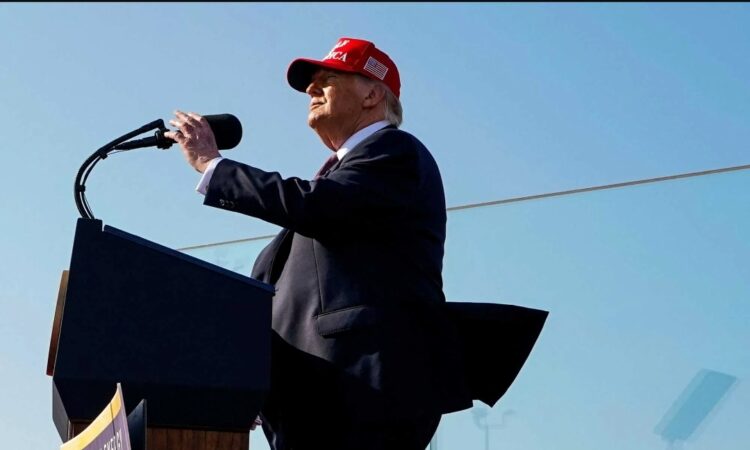
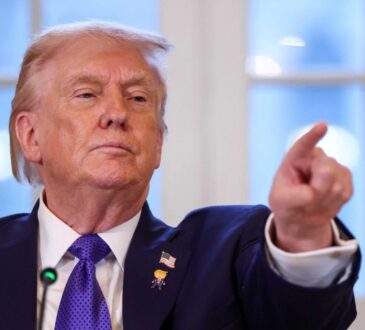
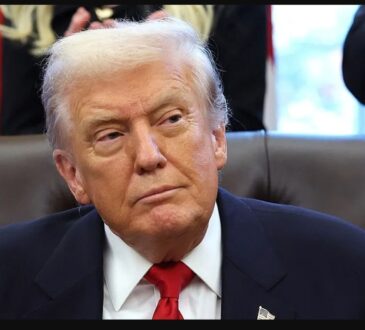
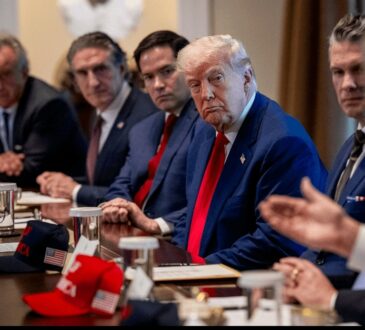
Donald Trump spoke at an event at the Port of Corpus Christi in Texas on February 27, 2026. During his remarks, he suggested that he believes he deserves to serve a third term as president, even though the U.S. Constitution clearly limits presidents to two terms. His comments quickly sparked concern among people who believe strongly in democratic rules and the peaceful transfer of power.
While addressing the crowd, Trump asked them, “Maybe we do one more term. Should we do one more?” The audience responded with loud cheers. He then added, “We are entitled to it,” suggesting that he believes he has a right to remain in office beyond the usual limits. Just days earlier, during his State of the Union address, he once again repeated his long-debunked claim that Democrats stole the 2020 presidential election from him and gave it to Joe Biden. Trump argued that because he believes the 2020 election was unfair, his current term should actually count as his third.
However, under the 22nd Amendment to the Constitution, no president can be elected more than twice. This rule was added after President Franklin D. Roosevelt served four terms, and it was meant to prevent any one person from holding too much power for too long. Changing this rule would require a constitutional amendment. That process is extremely difficult. It would need approval from two-thirds of both the House and the Senate, and then it would have to be ratified by three-fourths of the states. Given the deep political divisions in the country, such an amendment is considered nearly impossible before the 2028 election.
Many political experts warn that attempts to extend presidential term limits are often associated with authoritarian leaders. When leaders in other countries remove or ignore term limits, it is frequently seen as a step away from democracy. For example, in 2018, Xi Jinping removed constitutional term limits in China, allowing himself to potentially stay in power for life. At the time, Trump publicly praised Xi and commented positively about the idea of being president for life, which raised eyebrows among critics.
Trump has hinted at serving more than two terms on several occasions over the years. Sometimes he frames the idea jokingly, but other times his remarks appear more serious. Some of his supporters openly say they would like him to remain president indefinitely. Certain influential allies have also supported the idea of a third term. These include Lindsey Graham, a Republican senator, and Steve Bannon, a political strategist who was convicted of fraud and later granted clemency by Trump. Their public support adds to concerns that talk of a third term is not just casual rhetoric but part of a broader political strategy.
Since changing the Constitution appears highly unlikely, attention has turned to other reported efforts by Trump’s allies to reshape election rules. According to reporting by The Washington Post, a group of right-wing activists has been drafting a proposed executive order that would give the president unusually broad authority over federal elections. The draft reportedly includes measures that could restrict mail-in voting and limit the use of certain voting machines ahead of the 2026 midterm elections.
An April 2025 version of the draft order was later published by Democracy Docket, which described the document as being filled with errors and questionable claims. The draft reportedly argues that there was Chinese interference in the 2020 election. However, the Office of the Director of National Intelligence concluded after reviewing intelligence reports that there was no evidence of Chinese interference that changed the outcome of the election.
Critics argue that using claims of foreign interference as justification for expanding presidential control over elections could weaken the independence of the voting system. In the United States, elections are largely run by states, not by the president, in order to prevent any single leader from controlling the process. Expanding executive authority in this area would represent a significant shift in how elections are managed.
Marc Polymeropoulos, a national security contributor for MSNBC, strongly criticized the draft proposal, calling it extreme and authoritarian. His comments reflect broader concerns among democracy advocates who fear that even discussing a third term or expanding presidential control over elections could undermine public trust in democratic institutions.
Overall, Trump’s remarks about a possible third term, combined with reported efforts to change voting rules, have intensified debate about the future of American democracy. Supporters see his comments as bold leadership and a challenge to what they view as a flawed political system. Critics, however, see them as a direct challenge to constitutional limits and long-standing democratic norms designed to prevent any one leader from holding power indefinitely.