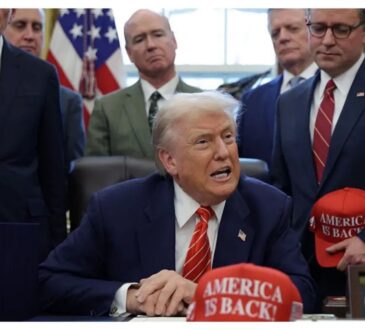

Donald Trump is once again lashing out, this time at Harvard University, after reports revealed that he quietly backed away from a major demand he had made against the school. The news made him look weak and exposed the limits of his leverage, and his reaction was explosive.
A Harvard political scientist argues that this clash is not just about one university or one political spat, but about how powerful institutions respond when faced with intimidation from a political leader who relies on fear and spectacle to get his way.
The situation escalated after The New York Times reported that Trump had reversed course on a key demand he had previously insisted Harvard must meet. Rather than calmly addressing the report, Trump launched into a series of angry public outbursts.
He demanded that the newspaper issue a correction, accused it of dishonesty, and then doubled down by threatening Harvard with even harsher consequences.
Among his new threats were calls for the university to hand over another billion dollars and even suggestions that Harvard should be criminally prosecuted. The intensity and chaos of these responses made him appear rattled and desperate to regain control of the narrative.
Behind the scenes, Harvard officials appear to have deliberately let word of Trump’s retreat leak out. The goal was not subtle. It was meant to expose his bluff and embarrass him at a moment when he was already politically vulnerable.
The strategy worked. Instead of projecting strength, Trump came across as impulsive and insecure, reacting emotionally rather than strategically. His threats felt rushed and poorly thought out, reinforcing the idea that his power often depends on others choosing not to challenge him.
This episode raises an uncomfortable question for many institutions: if pushing back can weaken Trump’s position, why do so many organizations still choose to comply or stay silent? Fear, uncertainty, and a desire to avoid conflict often lead universities, corporations, and government bodies to give in preemptively. But as this case shows, standing firm can sometimes flip the power dynamic and force Trump into defensive, self-damaging behavior.
Ryan Enos, a political scientist at Harvard, has long argued that resistance from strong institutions is essential in moments like this. He explains that Harvard’s current stance did not happen overnight. It was shaped by internal debates, concerns about long-term precedent, and a recognition that yielding once would invite even more aggressive demands later.
According to Enos, this fight matters far beyond Harvard’s campus. It reflects a broader struggle over whether democratic institutions will protect their independence or slowly surrender it under pressure.
As the country shows signs of drifting toward more authoritarian norms, these confrontations become symbolic. When respected institutions stand their ground, they demonstrate that intimidation does not always work and that power still has limits. The outcome of Harvard’s standoff with Trump could influence how other organizations respond in the future. The central question now is whether Harvard will continue to hold firm, and whether others will learn from this moment that resisting political bullying is not only possible, but necessary.