

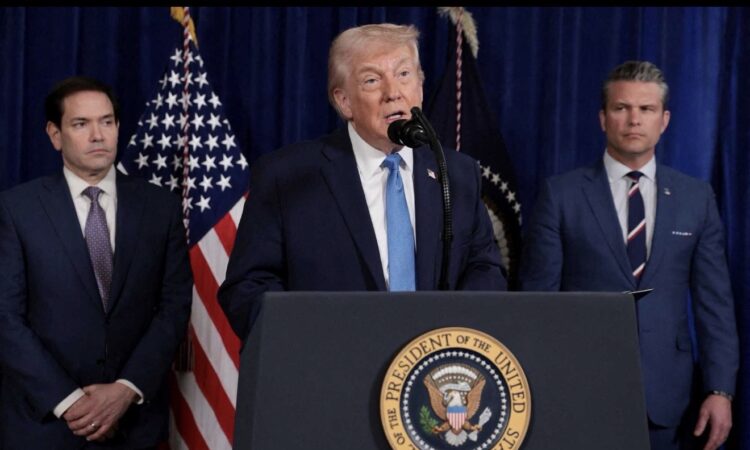
The Supreme Court delivered a major ruling against Donald Trump by striking down his tariff policy. The justices said clearly that only Congress has the constitutional power to impose taxes. Chief Justice John Roberts explained that the country’s founders never gave the president authority to raise taxes on his own, and tariffs are legally considered a form of taxation.
Many news outlets first described the decision as a political loss for Trump because tariffs had been one of the main pillars of his economic strategy. However, some analysts believe the ruling may have prevented bigger economic and political problems for him.
Before the court decision, new economic data showed the U.S. economy slowing more than experts expected. Consumers had begun cutting back spending because prices were rising. Economists say tariffs increase the cost of imported goods, and businesses usually pass those costs directly to customers. That means ordinary Americans end up paying more for everyday products such as electronics, clothing, tools, and household items.
Government figures showed that nearly $290 billion was collected through customs duties in one year alone, about three times higher than the previous year. Research from the Federal Reserve Bank of New York indicated that more than 90 percent of those costs were ultimately paid by American consumers, not foreign countries. This contributed to falling consumer confidence and growing frustration over high prices.
The court’s ruling made one important point very clear to the public: tariffs are taxes. Because Congress never approved these large increases, the justices ruled that the policy went beyond presidential authority.
Justice Brett Kavanaugh warned that undoing the tariffs could create serious complications, especially regarding refunds. Billions of dollars had already been collected, and figuring out whether the government should return that money — and to whom — could be extremely difficult. Importers officially paid the tariffs, but critics argue that consumers were the ones who truly bore the financial burden through higher prices.
After the decision, Trump strongly criticized the court and quickly announced plans to introduce a new round of tariffs using a different law that allows temporary trade restrictions. When reporters asked why he did not work with Congress to pass tariffs legally, Trump said he believed he already had the authority to impose them.
The ruling has now sparked a larger debate about presidential power and economic policy. Supporters of tariffs argue they protect American industries and give the United States leverage in trade negotiations. Critics say aggressive tariffs raise costs for American families and create uncertainty for businesses and investors.
The Supreme Court decision reinforced a basic constitutional rule: major tax policies must come from Congress, not a single president. But the political and economic fight over tariffs is far from over, as new legal battles and policy debates are expected to continue.



dtrump wants nothing less than being a dictator
The President has always gone beyond his duty as a sitting president. Congress and everyone else let’s him get away with breaking the law. What other sitting president has criminal indictments running a country. He is an indicted criminal telling the country what to do. I can’t think of anything as far from democracy as a president inciting a riot on the white house and still a sitting president.
would have been nice if they had done this right away instead of waiting a YEAR!!!!