Donald Trump’s ‘Dehumanizing’ Use Of This Phrase Sends A Message To Muslim Communities, Experts Say

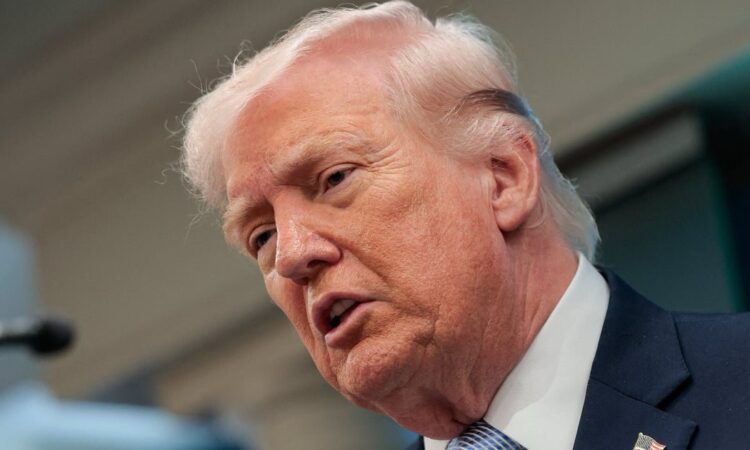
Experts say the president’s comments were not just strange, but also offensive and showed a lack of understanding.
They believe that Donald Trump has been using language about Muslims that strips away their humanity, especially at a time when tensions with Iran are rising. According to specialists in Islamic studies and Muslim advocacy groups, this kind of language is not accidental it is deliberate and part of a wider pattern.
On Easter Sunday, Trump posted an angry and aggressive message on his social media platform, Truth Social. In it, he threatened to attack Iran in a way that experts say could break international law and even count as war crimes. He demanded that Iran reopen the Strait of Hormuz, a very important route for global oil shipments, and used harsh, profane language to deliver that message.
At the end of his threat, he added the phrase “Praise be to Allah,” which is commonly used by Muslims to show gratitude and respect to God. This caused even more anger, as many people felt he was mocking Islam by placing a sacred phrase next to violent and offensive language.
The reaction was immediate and came from people across different political views. The Council on American-Islamic Relations strongly criticized the post, calling it reckless, dangerous, and deeply disrespectful.
They said it showed a lack of care for human life and open disrespect toward religious beliefs. They also pointed out that this was not an isolated case, but part of a long history of anti-Muslim comments and policies that have made Muslims feel targeted both in the U.S. and around the world.
According to the group, using a phrase like “Praise be to Allah” in such a threatening message is especially troubling. It turns something sacred into a tool for shock and provocation, while at the same time putting down the religion it comes from.
Iman Awad from Emgage explained that the biggest concern is not just the threat itself, but how serious it could be. She said the message included threats that could amount to war crimes and described the post as reckless and likely to inflame tensions.
She also warned that this kind of language has real-world consequences. When leaders speak about violence so casually, it can make extreme actions seem more acceptable. Over time, it can change how people think about what is normal in politics and public discussion, both in foreign policy and at home.
Things escalated further when Trump later warned that an entire civilization could be destroyed if Iran did not meet his demands. This only increased fears about how serious the situation could become.
Professor Ibrahim N. Abusharif said Trump’s message revealed three main things: a direct threat of violence, the mocking of a religious tradition, and the choice of Easter a significant Christian holiday—as the time to post it. He explained that the offensive language was not just random, but likely used to distract from how serious the threats actually were.
He also described Trump’s use of “Allah” as bizarre and showing ignorance. He pointed out that “Allah” is simply the Arabic word for God, used by millions of people, including Arabic-speaking Christians. He even noted that Jesus himself would have used a similar word in his own language, showing how closely related these religious traditions are.
Awad agreed that the use of the phrase was deeply offensive. She said placing a sacred expression next to violent threats aimed at a Muslim-majority country turns that expression into a political tool rather than treating it with respect. It sends a message that Islamic beliefs are being used for attention and shock value.
She stressed that the issue is not just about words, but about the impact those words have. When such statements come from a powerful leader, they carry weight and can affect real people’s lives. She believes the message was likely designed to provoke anger and spread widely online.
Awad also warned that if people do not challenge this kind of language, it can slowly become normal. Over time, this lowers expectations for how public officials should behave and what kind of speech is acceptable.
She ended by saying that religious language should never be used as a weapon, and that Muslim communities deserve the same level of respect and protection as any other group.