Health Expert Predicts How Much Time Donald Trump Has Left to Live as His Illness Allegedly Worsens

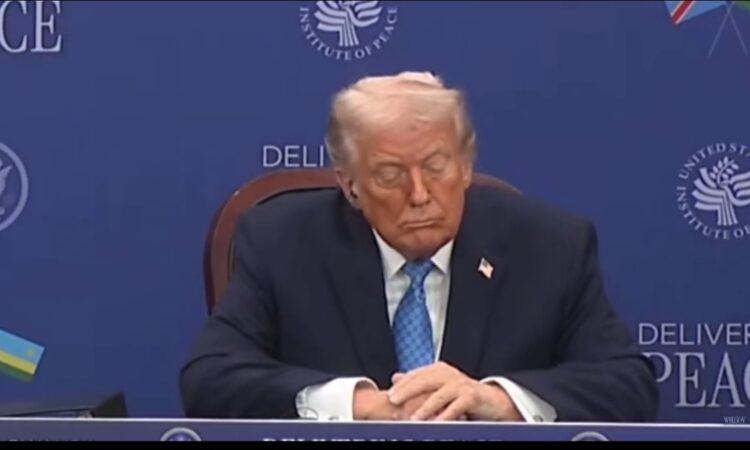
Speculation about Donald Trump’s health is spreading fast again, especially after his recent appearance at the World Economic Forum in Davos and a tabloid report that pushed a shocking claim from a health professional.
A physical therapist named Adam James has suggested that Trump may have as little as four months to live. There has been no official medical report to support this, but the claim has still gone viral and sparked intense debate online.
In recent months, many people watching Trump speak publicly have noticed moments that feel uncomfortable and hard to ignore. These are not the usual dramatic pauses or deliberate rhetorical tricks.
Instead, they look like genuine lapses, moments where he seems to lose his train of thought and struggle to reconnect with what he was saying. Since returning to the presidency last year, these moments have become more frequent, leading some observers to wonder whether something deeper is going on.
At Davos, what was supposed to be a confident, high-profile speech quickly turned awkward. Trump mixed up Greenland and Iceland, drifted off mid-sentence, and jumped between unrelated topics.
While a small mistake might normally be brushed off, the overall performance raised eyebrows because of how often he appeared confused or unfocused. For some, this was no longer just about politics or style, but about his health.
That concern took a darker turn after Adam James spoke to political commentator David Pakman. James claimed that Trump’s recent behavior, including rambling speech, apparent drowsiness in public, and near stumbles, could point to serious physical and neurological decline. He went as far as to suggest that Trump may only have months left to live, a statement that shocked many and immediately drew attention.
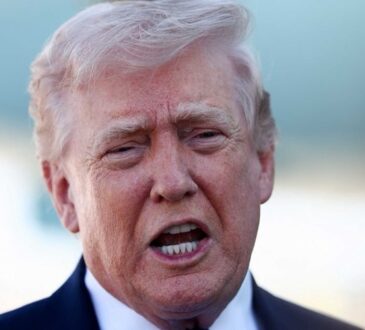
James also focused on visible bruises that have appeared repeatedly on Trump’s hands, marks that are sometimes covered with makeup. The White House has said these bruises come from frequent handshaking, but James strongly disagreed.
He argued that the marks look more like injection sites, possibly from IV treatments used to remove excess fluid from the body. According to him, this could mean Trump is receiving regular medical intervention just to stay functional and avoid hospitalization.
Beyond physical health, James expressed even greater concern about Trump’s mental state. He pointed to what he described as a breakdown in impulse control, something managed by the frontal lobe of the brain.
As an example, he cited a recent moment when Trump appeared to reference a classified military matter while openly admitting he was not supposed to talk about it, yet continued anyway. To James, this was not a simple slip of the tongue, but a sign that the brain is no longer able to stop inappropriate or risky speech.
James believes Trump’s frequent loss of focus and sudden topic changes are signs that the frontal lobe may be deteriorating. He suggested that this kind of decline could explain why Trump often seems unaware of how his words sound or why he struggles to stay on track during speeches.
He compared Trump’s situation to that of actor Bruce Willis, whose cognitive decline eventually forced him to step away from his career. James noted that Willis began showing noticeable symptoms years before his diagnosis became public, and he believes Trump may be following a similar pattern.
According to James, if the condition is frontotemporal dementia, life expectancy after diagnosis is often between seven and twelve years, and Trump may have been showing symptoms long before his first election win.
Based on how quickly the symptoms appear to be worsening, James arrived at his alarming estimate of just four months. In his view, the intense pace and urgency of the current administration may be driven less by policy goals and more by an awareness that time is running out.
James also made a controversial claim about Trump’s medical imaging. He suggested that Trump’s medical team may have quietly switched from MRI scans to CT scans. The reason, he said, is that MRIs would clearly show brain shrinkage, while CT scans are less detailed. According to this theory, the change is meant to hide visible evidence of neurological decline from the public.
In the end, James argues that the real risk is not just physical weakness, but the inability to control speech or judgment. While medical teams can manage appearances behind the scenes, those efforts fall apart the moment Trump steps up to a microphone.
As public lapses grow more frequent and physical signs become harder to hide, the debate has shifted. For many watching, the question is no longer whether Trump is unwell, but how long the image of strength and vitality can realistically be kept alive.