
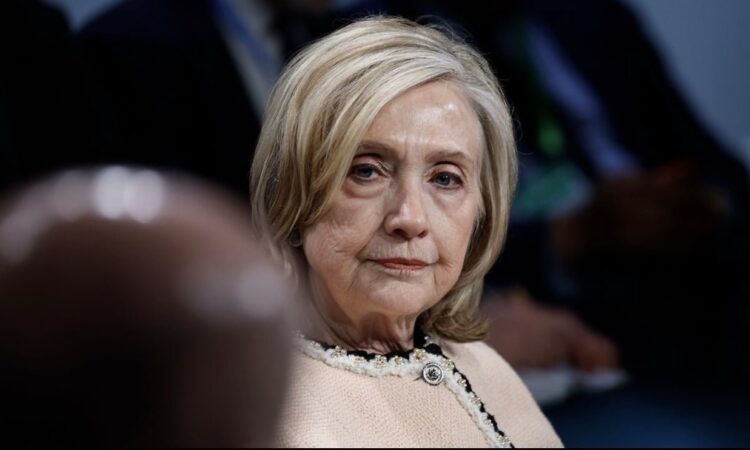
Former U.S. Secretary of State Hillary Clinton had a very tense and emotional exchange during a panel discussion at the Munich Security Conference in Germany. What started as a political debate quickly turned into a heated back-and-forth that showed just how deep the divisions are over President Donald Trump and his influence on global politics.
Clinton strongly criticized Trump during the panel. She accused him of damaging America’s reputation around the world and weakening important alliances, especially NATO. She said that his leadership style reminds her of Russian President Vladimir Putin, describing it as a model of power that is not accountable and not transparent. According to Clinton, Trump has turned away from long-standing Western values and democratic principles.
Her comments were direct and serious. She warned that the direction Trump is taking could hurt not only the United States but also the broader Western alliance. She suggested that the world is watching how America behaves, and that leadership matters greatly during times of global tension, especially with ongoing conflicts like the war in Ukraine.
Czech politician Petr Macinka, who was sitting on the same panel, reacted with a sarcastic comment. He joked that it was obvious Clinton really did not like Trump. Some people in the audience laughed at his remark, but Clinton did not smile. She looked serious and immediately responded.
She said that yes, she does not like Trump, but not because of personal feelings. She said she dislikes what he is doing to American democracy and to America’s relationships with other countries. She urged people in the room to seriously think about the long-term consequences of his actions rather than dismissing criticism as political bias.
Macinka then defended Trump. He argued that Trump’s rise is a reaction to cultural and political movements that many ordinary people feel have gone too far. He mentioned issues like cancel culture, climate activism, and what he described as “woke” ideology. In his view, these movements have moved away from the concerns of everyday citizens. He suggested that Trump’s leadership is a pushback against those trends.
As he listed these grievances, Clinton appeared frustrated. She shook her head and quietly reacted as he spoke. When Macinka criticized what he called the “gender revolution,” Clinton interrupted him sharply. She asked whether he meant women having equal rights. Her tone suggested she believed he was attacking basic civil rights rather than extreme policies.
Macinka responded by criticizing the idea that there are more than two genders. He argued that these cultural debates show how far left-wing politics have shifted. He said this shift has made many people uncomfortable and contributed to Trump’s support.
Clinton then brought the discussion back to foreign policy. She asked whether disagreements over cultural issues justify weakening support for Ukraine, where people are fighting and dying for their freedom. She suggested that even if there are cultural disagreements at home, that should not mean turning away from democratic allies abroad.