
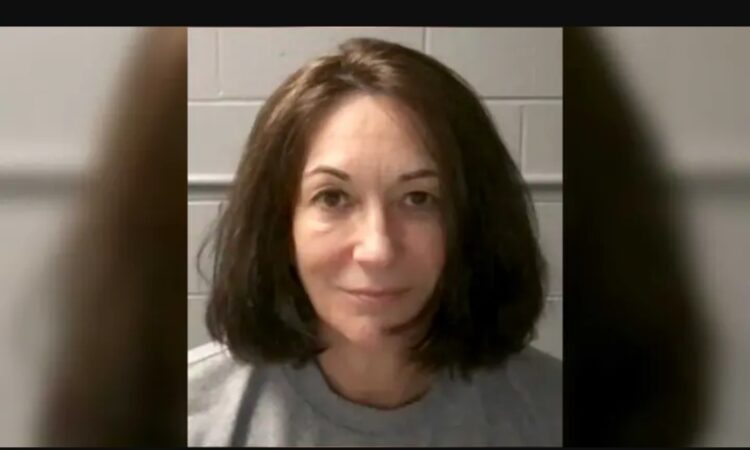
A mugshot of Ghislaine Maxwell taken at the Metropolitan Detention Center in New York has been circulated, reminding people that she is still serving time for her role in Jeffrey Epstein’s sex trafficking crimes. In the small Texas town where she is now imprisoned, people are talking openly about their fears that President Donald Trump might choose to pardon her. The town is home to a women’s federal prison camp that has recently become well known because of Maxwell’s transfer there.
As Christmas approaches, the level of concern has grown. This time of year is when presidents often issue pardons, and because Trump has not ruled out the idea of pardoning Maxwell, some residents believe it could actually happen. This possibility has made many locals feel uneasy, frustrated, and even betrayed, since Maxwell was found guilty of serious crimes involving the exploitation of young girls.
Residents are especially confused about why she was moved to a prison camp, which is generally reserved for people convicted of less violent crimes and who pose a lower escape risk. Her transfer became even more controversial because it happened while the public conversation about Epstein’s trafficking network was becoming louder and more emotional. It has left the town questioning whether she is getting special treatment, and why powerful people seem connected to where she is held.
Emily Trull, a 27-year-old life insurance worker who voted for Trump, said that freeing Maxwell would feel insulting to the entire justice system. She explained that pardoning someone convicted of grooming and trafficking minors would send a damaging message, and she believes Maxwell should be in a much tougher prison because of the nature of her crimes. Her opinion reflects the feelings of many people in the town who supported Trump politically but now fear he could make a choice they see as morally wrong.
Trump has not denied that a pardon could happen. He has known Maxwell for many years, and this long history worries people who think personal relationships may affect decisions that should be based on law and fairness. Maxwell is currently serving a 20-year sentence for sex trafficking and related crimes, and the decision to move her to this camp came after she was said to have met with Deputy Attorney General Todd Blanche. There has been no public explanation from the government about why she qualifies for camp placement, which has only deepened suspicion.
Inside the prison camp, inmates feel disturbed as well. One inmate said that everyone she talked to was upset and disgusted by Maxwell being placed there. She mentioned that Maxwell’s status does not fit the usual criteria for camp-level custody. Prison camps are meant for people who are not likely to run, not involved in violent or sexual crimes, and not facing decades in prison.
The prison where Maxwell is being held is close to everyday life. It sits less than a mile from downtown Bryan and about five miles from Texas A&M University. The facility has a chain-link fence topped with razor wire, but it lacks the strong layers of security seen in higher-risk prisons. There are no guard towers, no heavy walls, and no large number of armed staff. For locals, the idea that someone convicted of such serious crimes is held in a place so close to homes, businesses, and students feels unsafe.
The inmate at Bryan explained that prison camps are known to be easier to escape from. According to her, the fence does not even fully surround the camp, and guards are not equipped with weapons. She said that if someone wants to leave, they can literally walk away, and the guards are not trained or allowed to chase after them. This information adds another layer of anxiety for people living nearby, who fear that Maxwell could escape or disappear.
What makes the situation even stranger is that camp inmates traditionally have short sentences and usually come from backgrounds involving fraud, financial crimes, or other nonviolent offenses. Because their sentences are short, they usually have no desire to escape; they simply wait out their time and then return home. Maxwell, however, still has at least 12 years left to serve, which gives her a very different motivation. Some worry that if she did escape, Trump could avoid dealing with the public backlash of pardoning her.
All of this has created a mix of fear, confusion, anger, and distrust. People in the town worry that the justice system is bending to benefit someone with money, fame, and connections, rather than treating her like any other convicted criminal. They are afraid that a presidential pardon would send the message that certain people, especially those tied to powerful individuals, are above the law. Others worry that politics, personal relationships, or hidden deals might influence legal decisions.
The broader conversation around Maxwell also raises difficult questions about how society handles major crimes involving trafficking and exploitation. Many believe that anyone who took part in destroying the lives of young victims should face serious punishment. Seeing her in a lenient environment makes some feel as though the suffering of those victims is being ignored.
At the same time, rumors, unanswered questions, and the mystery of Epstein’s larger network continue to hang over the situation. People want to know who else was involved, who protected them, who looked the other way, and whether justice will ever reach everyone connected to those crimes. This gives the possibility of a pardon even more emotional weight, because it connects to fears that the full truth may never come out.
For now, the town remains tense. Residents are waiting to see what Trump will do, unsure whether politics or justice will win. Inmates are talking quietly among themselves, worried that someone with serious charges is being housed in a system designed for minor offenders. And the country is watching, wondering if a high-profile criminal will receive special treatment while many ordinary people who commit smaller crimes remain behind bars.
The situation highlights how deeply people care about fairness, safety, and accountability. It shows how upsetting it can be when famous or wealthy individuals appear to receive different rules. Above all, it reflects how fragile trust in government and the justice system can become when decisions are made behind closed doors, without clear explanation, in cases where so much harm has already been done.