Iran says it has ‘one word only’ for America in tense emergency UN Security Council meeting

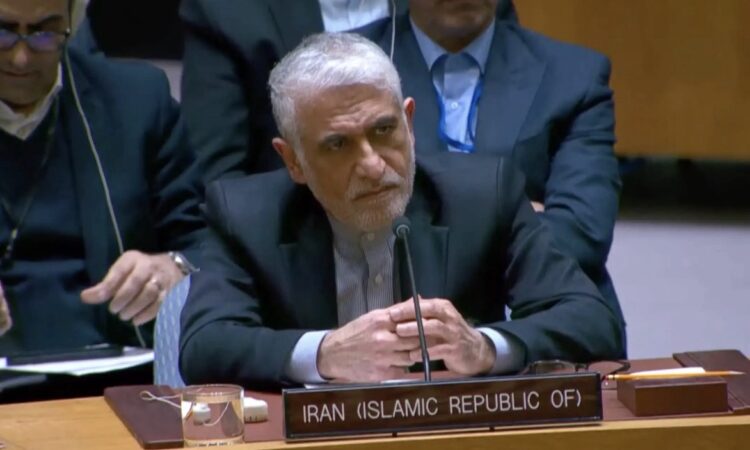
Tensions rose sharply at the United Nations in New York after Iran’s ambassador delivered a blunt message to the United States following deadly airstrikes.
The crisis began after the United States and Israel carried out coordinated airstrikes on several Iranian cities on February 28. During the attacks, Iran’s Supreme Leader, Ali Khamenei, was killed. His death marked a major turning point for Iran and sent shockwaves across the Middle East.
Khamenei had led Iran since 1989, taking over after the death of Ruhollah Khomeini, who had come to power following the 1979 Islamic Revolution. For more than three decades, Khamenei was the most powerful figure in Iran, shaping its foreign policy, military direction, and internal political system. His sudden death has thrown the country into political uncertainty and deep crisis.
After the airstrikes, Iran responded quickly. The country launched missile and drone attacks aimed at targets across the Middle East. Iranian forces also attempted to strike US military bases in the region. The situation has raised fears of a wider regional war, with many countries watching closely.
At an emergency meeting of the UN Security Council, Iran’s ambassador, Amir Saeid Iravani, strongly condemned the United States and Israel. Speaking directly to the US representative, he said he had “one word only” for the United States and advised the US ambassador to “be polite.” He added that it would be better for both the ambassador and the country he represents.
The US ambassador, Mike Waltz, refused to respond in detail. He said he would not “dignify” the remarks with a further answer. Waltz then sharply criticized the Iranian government, accusing it of killing thousands of its own people and imprisoning many more who demanded freedom.
Iravani described the airstrikes as a deliberate and unprovoked act of aggression. He said the United States and Israel had launched a planned attack against Iran for the second time in recent months. He called the action a war crime and even a crime against humanity. He rejected any claims that the strikes were necessary to prevent an imminent threat, saying those arguments had no legal or moral basis.
The attacks happened shortly after talks between the United States and Iran over Iran’s nuclear program ended without any agreement. Former President Donald Trump had previously warned that if no deal was reached, military action could follow. He also warned Iran against retaliation, threatening further action if Iran escalated the situation.
Following Khamenei’s death, Iran’s president, Masoud Pezeshkian, described revenge as a “legitimate duty and right.” He said Iran considers it its responsibility to seek justice against those responsible and promised that the country would respond with full strength.
The exchange at the United Nations showed just how serious the situation has become. Both sides used strong language, accusing each other of violence, aggression, and wrongdoing. With military strikes already carried out and retaliation underway, many fear that diplomatic solutions are becoming harder to achieve.
The world is now watching closely to see whether tensions will calm through negotiation or continue to escalate into a broader conflict that could affect not only the Middle East but global stability as well.