
A federal appeals court judge has thrown out a misconduct complaint that the U.S. Justice Department filed against a judge who had publicly clashed with President Donald Trump’s administration over the deportation of Venezuelan migrants to El Salvador.
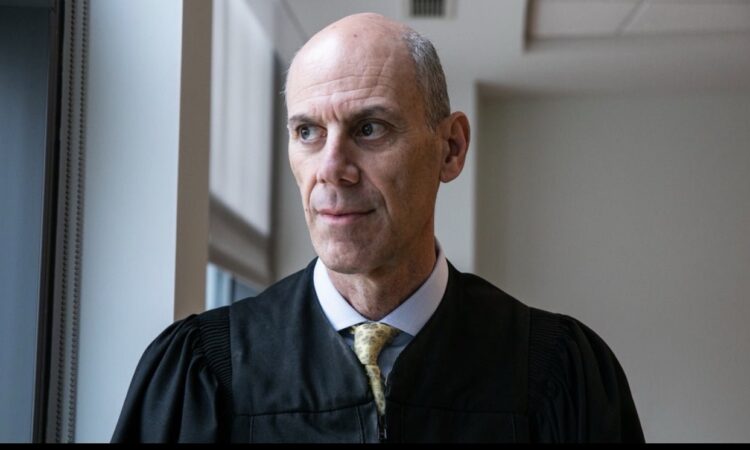
The judge at the center of the dispute is James Boasberg, the chief U.S. district judge in Washington, D.C. He was appointed by former Democratic President Barack Obama. The complaint was brought by Attorney General Pam Bondi, who took the unusual step in July of publicly announcing that the Justice Department was accusing Boasberg of improper conduct.
The complaint claimed that Boasberg had made inappropriate remarks about President Donald Trump during a private meeting of the U.S. Judicial Conference, which is the body that helps set policy for the federal courts. According to the Justice Department, those comments crossed ethical lines and showed bias.
However, that argument was rejected by Jeffrey Sutton, the chief judge of the 6th U.S. Circuit Court of Appeals. In an order dated December 19 and released publicly later, Sutton said that even if the statements attributed to Boasberg were accurate, they would not violate the judicial code of conduct. He also noted that the Justice Department failed to provide solid proof that Boasberg actually made the comments as described.
The Justice Department declined to comment when asked about the ruling. Boasberg also chose not to comment on the decision.
Bondi announced the misconduct complaint just days after Boasberg had suggested he might consider disciplinary action against Justice Department lawyers themselves. That possibility arose during a lawsuit filed by Venezuelan migrants who were challenging their removal from the United States to a prison in El Salvador. Boasberg had been sharply critical of how the administration handled the deportations.
In April, Boasberg said the administration appeared to have acted “in bad faith” when it quickly arranged three deportation flights on March 15. Those flights were put together while he was in the middle of emergency court proceedings to determine whether the deportations were legal. His comments suggested that the government may have rushed the removals to avoid judicial scrutiny.
The Justice Department’s complaint relied heavily on reporting by the conservative outlet The Federalist, which claimed Boasberg had raised serious concerns during a March meeting of the Judicial Conference. That meeting was attended by Chief Justice John Roberts and other senior judges.
According to the complaint, Boasberg allegedly warned that the Trump administration might ignore court rulings altogether, potentially setting off what he described as a “constitutional crisis.” The Justice Department argued that expressing such fears violated ethical rules and showed that Boasberg allowed his personal views to influence his handling of the Venezuelan deportation case, which involved removals carried out under the Alien Enemies Act.
Because judges in Washington, D.C., could have conflicts of interest in reviewing the complaint, Chief Justice Roberts transferred the matter to the 6th Circuit’s Judicial Council in Cincinnati.
In his decision, Sutton made clear that discussing concerns about whether the executive branch will follow court orders is not unusual or improper in private judicial meetings. He wrote that judges regularly talk about issues like judicial independence, court security, and the relationship between branches of government. In that context, Sutton said, a judge voicing anxiety about executive compliance with court rulings does not come close to violating judicial ethics, even if those fears turn out to be misplaced.