‘Notable’: Reporter flags evidence of Trump admin throwing one man under the bus

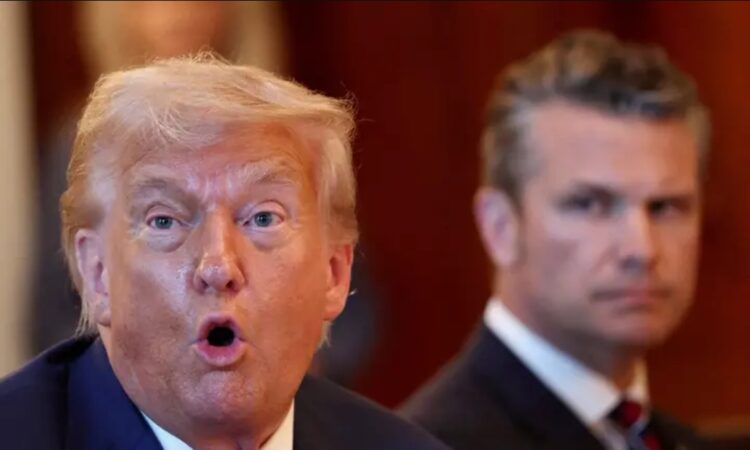
Donald Trump and Pete Hegseth are now trying to distance themselves from the controversy over what many are calling a “double tap” strike — a second hit on a ship suspected of transporting drugs, a strike that has brought serious criticism.
At first, when the story was still new and incomplete, both Trump and Hegseth made it sound like the operation was carefully planned and carried out with their full knowledge and approval. Hegseth — who serves as Secretary of Defense in the current administration — told the public that he was personally in the room when the strike happened and even watched it live. It was presented as a strong, decisive moment for the administration, something they wanted credit for.
But the situation changed when officials confirmed that there had been a second strike. That second attack is what caused outrage, because people began asking whether it was necessary, whether it targeted people who were already trying to escape, or whether it violated international rules. Once it became clear that the second strike would spark a scandal, Hegseth quickly adjusted his story. Suddenly, he said he wasn’t actually present for that part and claimed he had to leave for other responsibilities. What he had once proudly taken ownership of turned into something he did not want attached to his name.
Trump also changed his tune. When reporters first asked him if a second strike would be a problem, he said it would be something he wouldn’t have supported. But after the confirmation came out, instead of acknowledging any mistake, he insisted there was only a single strike and tried to downplay everything. His messaging flipped from cautious distancing to complete denial of what the Pentagon had already admitted.
With public pressure building and lawmakers demanding answers, Trump and Hegseth both turned toward Admiral Frank M. “Mitch” Bradley. Now they are directing attention at him, claiming that he was the one who made the decision for the second strike and that he had the authority to do so. The White House is presenting the admiral as the person who carried out the controversial order, even though earlier the operation had been described as coordinated with Trump and the Defense Department.
As a result, Bradley has been sent to Capitol Hill to take questions, defend the decision, and absorb the fallout from the backlash. A move that feels like he is being set up as the fall guy — the person left holding the blame while the government leaders who once cheered the strike now step out of the spotlight. This shift in responsibility highlights how quickly political figures can change their stories when something that once looked like a victory turns into a liability.