

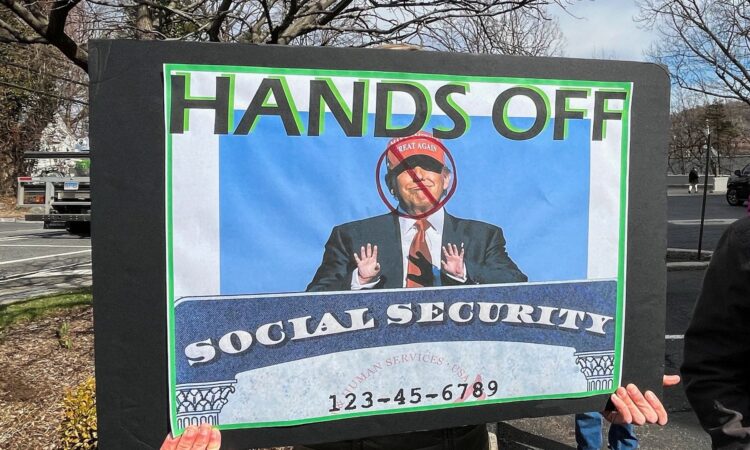
A group that advocates for Social Security has strongly accused the Trump administration of hiding key information from a government watchdog report, saying the public was not given the full truth about how the system is actually performing.
The issue centers on a report released in December by the Social Security Administration’s inspector general, which is supposed to independently review how well the agency is serving the public. According to The Washington Post, the version that was officially published painted a much more positive picture than what was originally found.
The published report suggested that people calling Social Security were waiting less than 10 minutes to speak with a representative. On the surface, that sounds like the system is working efficiently. But an earlier draft of the same report told a very different story.
That draft included a more realistic measure called “total wait time,” which tracks the full experience from when someone calls to when they actually get help. That version showed that in 2025, people were often waiting far longer — in many cases between 46 minutes and over two hours just to speak to someone. For many elderly or vulnerable people who depend on Social Security, that kind of delay can be frustrating, stressful, and even harmful.
However, before the report was made public, that key information was removed. The agency reviewed the draft and deleted the section that showed the longer wait times, leaving behind only the more favorable numbers. Critics say this made the situation look much better than it really was and misled the public about how serious the delays are.
Nancy Altman, president of Social Security Works, reacted strongly to the revelations. She said the situation sheds light on why President Donald Trump removed the inspector general at the Social Security Administration earlier in his second term. She pointed out that this wasn’t an isolated case, as several inspectors general across different government agencies were also fired around the same time.
Altman argued that these actions are part of a larger pattern. In her view, inspectors general are meant to act as independent watchdogs who protect the public by exposing problems inside government agencies. But if they are removed or pressured, that oversight disappears. She warned that without independent voices, there is no real way to hold the administration accountable, especially when it comes to critical programs like Social Security that millions of Americans rely on.
She went further to say that the administration is weakening transparency at every level, making it harder for the public to know what is really happening behind the scenes. According to her, this creates a system where problems can be hidden instead of fixed, and where the people who depend on these services are left in the dark.
Democratic communications consultant Jesse Lee also weighed in, connecting the situation to broader changes within the Social Security Administration. He pointed to actions taken by Elon Musk’s Department of Government Efficiency, often referred to as DOGE, which reportedly carried out major cuts to the agency.
Lee claimed that these cuts included firing large numbers of workers, including those responsible for answering phone calls and helping people in person. He argued that this likely made the wait times even worse, as fewer staff would naturally lead to longer delays for people trying to get help.
He also criticized what he described as a misleading use of the edited report. According to him, officials pointed to the published version to claim that wait times were under control, while the original findings showing waits of up to two hours were buried and kept from public view.
The situation has raised serious concerns about trust and accountability. For many people who depend on Social Security — including retirees, disabled individuals, and low-income families — being able to reach someone quickly is not just a convenience, but a necessity. Long wait times can delay benefits, create confusion, and add stress to people who are already in difficult situations.
Critics say that by removing key details from the report, the administration avoided public scrutiny and downplayed real problems that need attention. They argue that instead of addressing the delays and improving the system, the focus shifted to controlling how the information was presented.