
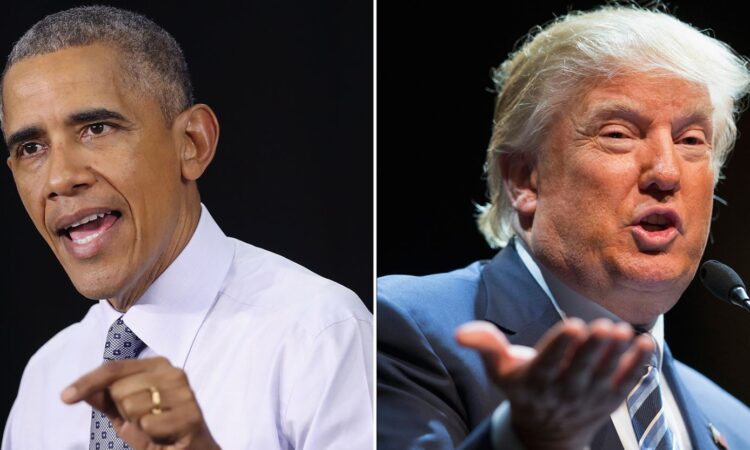
Former President Barack Obama has now publicly responded after President Donald Trump shared a video online that showed Obama and his wife, Michelle Obama, with their faces edited onto the bodies of apes. The video quickly caused outrage across the country.
Many people said it was clearly racist and deeply disrespectful, especially considering the long and painful history of comparing Black people to animals. For many Americans, it was not just another political jab. It crossed a serious line.
Obama spoke about the situation during a Saturday episode of a podcast hosted by Brian Tyler Cohen. The two discussed several political issues facing the country, but Cohen made sure to ask Obama directly about the video. By the time of the interview, Trump had already tried to distance himself slightly from the controversy, suggesting that a staff member may have posted it. Still, he defended the video and downplayed the criticism.
The video itself showed different politicians portrayed as animals, but the most shocking part was at the beginning, where the faces of Barack and Michelle Obama were placed on apes. That image was widely condemned as racist and offensive. Civil rights advocates, commentators, and ordinary citizens said it reflected harmful stereotypes that have been used for generations to insult and dehumanize Black people.
When reporters asked Trump about the backlash, he claimed the video was mainly about voter fraud. He said it included a short segment inspired by “The Lion King” and argued that the clip had already been circulating online long before it appeared on his account. He insisted that it was a strong piece focused on election issues and suggested that critics were exaggerating the meaning of the image. However, many people were not convinced by that explanation.
During the podcast, Brian Tyler Cohen asked Obama a broader question about what he called the decline of political conversation in America. He pointed to the ape video, as well as strong and sometimes harsh rhetoric from officials in the administration about immigration raids, shootings, and other controversial topics. He asked Obama how the country could move forward when public discourse seems to be getting more extreme and more personal.
Obama responded calmly but firmly. He said he believes most Americans are disturbed by this kind of behavior, even if the loudest voices online make it seem normal. He acknowledged that shocking content often grabs attention. It spreads quickly on social media. It dominates headlines. It pulls focus away from serious issues. But he said that when he travels across the country and meets everyday people, he sees something different.
According to Obama, many Americans still believe in basic decency. They still care about treating others with respect. They still believe public leaders should behave in a way that reflects the dignity of the office they hold. He said the outrage we see online does not always represent how most people truly feel in their daily lives.
At the same time, Obama said something deeper has changed. He expressed concern that there seems to be less shame around behavior that once would have been unacceptable. In the past, he suggested, leaders and their supporters would at least try to maintain a sense of decorum. There was an understanding that certain lines should not be crossed. Now, he said, it feels like some people no longer see a problem with disrespectful or inflammatory behavior.
He described much of what is happening in politics and media as a kind of “clown show,” where outrageous moments are used to distract the public. Instead of focusing on real policy debates or serious national challenges, attention shifts to viral clips, insults, and dramatic exchanges. In his view, that constant cycle of shock and distraction weakens the country’s ability to have thoughtful discussions.
Obama emphasized that he does not believe this behavior reflects the values of the majority of Americans. He said he continues to meet people who want unity, fairness, and simple human kindness. But he also made it clear that rebuilding respectful political discourse will not happen automatically. It requires people to speak up, to demand better from leaders, and to refuse to accept behavior that lowers the standard of public life.
For Obama, the issue is bigger than one video. It is about what kind of political culture the country wants to have. It is about whether respect, honesty, and dignity still matter in leadership. And it is about whether Americans are willing to hold their leaders accountable when those values are ignored.