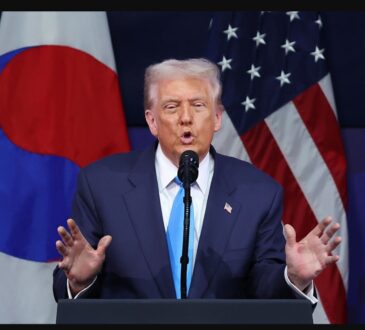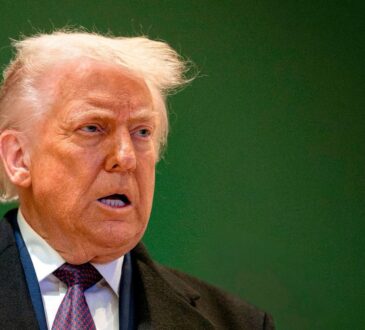

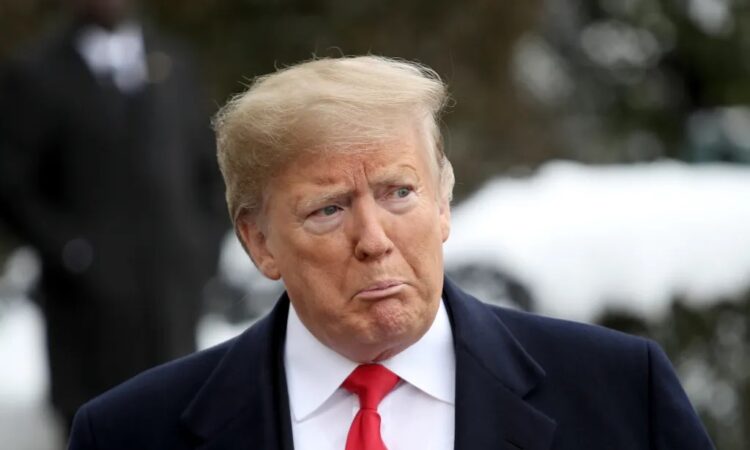
New national polls suggest that President Donald Trump may be facing growing political trouble as public confidence in his leadership appears to be slipping.
Several major surveys show that more Americans are unhappy with how he is handling key issues like the economy, health care costs, immigration, and foreign policy. Historically, when a president’s approval numbers drop like this, it can create serious problems for their party in upcoming midterm elections.
The White House disagrees with the negative interpretation of these polls. Officials argue that the president is still strong with Republican voters and say the economy is improving. However, across multiple independent surveys, the overall trend shows declining approval.
A recent Fox News poll found that 54 percent of registered voters believe the country is worse off than before. Only 44 percent approve of Trump’s performance. Seven out of ten voters say the economy is in bad shape, and that number has not improved compared to last year.
Researchers point out that when people decide the economy is on the wrong track, that belief can be very difficult to change. Even if economic data improves, public perception often stays negative for a long time.
A Pew Research Center survey of more than 8,500 adults showed Trump’s approval rating at 37 percent. That is down from 40 percent just a few months ago. While that drop may seem small, experts say even a few percentage points matter in national polling.
More concerning for Trump is that support inside his own party has weakened slightly. Last year, 67 percent of Republicans and Republican-leaning voters strongly backed most of his policies. That number has now dropped to 56 percent. This suggests that even some Republican voters are becoming less enthusiastic.
Another poll from Yahoo and YouGov placed Trump’s approval rating at 38 percent, tying his lowest point in that survey’s history.
Health care costs are also becoming a major issue. A KFF Health Tracking Poll found that 66 percent of Americans worry about being able to afford health care. Rising medical costs often influence suburban and older voters, who are important groups during midterm elections.
Some surveys show differences within the Republican Party itself. Strong MAGA supporters remain loyal, but other Republican voters are more critical, especially when it comes to affordability and everyday costs.
Foreign policy has also raised concerns. An AP-NORC poll found that 56 percent of Americans believe Trump has gone too far in using U.S. power overseas. A majority also disapproved of how he handled recent events in Venezuela. While most Republicans believe his actions were appropriate, Democrats and many independent voters disagree.
Experts say many Americans would prefer the president to focus more on domestic issues, such as prices and jobs, rather than international conflicts.
Confidence in immigration enforcement has also shifted. An Economist/YouGov poll found that 55 percent of Americans now say they have very little confidence in Immigration and Customs Enforcement, known as ICE. That number has increased since late last year. Some surveys even show rising support for reducing or eliminating the agency, especially among Democrats.
Republican allies push back against these negative numbers. Some GOP pollsters argue that Trump still has very strong support among Republican voters, with as many as 90 percent or more of his 2024 supporters still backing him. However, they admit he struggles more with independent voters and younger women.
Trump himself has dismissed the polls. On social media, he claimed his polling numbers are the highest they have ever been and accused some polling organizations of being dishonest.
The White House has also pointed to more favorable surveys, including one from Harvard CAPS–Harris, which showed modest improvements in how some voters view the country’s direction.
Still, political experts say the president faces two major challenges: strong opposition from Democrats and frustration over high prices. If inflation and cost-of-living concerns remain high, that could make it harder for him to regain public confidence.
More polls will be released in the coming months. Whether these current trends continue or improve will likely play a big role in shaping the next election cycle.