Retired NFL Star Featured In White House’s ‘Absolutely Disgusting’ Highlight Reel Blasts Donald Trump ‘Regime

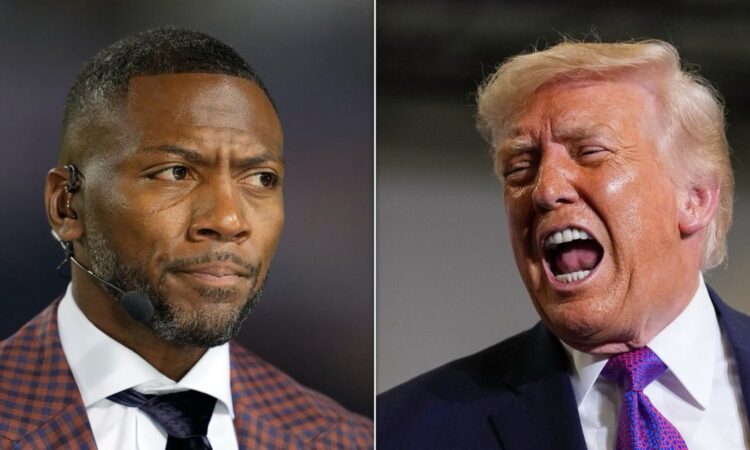
Former NFL player Ryan Clark has strongly criticized the White House after it posted controversial videos promoting President Donald Trump’s military actions in Iran. The videos, which were shared online, included real footage of missile strikes mixed with clips from football highlights, video games, movies, and television shows. Some viewers felt the videos made war look like entertainment rather than a serious and tragic situation.
Clark spoke about the issue on his podcast, “The Pivot,” where he said he was deeply disappointed by the way the videos were put together. He explained that war should never be treated like a game or a sport, especially when real people are risking their lives. Clark pointed out that many families in the United States have loved ones serving in the military, and those families understand that war is a life-and-death situation, not something to be turned into a highlight reel.
One of the things that upset Clark the most was that one of his own football highlight clips appeared in the video. He said he had no idea his footage was being used until reporters contacted him about it. Clark added that he had already stepped away from the social media platform X, which is owned by Elon Musk, because he felt the environment there had become too negative and toxic.
Clark also criticized the overall tone of the video, especially the decision to combine war footage with scenes from movies and comedy. He mentioned that the inclusion of clips from the 2008 comedy film “Tropic Thunder” made the situation even more inappropriate. According to him, mixing a comedy film and football highlights with images of war showed a lack of sensitivity.
Actor Ben Stiller, who starred in “Tropic Thunder,” also reacted angrily after discovering that a clip from the film had been used in the video without permission. Stiller publicly asked the White House to remove the clip, saying that neither he nor the filmmakers had approved its use. He made it clear that he did not want his work connected to what he described as propaganda. Stiller also emphasized that war is not entertainment and should never be treated like a movie scene.
Another former NFL legend, Hall of Famer Ray Lewis, also spoke out against the video. Lewis said he did not give permission for his image or football highlights to be used. He explained that football is about discipline, teamwork, and respect, while war is something entirely different where real lives are at risk. Lewis added that he respects and supports soldiers and their families, but he believes war should never be compared to sports.
Clark went even further in his criticism during the podcast conversation with his co-host, former NFL running back Fred Taylor. He said the situation was embarrassing and showed how unserious the country’s leadership had become. In his opinion, the video reflected a lack of professionalism and respect for the gravity of war.
Clark said moments like this make it clear that the tone of leadership has changed. He suggested that the country has lost some of the dignity and seriousness that should come with positions of power. He also described the video as “disgusting” and “despicable,” saying it was deeply offensive to use sports images to promote a military conflict.
Despite his criticism, Clark said he was not focused on demanding that the video be taken down. Instead, he expressed frustration with what he believes is a broader problem in the current political climate. He said he feels that those in power no longer care about public criticism or about the opinions of the people affected by their decisions.
According to Clark, the situation reflects a style of leadership that focuses more on personal agendas than on listening to different viewpoints. He said that when leaders ignore criticism and treat serious matters casually, it sends a troubling message about the direction of the country.
The controversy around the videos has sparked debate online, with some people defending the White House and others agreeing with Clark, Stiller, and Lewis that war should never be portrayed as entertainment.
The incident has also raised broader questions about how governments communicate about military actions and whether certain forms of messaging cross the line into insensitivity or propaganda.